.png)

Psychedelic Therapy in Australia: Busting Common Myths and Understanding the Journey
- Azita Abdollahian

- 1 day ago
- 12 min read
What if the experiences you’ve spent years trying to avoid could, with the right professional support, become part of understanding and healing what has kept you stuck?
Living with chronic stress or unresolved trauma can feel like being trapped in the same patterns despite years of trying to understand them. You may have explored traditional talk therapy, developed insight into your past, and still feel as though your body continues to respond as if the danger is present. It is understandable, then, to feel both curious and cautious about the growing conversation around psychedelic-assisted therapy in Australia.
As a psychotherapist, trauma expert and founder of The Project Of You, Azita Abdollahian approaches emerging mental health treatments through a trauma-informed and evidence-informed lens. Rather than treating psychedelic therapy as a quick fix or a new wellness trend, Azita explores the importance of appropriate clinical oversight, preparation, therapeutic support and integration.
In this guide, Azita explores what psychedelic-assisted therapy actually involves, how regulated psychedelic treatments differ from recreational psychedelic use, what the current Australian clinical landscape looks like, and why therapeutic integration is such an important part of the process.
We’ll also examine how psychedelic-assisted approaches may intersect with trauma therapy, somatic healing and nervous system regulation, while addressing the limitations, risks and questions you should consider before exploring this emerging field.
Psychedelic therapy is not about escaping your experience. When used within an appropriate therapeutic framework, the focus is on creating a carefully supported opportunity to understand your experience differently—and integrate that understanding into lasting change.
Table of Contents
Demystifying Psychedelic Therapy: Beyond the Counter-Culture Stereotypes
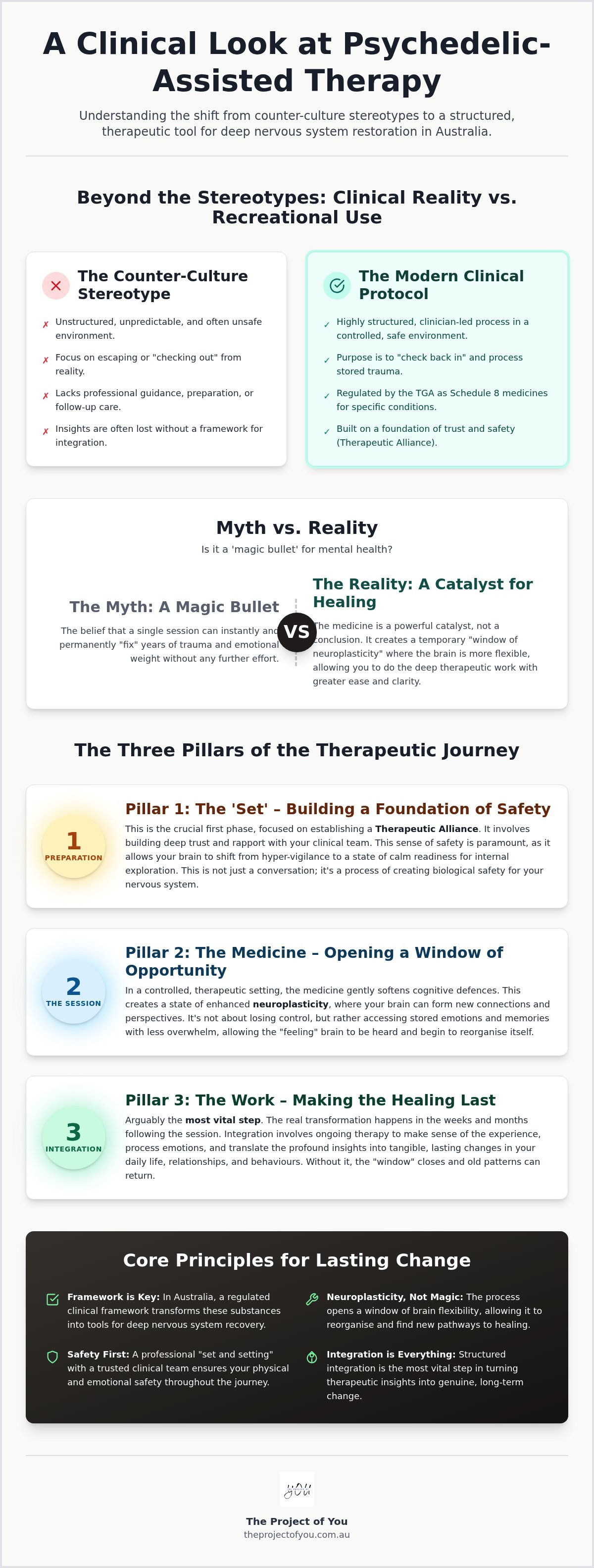
When you hear the words "psychedelic therapy," your mind might jump to images of the 1960s or experimental counter-culture movements. It's a common association, but the reality of modern clinical practice is vastly different. This isn't about recreational use or "checking out" from reality. Instead, it's a deeply structured, clinician-led process designed to help you check back into yourself. It's a quiet, intentional space where the medicine acts as a catalyst for a much larger therapeutic journey.
In Australia, the Therapeutic Goods Administration (TGA) recognised this potential on 1 July 2023. They reclassified specific substances as Schedule 8 medicines, allowing authorised psychiatrists to prescribe them for treatment-resistant depression and PTSD. This move acknowledges that for many Australians, traditional paths haven't provided the relief they need. Using psychedelic therapy within this framework means you're supported by a professional team in a controlled, safe environment. It functions like a gentle reset button for a hyper-vigilant nervous system, offering a pause in the "fight or flight" response so you can finally catch your breath.
The Shift from Recreational to Clinical
The difference between taking a substance and undergoing a therapeutic protocol lies in the "container" created by your practitioners. In a clinical setting, your biological response is influenced by what we call the Therapeutic Alliance. This is the bond of trust and safety you build with your therapy team before any medicine is introduced. Safety changes the brain's priorities. It allows you to move away from external monitoring and turn toward internal healing. While the stigma from decades past might still linger, your curiosity is a valid response to a growing body of evidence. You can explore a comprehensive overview of psychedelic therapy to see how these clinical structures have evolved to prioritise patient wellbeing and long-term stability.
A Trauma-Informed Perspective
Trauma often hides in the body, protected by cognitive defences that talk therapy alone can't always reach. Psychedelic-assisted therapy works by gently softening these defences, allowing you to access and process stored emotions without the usual sense of overwhelm. This creates a state of biological safety where the nervous system can begin to reorganise itself. This approach is a natural companion to Nervous System Restoration, as it helps clear the path for the deep, somatic work required for lasting change. By bypassing the "thinking" brain, we can reach the "feeling" brain where true transformation takes root.
Myth vs Reality: Is it a 'Magic Bullet' for Mental Health?
What if you could solve years of emotional weight in a single afternoon? It's a seductive thought, and one that often fuels the "magic bullet" myth surrounding psychedelic therapy. While the results can be life-changing, the idea that one session "fixes" everything for life is a misconception that can lead to disappointment. It's more helpful to view the medicine as a catalyst rather than a conclusion. It doesn't do the work for you. Instead, it creates the biological and emotional conditions where you can finally do the work yourself with greater ease and clarity.
The real transformation often happens in the weeks following a session. This is because the medicine opens what researchers call a "window of opportunity." During this time, your brain is more flexible and open to new ways of thinking and feeling. However, without ongoing counselling and intentional practice, these new paths can easily become overgrown by old habits. True healing is a rhythmic process of insight followed by action, ensuring that the "aha" moments from your journey actually translate into a different way of living.
The "Shortcut" Misconception
Is this therapy a shortcut? Not exactly. It's more like a biological "fast-forward" button for the heavy lifting of traditional healing. For example, it can significantly accelerate progress in couples counselling by helping partners move past entrenched patterns of blame or withdrawal that have felt immovable for years. However, this isn't an escape from the hard work of relationship building. It requires a high level of emotional readiness and a willingness to be vulnerable. You aren't bypassing your challenges; you're finally stepping into them with the resources you need to navigate them successfully.
Evidence-Informed Hope
From the perspective of Polyvagal Theory, these sessions help reduce the "defensive" responses that keep us trapped in states of high alert or shutdown. When the nervous system feels safe enough to drop its guard, we can access deeper levels of self-compassion. This is where the science of change becomes tangible. Neuroplasticity is the brain’s ability to reorganise its neural pathways during the integration phase. It's like fresh snow on a mountain; the old, deep tracks are covered, giving you the chance to choose a new, healthier path down. By pairing this biological window with evidence-informed strategies, we can turn a temporary shift into a permanent way of being. If you're curious about how this structured approach might support your own healing, you're welcome to explore a path forward with us.
The Truth About 'Bad Trips' and the Importance of Setting
One of the most common fears people bring to the table is the dread of a "bad trip." It's a valid concern, especially if your only reference points are stories of recreational use gone wrong. However, in the context of psychedelic therapy, we view these moments through a different lens. A challenging experience isn't a failed session. Often, it's the very moment where the most profound healing begins. Think of it like a storm at sea. If you're alone in a rowboat, a storm is terrifying. But if you're on a steady ship with an experienced crew, the storm becomes something you move through to reach calmer waters.
In a clinical setting, your safety is the absolute priority. This isn't just about physical comfort; it's about emotional containment. We don't leave your experience to chance. Instead, we build a framework that allows you to explore the depths of your subconscious while staying tethered to the present moment. This structure is what distinguishes a therapeutic journey from a random event.
Understanding "Set and Setting"
In a clinical environment, we meticulously curate what we call "Set and Setting" to ensure your safety. "Set" refers to your internal mindset, including the intentions, fears, and hopes you bring into the room. We spend hours in preparatory sessions helping you cultivate a mindset of curiosity and surrender. "Setting" is the physical environment. Unlike a chaotic recreational space, our clinical rooms are designed to be sanctuaries. We use soft lighting, comfortable furniture, and specific tools like eye masks and curated music to encourage an internal focus. This structure creates a "container" that holds you safely, allowing your mind to explore difficult terrain without losing its footing.
Navigating Challenging Material
When difficult emotions or memories surface, you aren't left to navigate them alone. Every session includes two trained facilitators who act as your anchors. Their role is to help you "walk towards" the discomfort rather than running from it. If you feel overwhelmed, they use somatic grounding techniques to help you feel your physical presence in the room. This focus on safety is reflected in the clinical data. As of September 2025, the TGA reported zero serious adverse events among the first 134 patients treated under the Australian authorised prescriber scheme. This is why having a trauma-informed counsellor by your side is essential. They understand the language of the nervous system and ensure your journey leads toward restoration rather than further distress.
The Critical Role of Integration: Making the Healing Last
Imagine coming home from a long journey with a suitcase full of treasures but no idea where to put them. This is what it feels like when someone undergoes psychedelic therapy without a plan for what comes next. The session itself is often profound, but the true healing happens in the quiet moments of the days and weeks that follow. Integration is the intentional process of taking the insights gained during your journey and turning them into the building blocks of a new life. Without this phase, the experience remains just that; a temporary peak rather than a catalyst for permanent change.
Typically, integration begins within 24 to 72 hours of your session. It involves a series of structured meetings with your therapist to process what you saw, felt, and understood. We often encourage creative expressions such as journalling, painting, or spending time in nature to help anchor the experience. These tools provide a bridge between the non-linear world of the medicine and the grounded reality of your daily life. It's about moving from "knowing" something to "living" it.
Bridging the Gap Between Insight and Life
During your journey, you might suddenly understand why you struggle with certain boundaries or why a specific relationship pattern keeps repeating. Translating this "knowing" into a new habit requires a supportive framework. We often use attachment-based therapy to help you process these relationship realisations through the lens of your earliest bonds. The weeks following a session require a period of "gentle living." This means minimising stress and avoiding major life decisions while your mind is still reorganising. It's a time to be soft with yourself as you navigate these new internal landscapes.
Sustaining the Nervous System Shift
Integration is the process of weaving the threads of a therapeutic experience into the fabric of daily life. To maintain the sense of "openness" achieved, we introduce somatic tools that help you stay connected to your body. The "window of plasticity" we discussed earlier is most active for about two to three weeks. Identifying when this window begins to close is vital, as it's the time to lock in your gains through consistent, small actions. By doing so, you ensure that the shift in your nervous system becomes your new baseline rather than a fading memory.
Finding Your Way Forward: Is Psychedelic Therapy Right for You?
Deciding to explore this path is a significant moment of self-advocacy. It's not simply about meeting a rigid clinical checklist; it's about whether you feel ready to partner with your own nervous system in a new way. While there are specific medical criteria to consider, we approach suitability with deep compassion and clinical nuance. We look at whether your current environment provides the stability needed to process deep work and if your body feels ready to hold the experience. This curiosity-first approach ensures that if you do move forward with psychedelic therapy, you do so from a place of grounded readiness rather than desperation.
The First Steps in the Journey
When you begin your search for a provider, it's vital to ask questions that go beyond the medicine itself. You might ask how they manage somatic overwhelm or what their specific integration protocol looks like to ensure long-term safety. Preparing your nervous system for psychedelic therapy starts long before the session. It involves building a foundation of emotional regulation and learning to listen to your body’s subtle cues. At The Project of You, Azita Abdollahian and our team act as your steady partners in this exploration. For those seeking a more immersive environment for this deep work, our Private Retreat offers a sanctuary where you can focus entirely on your restoration without the distractions of daily life.
A Compassionate Conclusion
Healing is never a straight line or a final destination. It's a continuous journey of returning to yourself with greater kindness and clarity. While these new therapeutic paths offer profound hope, they aren't a promise of a life without challenges. Instead, they offer you the tools to navigate those challenges with a more resilient heart and a regulated nervous system. You don't have to find your way through the fog alone. Whether you're just starting to wonder "what if" or you're ready to commit to a structured path of restoration, we're here to walk alongside you. If you're feeling a pull toward this transformative work, we invite you to Book a discovery call with Azita to discuss your path to restoration.
Your Path to Deep Restoration
Choosing to explore the potential of psychedelic therapy is an act of profound self-compassion. We've moved beyond the stereotypes to see a clinical framework that prioritises your safety and long-term wellbeing. You now understand that while the medicine acts as a catalyst, the true transformation is woven into your life during the intentional integration phase. By focusing on nervous system restoration and using evidence-based protocols, we ensure that your journey is supported every step of the way.
At The Project of You, Azita Abdollahian brings years of Clinical Social Work expertise to create a trauma-informed environment where you can feel truly seen. Whether you're navigating chronic stress or seeking a way through old trauma loops, you don't have to walk this path alone. There is a way forward that respects your pace and honours your unique story. It's about finding a rhythmic balance between deep insight and practical, daily change.
Begin your journey to restoration with a confidential consultation You deserve to feel at home in your own body again, and we're here to help you find your way there with grace and steady support.
Frequently Asked Questions
Is psychedelic therapy legal in Australia in 2026?
Yes, it is legal under very specific clinical conditions. Since July 2023, the TGA has allowed authorised psychiatrists to prescribe psilocybin for treatment-resistant depression and MDMA for PTSD. It isn't available for general use or self-referral. You must be assessed by a specialist who has received specific authorisation. This ensures the medicine is used as a tool within a highly regulated and safe clinical environment that prioritises your long-term wellbeing.
How much does a full course of psychedelic-assisted therapy cost?
The cost of a full course varies significantly depending on the clinical team and the number of sessions required for your unique journey. Because this involves a "therapy dyad" of two clinicians and several months of preparation and integration, the investment reflects the intensive level of professional support provided. While some private health insurers have begun pilot programs for subsidies, it's best to discuss specific fees during your initial consultation to understand the full scope of the process.
Can I do psychedelic therapy if I am on antidepressants?
This is a vital question that only your prescribing psychiatrist can answer after a thorough medical review. Some antidepressants, particularly SSRIs, can interact with the medicine or reduce its effectiveness. In many cases, a supervised tapering process might be recommended before you begin psychedelic therapy. Your safety is the priority; therefore, a transparent conversation about your current medications is the first step in your journey toward restoration and healing.
What is the difference between a "trip" and a therapeutic session?
A therapeutic session is a structured clinical protocol, whereas a "trip" usually refers to recreational use without professional containment. In a clinical setting, we use specific music, eye masks, and a curated environment to encourage an internal focus. You are supported by two trained facilitators who help you navigate the experience safely. The goal isn't just the experience itself; it's the long-term healing and integration that follows in your daily life.
Do I have to talk during the psychedelic experience?
You don't have to talk at all if you don't feel like it. Many people spend the majority of their dosing session in quiet reflection, wearing an eye mask and listening to music. The facilitators are there as a steady presence, but they won't force conversation. If you do feel the need to speak or express an emotion, they are there to listen and support you, ensuring you feel held and understood throughout.
What happens if I have a "bad trip" during the session?
We reframe these moments as "challenging experiences" rather than "bad trips." If you encounter difficult emotions, your facilitators use somatic grounding techniques to help you stay present in your body. They act as your anchors, helping you move through the discomfort rather than being overwhelmed by it. These challenging moments often hold the most significant opportunities for deep nervous system restoration and personal growth when they are handled with expert, compassionate care.
How many sessions are usually required for lasting change?
Most clinical protocols involve two to three dosing sessions, but these are part of a much longer therapeutic journey. Before the first dosing session, you'll have several preparatory meetings to build trust and set intentions. After each session, multiple integration appointments are required to help you weave your insights into your daily life. Healing isn't about a single event; it's about the consistent, supported work that happens over several months of psychedelic therapy.
Can psychedelic therapy help with relationship or attachment trauma?
Yes, it can be a powerful tool for exploring deep-seated attachment wounds. By gently softening your cognitive defences, the therapy allows you to access core feelings of shame or grief that might be impacting your relationships. This often creates a window of openness where you can re-examine your attachment style and learn to create more secure bonds. It works beautifully alongside somatic therapy to help you find a sense of safety within yourself and with others.


Comments