

Avoidant Attachment Style in Adults: Signs in Relationships

What is avoidant attachment in adults, and how can it affect your relationships? Avoidant attachment is an attachment pattern often characterised by discomfort with emotional vulnerability, a strong reliance on independence and a tendency to withdraw when intimacy feels overwhelming. These behaviours can develop when early experiences make it difficult to trust others, express emotional needs or feel comfortable relying on someone for support.
If you or your partner struggle with emotional closeness, avoid difficult conversations or pull away when a relationship becomes more intimate, it can leave both people feeling confused, disconnected or rejected. Understanding avoidant attachment can help you recognise these patterns without blame and begin to understand what may be happening beneath the surface. In this article, Azita Abdollahian, psychotherapist and Clinical Social Worker, explores the common signs of avoidant attachment in adult relationships, how it differs from other attachment styles and how therapy, emotional awareness and gradual changes in communication can help you build greater emotional safety and more secure connections. Attachment patterns can influence how you relate to others, but they do not have to define your relationships or remain unchanged.
Table of Contents
What Is the Avoidant Attachment Style?
An avoidant attachment style in adults is a pattern of protecting independence when emotional closeness feels difficult. In romantic relationships, it can shape how someone responds to affection, conflict and requests for support.
Avoidance in romantic relationships
Avoidant attachment can show up as discomfort with dependence, vulnerability or frequent reassurance. Someone may enjoy time with a partner but feel a strong urge to withdraw after a tender conversation. That distance does not necessarily mean they do not care. It may be a learned way of managing intense feelings.
This pattern matters because partners can interpret the same behaviour differently. One person might see a quiet evening alone as rejection, while the other sees it as a chance to unwind. Naming the need beneath the behaviour, such as space or reassurance, can help couples discuss connection without assuming each other’s intentions.
Childhood patterns in adult relationships
Early relationships with a caregiver can shape expectations about whether closeness feels safe, available or welcome. If a child’s bids for comfort are often ignored or emotional expression is discouraged, they may learn to manage distress alone. These responses can become a working model for later relationships, influencing how an adult handles support, trust and emotional intimacy.
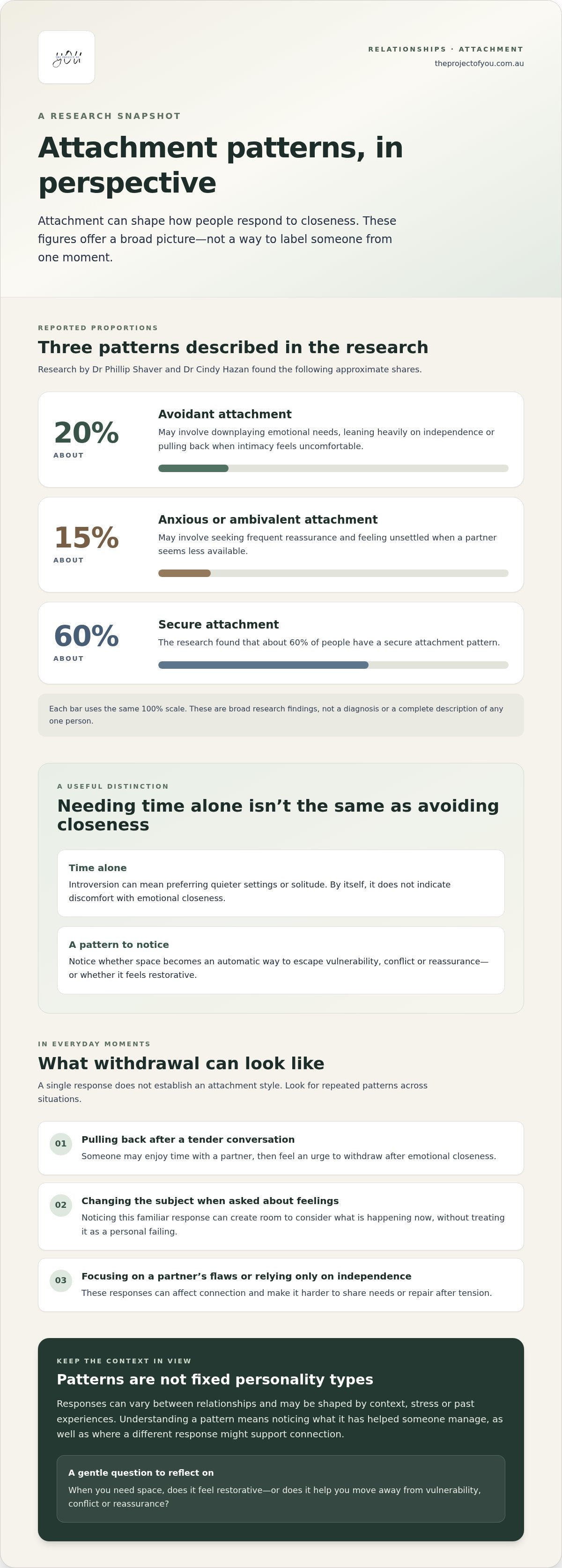
That model is not a fixed blueprint. Someone might notice, for example, that they change the subject whenever a partner asks how they feel. Recognising this as a familiar response, rather than a personal failing, creates room to consider what is happening now. Childhood patterns can affect adult relationships, but they do not explain every choice or define someone’s capacity for closeness.
Dismissive and anxious patterns
Dismissive-avoidant and anxious-preoccupied patterns tend to manage closeness differently. A dismissive-avoidant person may downplay their needs, rely heavily on independence or distance themselves emotionally. An anxious-preoccupied person may seek frequent reassurance and feel unsettled when a partner seems less available. These are patterns, not diagnoses, and responses can vary between relationships.
Research by Dr. Phillip Shaver and Dr. Cindy Hazan found that about 20% of people have an avoidant attachment, while about 15% have an anxious or ambivalent attachment. Their research also found that about 60% have a secure attachment. These figures offer a broad picture, not a way to label someone from a single action. In a tense moment, both partners’ feelings and needs deserve curiosity.
Differences between avoidant and other attachment patterns
Attachment patterns describe familiar ways of responding to closeness, not fixed personality types. Comparing them can help you notice behaviour without turning a label into a judgement.
Self-diagnosis can oversimplify a response shaped by context, stress or past experiences. Consider professional support when relationship patterns cause ongoing distress, anxiety, isolation or repeated conflict.
Strengths of avoidant patterns
Some behaviours associated with avoidance can also support self-reliance, practical problem-solving and calm decision-making. For example, someone may stay organised during a crisis or respect a partner’s need for independence. These strengths matter: understanding a pattern means recognising what has helped someone cope, not only what feels difficult.
Strengths do not mean every response works well in every situation. Mikulincer’s three studies of people with higher attachment avoidance found they did not report unusually intense anger in the moment. This finding offers one specific perspective, not a complete description of every person or relationship.
Attachment and partner selection
Attachment patterns can influence what feels familiar or comfortable when choosing partners. Someone who values emotional distance may feel drawn to a partner who also keeps conversations practical, while another person may seek frequent reassurance and closeness. These tendencies can shape how partners connect, but do not determine whom someone will choose.
Look for patterns across relationships rather than judging a single match. Ask yourself whether you can share needs, tolerate differences and repair after tension. This reflection can show whether a familiar dynamic supports your values or keeps both partners caught in stress and anxiety.
Avoidance, introversion and independence
Introversion describes a preference for quieter settings or time alone. By itself, it does not indicate discomfort with emotional closeness. Someone can enjoy solitude and still share feelings, ask for support and stay present in relationship conversations. The distinction is less about needing space and more about what happens when intimacy or dependence arises.
Consider whether time alone feels restorative or becomes an automatic way to escape vulnerability, conflict or reassurance. One moment cannot establish an attachment style. Look for repeated responses across situations, including how you react when a partner expresses hurt or asks to connect.
Parenting can make these patterns especially visible. A parent who learned to manage distress alone may struggle to respond to a child’s strong feelings, particularly during a rushed morning or a conflict at bedtime. Noticing that response can help interrupt intergenerational habits. Parenting counselling can provide space to explore how family experiences affect current behaviour.
Therapy can help a person examine what triggers withdrawal, practise naming feelings and try different responses in relationships. It can also explore anxiety, trauma or stress that may affect closeness, without assuming attachment explains everything. If these patterns are causing distress, booking a conversation with a therapist can be one way to begin exploring them.
How does an avoidant adult behave in relationships?
Responses vary, but emotional distance can become more noticeable during tension or intimacy. What looks like indifference may instead reflect an attempt to manage feelings that are difficult to express.
Emotional regulation and distress
Emotional regulation means noticing feelings and finding ways to respond without becoming overwhelmed or shutting them out. Someone who has learned to downplay distress might focus on practical details during an argument while their partner tries to discuss hurt feelings. This response may lower emotional intensity in the moment, yet leave important feelings unspoken.
People with avoidant and anxious attachment styles experience greater physiological stress during conflict than people with a secure attachment style. Stress may not look like visible distress: someone might become quiet, speak bluntly or insist nothing is wrong. Recognising these actions as possible signs of strain can invite curiosity, rather than treating silence as proof of indifference.
Emotional intelligence can develop with practice. After a difficult exchange, someone might identify a feeling and consider what it signals before responding. This can help distinguish a feeling from an action: feeling exposed does not require ending the conversation or dismissing a partner’s concern.
Closeness and intimacy
Emotional intimacy involves sharing inner experiences and responding to a partner’s feelings with care. For someone who finds closeness uncomfortable, a personal question may feel demanding, even when asked gently. They might change the subject, focus on a partner’s flaws or immerse themselves in work after a tender moment.
These responses can create a pursue-withdraw cycle: one partner seeks more connection while the other retreats to manage emotional intensity. The first partner may then pursue more urgently, increasing strain for both. Naming this shared pattern, rather than assigning blame, can help each person consider what they need to feel safer and more understood.
Communicating with an avoidant partner
Communication can be more constructive when each partner describes their own experience instead of interpreting the other’s motives. For example, “I felt alone when we didn’t discuss the decision” gives a partner something specific to understand, unlike “You don’t care.” This approach leaves room for different perspectives without asking either person to agree straight away.
Listening matters too. A partner can reflect what they heard, then ask whether they understood correctly. Someone who tends to withdraw may find it easier to respond when they are not expected to explain everything at once. The other partner can still state a clear boundary, such as needing important decisions to be discussed together.
During a conversation, focus on one concern and check that you both understand the request. For instance, clarify what shared decision-making means before discussing a specific choice. This makes expectations more concrete and gives each person a chance to explain their perspective. Neither partner needs to express feelings perfectly. Careful listening and honest requests can support mutual understanding without blame.
Gradual movement toward secure functioning
Secure functioning is less about performing a perfect relationship and more about having choices when old expectations arise. Attachment theory offers a way to understand those expectations, while everyday experiences can show where new responses are possible.
Earned secure attachment
Earned secure attachment describes developing a more flexible way of relating, even when earlier experiences shaped different expectations. The idea matters because childhood attachment doesn’t have to determine how someone connects throughout adulthood. Reflection can help a person notice which assumptions still guide them, such as believing that needing support will make them a burden.
Try testing an assumption against what happens now. If accepting help feels uncomfortable, notice whether the other person responds with respect, pressure or criticism. That information can help distinguish a present relationship from an expectation formed earlier. The aim is not to dismiss past experiences, but to recognise when an old conclusion may not fit the current situation.
Change can also mean making room for mixed feelings. Someone might value closeness and still feel uneasy when a partner offers comfort. Rather than treating that discomfort as proof that connection is unsafe, they can acknowledge both responses and consider what matters to them. Curiosity can help make their choices more intentional.
Secure attachment in adulthood
Secure attachment in adults means being able to value connection while maintaining a sense of self. Someone who functions securely can express a preference, hear a different view and stay engaged in the relationship. Disagreement may still feel uncomfortable, but it does not automatically mean the relationship is failing.
In daily life, this might sound like telling a partner, “I’d like some time to myself tonight, and I’m looking forward to seeing you tomorrow.” This communicates independence and care together. A partner can respond honestly too, rather than guessing what the request means. These exchanges help couples understand real needs instead of relying on assumptions.
Security also means receiving affection without needing to earn it through constant usefulness. Someone who usually handles every task alone might let a partner contribute to a shared responsibility. They can notice how that feels and whether it aligns with their values. Such experiences can gradually broaden what feels possible, without requiring someone to give up autonomy or become comfortable with every form of closeness.
Progress may be uneven across relationships and circumstances. A demanding period at work, for example, can bring old habits back into focus. Instead of treating that as failure, consider what the moment reveals about your capacity and support needs. A more secure way of relating develops through repeated, considered choices that respect personal limits and the importance of connection.
Changing or healing avoidant attachment
Changing an avoidant pattern does not mean giving up independence or forcing closeness. It involves understanding what the pattern protects, then creating more choice in how you respond. A useful starting point is noticing which situations bring discomfort, rather than judging yourself for feeling it.
Try making a brief private note after a moment of withdrawal. Record what happened, what you expected and what you did to feel safer. For example, after declining an invitation, you might realise you expected to feel trapped, even though it was for a short family lunch. Reviewing these moments can help separate the current situation from an expectation shaped by childhood.
Then consider whether your usual response still serves you. Ask yourself: “What matters to me here?” and “What choice respects both my independence and the relationship?” You might decide to attend the lunch for a limited time, suggest another activity or decline clearly. You can consider each option without treating discomfort as a command.
Notice the pattern: Write down the situation and what you expected would happen.
Identify the protection: Consider what withdrawing or staying independent helps you avoid feeling.
Choose deliberately: Select a response that reflects your needs and values, rather than acting automatically.
These reflections are not a test to pass. They can help you approach an insecure pattern with curiosity instead of shame. Someone with a dismissive response, for instance, might recognise that doing everything alone protects them from disappointment while also limiting opportunities to experience dependable support.
Therapy can offer a steady place to explore how personal history, present stress and relationship experiences interact. A therapist may help you identify the beliefs beneath a response, notice what happens emotionally or physically, and consider manageable alternatives. The work can focus on understanding your own pattern, rather than assigning blame or demanding a particular relationship outcome.
Change may appear in choices beyond difficult conversations: accepting a thoughtful gesture, stating a preference before resentment builds or letting someone contribute to a shared task. These actions preserve your independence while making room for mutual support. If a familiar response returns during a demanding period, use the moment to learn what feels difficult and what kind of support suits you.
[Book an individual counselling session](https://www.theprojectofyou.com.au/book-online)
The Project of You | Trauma, Couples & Relationship Therapy Australia: Nervous System Regulation & Restoration
The Project of You | Trauma, Couples & Relationship Therapy Australia offers Nervous System Regulation & Restoration for people who want support understanding how stress and emotional responses affect closeness. It may be helpful when withdrawing, shutting down or struggling to express needs is causing relationship distress.
Individual Counselling offers space to explore personal patterns and practise responses that feel more manageable. If relationship difficulties involve both partners, support can also help you understand each other’s needs and work towards clearer communication. The Healing Feminine Workshops and Self Love e-Books provide other ways to engage with reflection and personal growth.
You do not need a label or a complete explanation before seeking support. If you’d like to explore what may help, contact The Project of You | Trauma, Couples & Relationship Therapy Australia.
Make space for a different kind of connection
Understanding the avoidant attachment style in adults can offer a starting point, not a verdict on who you are or what your relationships can become. You might use what you’ve noticed to ask a gentler question: what kind of connection matters to me, and what would help me move towards it while honouring my boundaries?
There’s no need to change everything at once. Choose a relationship moment to reflect on, and consider what response would better align with your values. If these patterns affect your wellbeing or make it difficult to connect, support can give you room to explore them with care and curiosity.
[Explore booking a counselling session](https://www.theprojectofyou.com.au/book-online)
Each thoughtful step can help you build a more flexible way of relating. You’re allowed to take that step at your own pace.
Frequently Asked Questions
Can You Be Both Anxious and Avoidant?
Yes. Someone can want reassurance and closeness while also feeling uneasy when intimacy deepens. This combination is often described as fearful-avoidant attachment: a person may move towards a partner, then pull back when connection feels exposing. Responses can vary across relationships and situations. Noticing whether you tend to seek contact, retreat or alternate between the two can help you describe your experience more clearly.
What is avoidant attachment style in adults?
An avoidant attachment style in adults is a pattern of responding to emotional closeness by leaning heavily on self-reliance or holding feelings back. It is not a diagnosis or a complete picture of someone’s character. For example, a person may be comfortable solving practical problems but find it difficult to tell a partner they feel hurt. Look at repeated responses, not one quiet moment, to understand the pattern.
What are common signs of avoidant attachment in adult relationships?
Signs may include feeling uneasy when a partner offers care, changing the subject when conversations become personal, or preferring messages to emotionally charged face-to-face discussions. Someone might also cancel plans after sharing something vulnerable, then feel more comfortable once they have regained distance. One behaviour alone does not establish an attachment pattern. Consider whether similar reactions recur and affect trust, communication or the ability to receive support.
What causes avoidant attachment, and how does it develop in childhood?
Avoidant attachment can develop when a child repeatedly learns that showing emotion or seeking comfort doesn’t bring a reliable response. A caregiver may discourage tears, overlook bids for attention, or praise independence while giving little space for vulnerability. The child adapts to those conditions, and the strategy can later shape expectations of relationships. Childhood experiences are not the only influence, and this pattern doesn’t prove that trauma occurred.
How does avoidant attachment affect romantic relationships, friendships, and family relationships?
In romantic relationships, avoidant patterns may make it uncomfortable to share personal worries or accept care. With friends, someone might keep contact focused on activities and practical updates, even when a friend offers a deeper conversation. In family relationships, they may avoid asking relatives for help or step back during emotionally charged gatherings. The effects depend on the people and circumstances involved, and can differ across relationships.
Can adults change avoidant attachment patterns, and what steps help?
Adults can work towards different responses by noticing what happens before they withdraw and practising a manageable alternative. After a tense interaction, write down what prompted the reaction, what you felt and what you needed. Then consider one small action for next time, such as asking to continue the conversation later. Reviewing this with someone you trust or a therapist can help you recognise patterns without turning reflection into self-criticism.
What therapy approaches are effective for avoidant attachment in adults?
No single therapy approach suits everyone. The work can start by understanding what brings discomfort or distance into relationships. Individual counselling may explore personal experiences and current responses. CBT can help examine beliefs that shape behaviour, while trauma-informed therapy can attend to safety and emotional capacity. Couple counselling may help partners discuss recurring difficulties together. A therapist can work with you to choose an approach that fits your concerns.
Where can adults in Australia find relationship or mental health support for attachment concerns?
Adults across Australia can seek individual or couple counselling when attachment concerns affect their wellbeing or relationships. The Project of You offers Individual Counselling, Couple Counselling and Nervous System Regulation & Restoration. Individual counselling may suit someone exploring personal reactions, while couple counselling can help partners understand a recurring dynamic together. Consider what kind of support feels most relevant to your experience.



Comments