

Childhood emotional neglect in adults: signs, effects, and self-esteem

What a child doesn’t receive emotionally can matter as much as what happens to them. Childhood emotional neglect in adults refers to the lasting effects of growing up without enough emotional support, attention or acknowledgement from caregivers. It can happen even when parents love their children and want the best for them, and may leave someone unsure how to recognise or express their feelings.
If you’ve wondered why it’s hard to ask for help, feel distant from your emotions or doubt that your needs matter, those experiences are worth exploring with care. This article explains what emotional neglect can look like, how it may affect adults, and how it can shape self-esteem and emotional attunement. You’ll also find ways to start noticing your feelings and needs, without treating your past as a diagnosis or a reason to blame yourself.
Table of Contents
Low self-esteem and self-compassion
Growing up without emotional support can shape how you judge your worth and respond to your needs. Self-compassion offers a way to meet difficult feelings with understanding rather than criticism.
Effects on self-esteem
Self-esteem is the sense of worth you carry into everyday situations. When caregivers repeatedly dismiss or overlook a child’s feelings, that child may learn to doubt their needs or believe they’re a burden. As an adult, this might sound like “I’m being too sensitive” after asking for support, or “I should manage alone” when overwhelmed. These beliefs can affect boundaries, relationships and decisions.
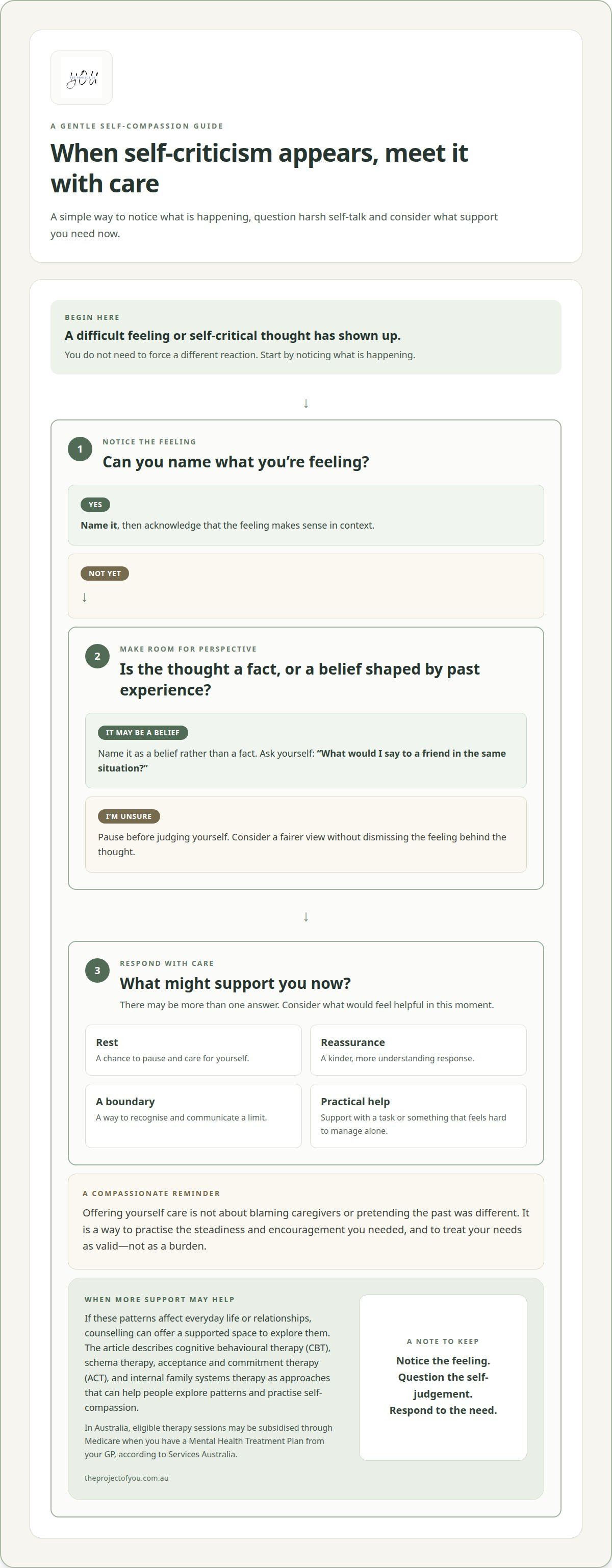
Notice the difference between a thought and a fact. If you catch yourself thinking, “I don’t deserve help,” try naming it as a belief shaped by past experience. Then ask what you’d say to a friend in the same situation. That pause can make room for a fairer view of yourself without dismissing the feelings behind the thought.
Reparenting through self-compassion
Reparenting means learning to offer yourself some of the care, steadiness and encouragement you needed as a child. It isn’t about blaming caregivers or pretending the past was different. For example, after making a mistake at work, you might notice the urge to call yourself useless, then respond, “I’m disappointed, and I can work out what to do next.”
Self-compassion can help you respond to an old pattern with a new choice. When shame or self-criticism appears, try three steps: name the feeling, acknowledge that it makes sense in context, and identify what would support you now. That support might be rest, reassurance, a boundary or help with a practical task. Practising this approach can help you treat your needs as valid, not as a burden.
Self-care and therapeutic support
Self-care can include activities that bring you joy, mindfulness, meditation or journalling. Make it specific: write down one feeling, where you notice it in your body, and what it might be telling you. You could also choose a creative activity or set aside time for something you enjoy. The aim isn’t to force a different reaction, but to notice what’s happening and respond with care.
What therapies help adults recover from childhood emotional neglect? Cognitive behavioural therapy (CBT), schema therapy, acceptance and commitment therapy (ACT), and internal family systems therapy can help people explore patterns, relate differently to difficult feelings and practise self-compassion. Therapy can also support emotional awareness, self-acceptance and healthy boundaries.
In Australia, eligible therapy sessions may be subsidised through Medicare when you have a Mental Health Treatment Plan from your GP, according to Services Australia. Individual counselling can provide a supported space to explore how earlier experiences affect your self-worth today. You can begin by bringing one example, such as finding it hard to ask for help, and noticing what feelings or beliefs arise.
Common effects in adulthood
Early emotional neglect can shape how adults relate to others, view themselves and respond to strong feelings. It may show up as people-pleasing, withdrawal, self-doubt or difficulty managing conflict, rather than one single pattern.
Childhood emotional neglect can affect relationships, self-esteem and emotional regulation by making it harder to recognise needs, trust support or express feelings during stress. For example, a disagreement may lead someone to go quiet, even when they want connection.
Relationship effects
Relationship effects can include patterns of closeness, distance and communication that develop around unmet emotional needs. Someone might avoid dating, withdraw from social groups or care for a partner while neglecting their own needs. During conflict, they may suppress concerns or act as if nothing is wrong. Noticing these responses can help explain why connection feels uncomfortable, without blaming either person.
Effects on adult self-esteem
Self-esteem can be affected when a person grows up without their feelings and needs being taken seriously. They may assume they’re asking too much, feel responsible for keeping everyone happy or measure their worth through constant achievement. For example, a small mistake at work might feel like proof of personal failure. Recognising this pattern can help separate self-worth from performance.
Emotional regulation difficulties
Emotional regulation is the ability to notice feelings and respond without being overwhelmed or shutting down. If a child had little support understanding emotions, they may struggle as an adult to name what’s happening, tolerate distress or communicate it clearly. A tense conversation might bring anger, numbness or an urge to leave. These reactions can make it harder to repair misunderstandings.
Family dynamics may shape how these patterns appear. A child of an absent parent may become highly responsible, then feel compelled to solve everyone’s problems. Growing up with a perfectionistic parent may contribute to anxiety about never being good enough. These are possible influences, not fixed outcomes, and family labels alone don’t explain a person’s whole experience.
Some adults focus on caring for others while overlooking their own needs. Others find asking for help uncomfortable because they expect disappointment, or use alcohol, drugs or risky behaviour to cope with distress. Being ignored in a conversation can stir a painful sense of being unseen. Identifying the trigger and response can reveal what support or boundary might help.
If these patterns are affecting connection or everyday life, explore counselling support as one way to understand them and practise different responses.
Definition and examples of childhood emotional neglect
Childhood emotional neglect happens when a child lacks enough emotional security or support from caregivers. It can involve a parent being emotionally unavailable, missing a child’s cues or dismissing their feelings. The absence can be hard to recognise later, especially if the child’s practical needs were met and there were no obvious incidents.
What is childhood emotional neglect, and how can it affect adults? It means important emotional needs, such as comfort, attention or help making sense of feelings, weren’t adequately met. As adults, people may have difficulty understanding their emotions, trusting support or expressing what they need.
Examples can include a caregiver who:
Ignores a child who is upset instead of listening or offering comfort.
Calls a child “too sensitive” when they try to explain feeling hurt.
Punishes a child for expressing anger, sadness or fear.
Changes the subject when a child wants to talk about a difficult experience.
How does childhood emotional neglect differ from abuse or trauma? Neglect describes emotional care that was missing, while abuse can involve harmful actions; the experiences can overlap. Ongoing emotional neglect is also described as a form of child abuse, and neglect can be traumatic for a child.
Not every missed moment means a child was neglected. Caregivers can misunderstand a feeling or be distracted sometimes; the concern is a pattern of emotional needs going unnoticed or unsupported. Childhood emotional neglect can affect someone even if it occurred once or twice, particularly when those experiences shaped how they learned to understand feelings and seek comfort.
How is childhood emotional neglect assessed or diagnosed by a mental health professional? A mental health professional can discuss childhood experiences alongside current concerns, such as difficulty naming feelings or coping with closeness. They can explore how those experiences relate to daily life without assuming one memory or family description explains everything.
For example, a person might describe a caregiver who provided meals and school uniforms but rarely asked about their day. A professional may explore what happened when the person felt afraid or disappointed, and whether they felt able to seek support. This helps place individual memories in context rather than relying on one event alone.
When should someone seek professional help for the effects of childhood emotional neglect? Consider support when memories or current patterns make relationships, emotional expression or daily responsibilities difficult. You might begin by sharing one specific example, such as avoiding a conversation about hurt feelings, and describing what you notice now. That gives the conversation a clear starting point.
Emotional attunement between parents and children
Emotional attunement means noticing a child’s emotional cues and responding with interest, care and guidance. For example, a parent might notice a quiet child after school and ask what happened, rather than assuming everything is fine.
Attunement doesn’t require parents to understand every feeling perfectly. It means being willing to pause, listen and adjust when a child signals distress. A child who spills paint might feel ashamed or worried about getting in trouble. A calm response, such as “You look upset; let’s clean it together”, shows that the feeling can be met without rejection.
Parents may miss a cue even when they’re trying to be attentive. A child might say “I’m fine” while avoiding eye contact, or become irritable after a tiring day. Rather than pressing for an explanation, a parent can offer a gentle observation and leave room for the child to respond. This helps make emotional conversations feel less like an interrogation and more like an open invitation.
Simple questions can help parents tune in. For example, pause during a difficult moment and ask:
“What are you feeling right now?”
“Where do you notice that feeling in your body?”
“What might the feeling be telling you?”
These questions help children connect a physical cue with an emotion and a possible need. A tight stomach before school might point to worry about a test or friendship. A parent can listen first, then help the child consider what support would be useful. The aim isn’t to talk a feeling away or immediately fix every problem.
How can childhood emotional neglect affect parenting and be prevented from continuing across generations? Adults may repeat familiar responses, such as dismissing tears or avoiding emotional conversations, especially under stress. Noticing the pattern, naming the child’s feeling and returning to repair after a difficult exchange can create a different experience.
Repair matters in ordinary family life. If a parent snaps during the morning rush, they can return later and say, “I spoke sharply; that wasn’t your fault. What was happening for you?” This acknowledges the child’s experience without asking them to comfort the adult. It also shows that relationships can hold mistakes and reconnection.
Parents who find emotional conversations difficult can practise one small response at a time. During dinner, for instance, each person could share one feeling from the day and what helped. If parenting stress or past experiences make attunement hard to sustain, parenting counselling can help explore those reactions and practise more supportive ways of responding.
Adult symptoms associated with childhood emotional neglect
There isn’t one symptom that establishes whether someone experienced emotional neglect. Adults may notice emotional disconnection, difficulty identifying needs or heightened sensitivity to rejection. Research links childhood maltreatment, including neglect, with later mental health concerns, but these associations don’t prove what caused one person’s symptoms. A systematic review by Norman and colleagues in PLoS Medicine examined these associations across studies.
Emotional disconnection can feel like knowing something is wrong without being able to name it. For instance, someone might feel blank during a family conversation, then notice tension in their shoulders afterwards. A therapist may help them explore what was happening while also considering present-day stressors and other explanations.
Difficulty expressing feelings: going quiet when a friend asks what’s troubling you.
Rejection sensitivity: interpreting a brief message as evidence of disapproval.
Perfectionism: repeatedly checking a work email for minor errors.
Low self-esteem: dismissing positive feedback as undeserved.
Withdrawal: leaving a gathering when the conversation becomes emotionally intense.
Responses to another person’s strong emotions can offer clues about what feels manageable. Someone might joke when a partner is upset, rush to solve the problem or change the subject. During conflict, they may suppress concerns or act as though nothing is wrong. These behaviours can make it harder to communicate needs and reconnect after a misunderstanding.
Some adults feel hurt or lonely around parents who avoid deeper conversations. Others may hesitate to ask for support, expecting disappointment. Rather than treating one reaction as proof, note what was happening, the feeling that followed and how you responded. For example: “My concern wasn’t discussed; I felt alone; I stopped bringing it up.” This can help make a future conversation with a mental health professional more specific.
Emotional neglect may be associated with anxiety, depression or post-traumatic stress disorder, but these symptoms can have many contributing factors. Research findings describe patterns across groups, not a diagnosis for an individual. If distress is affecting work, sleep or relationships, mental health counselling can help you understand what you’re experiencing and consider appropriate support.
In Australia, call 000 in a crisis or if you’re experiencing suicidal or homicidal thoughts. If someone is in immediate danger, emergency assistance is the priority. For distress that isn’t immediate, consider speaking with a trusted person or mental health professional about what support could help you feel safer and more supported.
The Project of You | Trauma, Couples & Relationship Therapy Australia: Nervous System Regulation & Restoration
The Project of You | Trauma, Couples & Relationship Therapy Australia offers Nervous System Regulation & Restoration and individual counselling for people exploring how earlier emotional experiences affect their wellbeing. If you notice recurring difficulty identifying feelings, responding to stress or feeling safe in relationships, counselling can provide space to understand those patterns and consider supportive ways forward.
Nervous System Regulation & Restoration may be relevant if stress leaves you feeling overwhelmed or disconnected. The Healing Feminine Workshops and Self Love e-Books offer other ways to engage with reflection and self-compassion. You can choose the kind of support that feels appropriate to what you’re working through.
If you’d like to explore support, contact The Project of You | Trauma, Couples & Relationship Therapy Australia or visit theprojectofyou.com.au.
Make space for a different response
Understanding childhood emotional neglect in adults can help shift the question from “What’s wrong with me?” to “What did I learn to expect, and what do I need now?” That change doesn’t erase the past, but it can offer a kinder starting point for decisions you make today.
Choose one recurring moment to notice this week, such as agreeing to something when you feel stretched or going quiet during a difficult conversation. Pause afterwards and write down what happened, what you felt and what you might want to try next time. Keep the step small enough to feel manageable. Change can begin with recognising a choice, not forcing yourself to make it perfectly.
If these reflections bring up distress or feel difficult to hold alone, professional support can help you explore them at a pace that feels steady. You deserve room to understand your own needs and decide what comes next.
Your past may have shaped the path you learnt to walk, but it doesn’t have to define every step ahead.
Frequently Asked Questions
What is childhood emotional neglect?
Childhood emotional neglect describes a gap in the emotional care a child needed from caregivers. It focuses on what wasn’t consistently available, rather than requiring one identifiable harmful event. For instance, a child might have dependable routines but little help making sense of disappointment or fear. The term can help adults reflect on their experiences, but it isn’t a diagnosis by itself or a complete account of a family’s history.
What are common signs of childhood emotional neglect in adults?
Some adults notice they struggle to make choices without imagining how others will react, or feel uneasy when someone offers care without asking for anything in return. They may also minimise achievements, feel responsible for other people’s moods or find it hard to know what they enjoy. These experiences can arise for different reasons. A useful clue is whether the pattern repeatedly limits your choices, comfort or sense of connection.
What causes childhood emotional neglect, and how can it happen in a family?
It can arise from a family’s repeated ways of handling emotion, shaped by caregivers’ own learning, stress and capacity to respond. For example, a household may value achievement and good behaviour so strongly that a child learns to hide uncertainty or disagreement. This isn’t a judgement of a whole family. Looking at the emotional rules a child absorbed, such as “stay easy” or “don’t need much”, can clarify their later expectations.
What self-help strategies can adults use to heal from childhood emotional neglect?
Try mapping a recurring trigger without judging your response: note the situation, what you expected would happen, and what you did to feel safer. Then choose one low-stakes experiment, such as expressing a different preference about a meal or asking someone to wait while you consider a request. Afterwards, reflect on what felt difficult and what helped. Small, repeatable experiments can build confidence in making choices that fit you.
Where can adults in Australia find support for childhood emotional neglect, including low-cost counselling?
For lower-cost options, ask local community health centres, not-for-profit services or university psychology training clinics whether they offer reduced-fee counselling. Availability and eligibility vary, so explain what support you’re seeking and ask about fees before booking. A GP can also help you discuss suitable services. If you prefer private support, ask about the session cost and any payment arrangements directly, so you can make an informed choice that fits your circumstances.



Comments