

Childhood trauma affecting relationships: trust and attachment

What if the childhood experiences that once helped you feel safe are now affecting your adult relationships? Childhood trauma can influence how you experience trust, intimacy, conflict and emotional connection, sometimes showing up as fear of abandonment, withdrawing from a partner or struggling to feel secure in a relationship. These are often learned responses to earlier experiences, not signs that you are incapable of building healthy, loving relationships.
Understanding how childhood trauma affects adult relationships can help you recognise your attachment patterns, understand your emotional triggers and begin changing behaviours that no longer serve you. In this article, Azita Abdollahian, psychotherapist and Clinical Social Worker, explores how early experiences can shape adult attachment, communication and emotional safety, and how trauma-informed therapy can help you develop greater self-awareness, healthier boundaries and more secure connections. Your past may influence how you relate to others, but it does not have to determine your future.
Table of Contents
Therapy, self-reflection and unlearning dysfunctional patterns
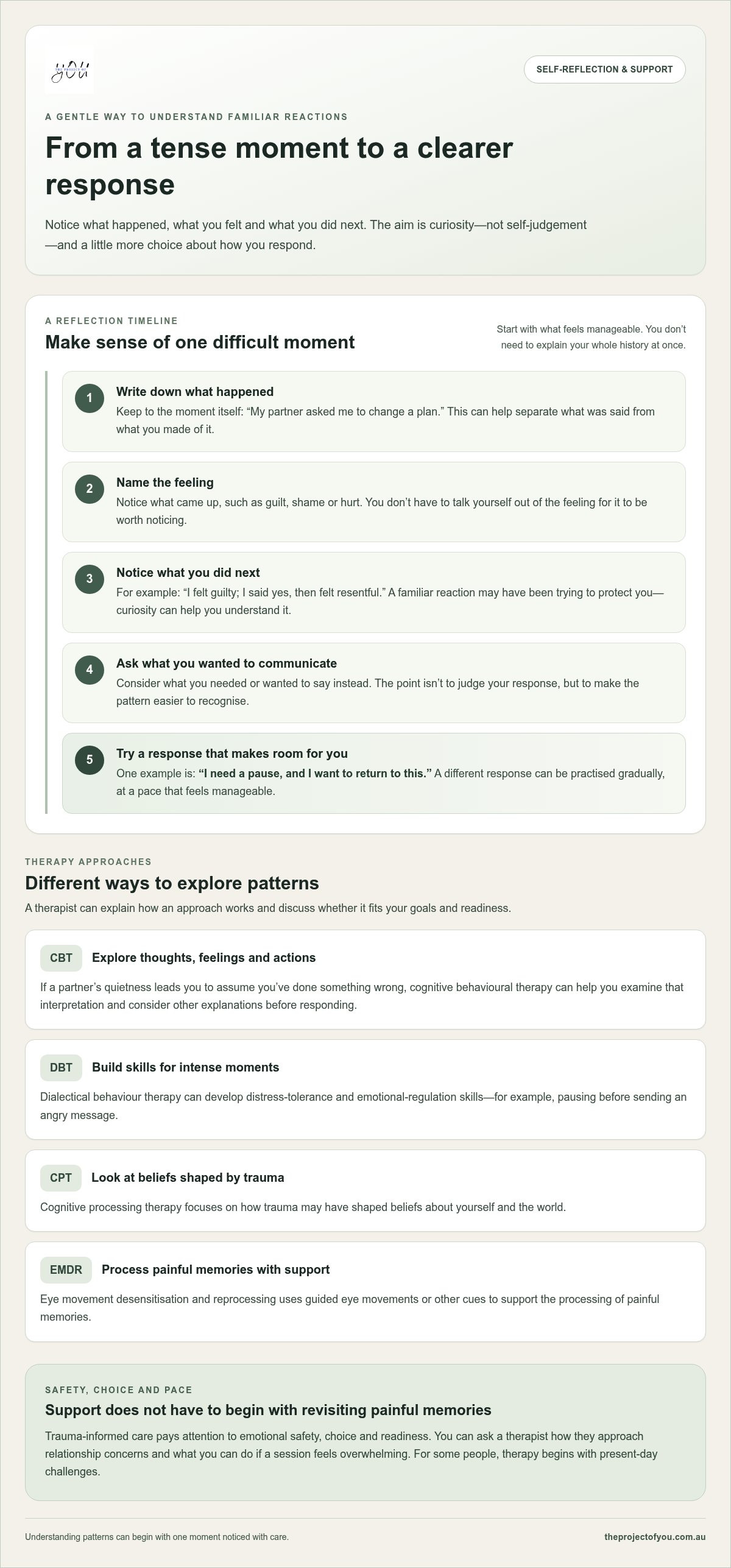
Therapy can help you understand how earlier experiences shape present reactions and practise different responses. Trauma-informed care prioritises safety, choice and pace, rather than pushing you to revisit painful memories before you feel ready. For example, if you agree to plans despite feeling exhausted, therapy can help you explore the fear or belief behind that choice and practise expressing what you need.
In Australia, look for a psychologist or therapist who describes their work as trauma-informed and can explain how they approach relationship concerns. Ask how they support emotional safety and what happens if a session feels overwhelming. Medicare rebates depend on the relevant eligibility criteria and arrangements. Services Australia provides information about Medicare eligibility and claiming. A rebate doesn’t automatically apply to every practitioner or appointment.
How therapy approaches can help
Cognitive behavioural therapy (CBT) can help you examine how interpretations shape feelings and actions. For instance, if a partner’s quietness makes you assume you’ve done something wrong, you can explore that thought and consider other explanations before responding. Dialectical behaviour therapy (DBT) can develop distress-tolerance and emotional-regulation skills. These approaches may help when negative self-beliefs or intense reactions affect everyday choices.
Cognitive processing therapy focuses on how trauma may have shaped beliefs about yourself and the world. Eye movement desensitisation and reprocessing (EMDR) uses guided eye movements or other cues to support the processing of painful memories. A therapist can explain how an approach works and discuss whether it fits your goals and readiness. For some people, therapy starts with present-day challenges rather than detailed discussion of past events.
Self-reflection between sessions
Self-reflection can help you notice patterns between sessions. After a tense conversation, write down what was said, what you felt and what you did next. For example: “I was asked to change a plan; I felt guilty; I said yes, then felt resentful.” Consider what you wanted to communicate instead. The aim isn’t to judge your response, but to make a familiar reaction easier to recognise.
For further support, you can book a counselling session and begin with the concern that feels most present. Understanding childhood trauma affecting relationships can also involve exploring how your earlier experiences influence choices today. With greater awareness, you can start identifying which patterns still protect you and which ones you’d like to change.
Therapy, self-reflection and unlearning dysfunctional patterns
Therapy can help you understand how earlier experiences shape present reactions and practise different responses. Trauma-informed care pays attention to safety, choice and the pace of conversations, rather than asking you to revisit painful memories before you feel ready. For example, if a disagreement leaves you unable to speak, therapy can help you explore what you notice, what you fear and what might help you stay present. Support can focus on your needs and goals.
To find a trauma-informed psychologist in Australia, look for someone who describes this approach and can explain how they work with relationship concerns. Ask how they support emotional safety, what methods they use and how you can signal if a session feels overwhelming. Medicare rebates don’t apply to every therapist or session; eligibility depends on the relevant requirements and care arrangements. Services Australia outlines current Medicare eligibility and claiming information.
How therapy approaches can help
Cognitive behavioural therapy (CBT) explores the links between thoughts, feelings and actions. If a delayed text brings the thought “I’m being rejected”, CBT may help you examine that interpretation and choose a response that fits the evidence. Dialectical behaviour therapy (DBT) develops skills for tolerating distress and regulating emotions, such as pausing before sending an angry message. These approaches can address unhelpful patterns without treating your reactions as character flaws.
Eye movement desensitisation and reprocessing (EMDR) uses guided eye movements or other cues to support the processing of painful memories. A trauma-informed therapist can explain the process and work collaboratively, taking readiness and emotional safety into account. Cognitive processing therapy focuses on how trauma may have shaped beliefs about yourself and the world. The approach can reflect what you want help with, such as current symptoms, relationship patterns or communicating your needs.
Self-reflection between sessions
Self-reflection can make therapy more useful by turning a difficult moment into information. After an argument, write down what happened, the feeling that followed and what you did. For instance: “My partner disagreed; I felt ashamed; I stopped speaking.” Then consider an alternative response, such as saying, “I need a pause, and I want to return to this.” Journalling isn’t about judging yourself or proving a memory; it can help you notice recurring patterns and possible responses.
If these patterns affect your relationships or daily life, booking a counselling session can offer space to explore them with support. You can begin with the concern that feels most present, without explaining your whole history at once.
Attachment styles
Attachment describes how people seek closeness, safety and reassurance in relationships. Early caregiving can influence these patterns, but adult experiences can shape them too.
Attachment patterns in adult relationships
Attachment patterns are familiar ways of responding to closeness, separation and emotional needs. Psychologist John Bowlby’s attachment theory explored how bonds with caregivers can influence later relationships. For example, one person may find it easy to ask for support, while another may expect rejection or prefer handling difficulties alone.
These responses may become more noticeable during change, such as moving in together or discussing commitment. One person might seek frequent reassurance, while their partner needs quiet time before talking. Recognising the pattern helps both people discuss what they need, rather than treating different reactions as evidence that someone doesn’t care.
Attachment anxiety and avoidance
Attachment anxiety can involve strong concerns about rejection or abandonment. A late reply might prompt repeated messages or worries that a partner is losing interest. Attachment avoidance can involve keeping emotional distance, changing the subject or feeling uncomfortable relying on someone. These patterns describe ways of coping, not fixed identities or diagnoses.
Some people alternate between seeking closeness and pulling away, especially when a relationship feels uncertain. Someone might ask for reassurance, then feel exposed and withdraw when it arrives. Noticing what happens before that shift can help: identify the trigger, name the feeling and consider what response would support connection and personal boundaries.
Attachment difficulties
Attachment difficulties arise when someone struggles to feel safe with closeness, trust another person or manage separation. They can affect everyday moments, such as making plans, sharing a worry or repairing tension after a disagreement. A partner’s need for time alone, for instance, may feel like rejection, even when they intend to reconnect later.
Interactions with caregivers and the emotional climate at home can influence a child’s developing expectations of relationships. Unpredictable care may leave someone unsure whether support will be available; rejection or neglect may make asking for help feel risky. These experiences can contribute to challenges in adulthood, though people’s histories and relationships differ. One pattern cannot explain every difficulty.
Building secure attachment and self-compassion
Secure attachment involves being able to seek closeness and support while maintaining a sense of self. It can develop through experiences of consistent care, honest communication and respect for boundaries. For example, partners can agree to pause during a difficult conversation, then return to it at a time they have both chosen.
Self-compassion means responding to difficulty with understanding rather than shame. Try saying, “I’m feeling anxious, and I can ask for reassurance without blaming myself.” Then share one specific need, such as a clear plan for reconnecting after time apart. Small, repeated moments of openness can make vulnerability feel more manageable.
Trust issues in adult relationships
Childhood experiences with caregivers can influence how safe it feels to depend on someone. In adult relationships, trust may be affected by expectations shaped by neglect, inconsistency or betrayal.
Trust and relationship security
Trust is the expectation that a partner will act with care and honesty over time. It supports relationship security by making everyday reliance feel less risky. For example, if your partner says they’ll call after work and follows through, that consistency can build confidence in their words.
When early care was unpredictable, a missed call may stir fears beyond the immediate situation. The University of Queensland found that people with a history of childhood trauma were significantly more likely to report difficulty trusting partners. That finding describes a connection, not a prediction about any individual. In a current relationship, try separating what happened from what you fear it means: “They haven’t called yet” is different from “They’ll leave me.”
Trust and intimacy challenges
Intimacy involves sharing thoughts, feelings and needs with another person. Trust challenges can make openness feel unsafe, so someone may keep conversations practical, avoid affection or feel uneasy when a partner asks personal questions. For instance, after a difficult day, they might say “I’m fine” rather than risk being dismissed or criticised.
Emotional or physical closeness can also bring uncertainty about whether a partner will respect boundaries. Agreeing on small, clear steps can make intimacy easier to approach: share one concern, ask how it lands, then pause and listen. If a partner responds with curiosity rather than pressure, that interaction can offer new information about the relationship. Intimacy grows through mutual respect, not forced disclosure.
Trust and vulnerability
Vulnerability means allowing another person to see a feeling or need you might usually protect. It matters because closeness depends on honest communication, while past experiences can make openness feel exposing. Saying, “I’m worried you’re upset with me; can we talk?” gives a partner a clearer way to respond than withdrawing without explanation.
Trust develops through repeated experiences, so vulnerability can start with a manageable request rather than a major disclosure. Ask for a specific kind of support, such as listening without offering advice, and notice whether your partner respects that request. If you feel overwhelmed, pause and use a grounding practice before continuing. Emotional regulation can help you stay present while choosing what you’re ready to share.
Healing trust challenges doesn’t require ignoring the past or relying on a partner for every need. It can involve noticing what helps you feel safe, communicating boundaries and observing whether care is consistent. A therapist can help you explore persistent trust difficulties and practise ways to build connection while protecting your wellbeing.
Childhood trauma and adult relationships
Childhood trauma can influence adults’ ability to trust, feel close and communicate openly. Common signs include withdrawing during tension, fearing rejection, struggling to express needs or repeating painful relationship patterns.
Common signs in romantic relationships
Signs are recurring responses that make closeness or conflict difficult, not proof of a diagnosis. For example, a partner’s quietness after work might lead to intense worry, repeated requests for reassurance or an assumption that affection has disappeared. Someone else may avoid difficult conversations, feel numb during intimacy or stay in an unsatisfying relationship because being alone feels harder.
These effects can vary with a person’s experiences, supportive relationships and access to help. A reaction may be connected to earlier harm, but one argument or relationship challenge cannot establish that connection. Notice whether the same fear or protective response appears across different partners, situations or stages of a relationship. That pattern can be a useful starting point for awareness.
Effects on trust and attachment
Early experiences can shape expectations about whether other people will be dependable and caring. If a caregiver was unpredictable, an adult may find it difficult to rely on a partner, even when that partner behaves consistently. They might check messages repeatedly, expect a change of heart or feel uneasy after a kind gesture. These responses can influence attachment and the ability to accept care, without defining someone’s capacity for a secure relationship.
Some people may also repeat familiar dynamics without intending to. Someone who learnt that love comes with criticism might tolerate harsh treatment or become highly critical themselves. This isn’t a deliberate choice or a personal failure; familiar responses can develop as ways of coping. Awareness helps distinguish what feels familiar from what supports respect, safety and mutual care now.
Communication difficulties
Trauma can affect how adults express thoughts and feelings, contributing to misunderstandings between partners. Someone may go quiet when asked what’s wrong, become defensive when receiving feedback or struggle to explain why a small disagreement feels overwhelming. Emotional numbing can also make it difficult to identify feelings before they show up as distance, frustration or a sudden change in tone.
A practical starting point is to slow the exchange and use specific language. Try, “I’m finding this hard to talk about, and I need a pause,” rather than leaving without explanation. Then agree when to return to the conversation. This supports communication without requiring either partner to know the whole history. Couples therapy can help partners understand recurring patterns together, while individual therapy offers space to explore personal experiences.
Childhood trauma can shape relationship patterns, but self-awareness and appropriate support can help adults explore its effects and practise new ways of relating. A therapist can help you consider how your history, current relationship and personal needs fit together.
Book a counselling session
The Project of You | Trauma, Couples & Relationship Therapy Australia: Nervous System Regulation & Restoration
The Project of You | Trauma, Couples & Relationship Therapy Australia offers Nervous System Regulation & Restoration for people who want to understand how stress responses affect connection and everyday life. If old relationship patterns leave you overwhelmed, guarded or disconnected, Individual Counselling can provide space to explore what’s happening and consider what support may help.
Sessions can focus on noticing body signals, understanding emotional responses and developing ways to feel more present in relationships. The aim isn’t to force disclosure or rush your process; it’s to approach your experiences with care and curiosity. Self Love e-Books and The Healing Feminine Workshops offer other learning formats for personal reflection.
You’re welcome to contact The Project of You to discuss support that feels right for you.
Choose one small step towards safer connection
If you’re noticing childhood trauma affecting your relationships, you don’t need to understand every part of your history before taking a next step. Begin with one familiar moment: what happened, what did you feel, and what would help you feel heard or respected now? That simple reflection can make room for a different response, without blaming yourself or your partner.
Change can involve learning at your own pace, practising clearer boundaries and finding support that feels emotionally safe. You might explore a recurring pattern in counselling or start by writing down questions you’d like to bring to a conversation. There’s no need to force vulnerability or rush towards a particular outcome. Your needs and readiness matter.
Book a session with The Project of You Each thoughtful step can create more space for trust, choice and connection.
Frequently Asked Questions
Can these behaviour patterns be changed?
Yes, people can learn new ways to respond, though change takes practice and support. Start by noticing one recurring moment, such as agreeing to something you don’t want, then consider what you needed and how you could express it next time. A therapist can help you understand the response and practise alternatives. Progress may mean recognising a pattern sooner, not never feeling distressed again.
Is it just in the brain?
No. Trauma’s effects aren’t limited to thoughts or brain processes. They can also involve body sensations, emotions, habits and relationships. For example, a tense meeting might bring a racing heart before you understand why you feel uneasy. Noticing physical cues alongside thoughts can help you respond with greater awareness. Current circumstances and a person’s support network also shape how they experience distress.
What is childhood maltreatment?
Childhood maltreatment is behaviour or a lack of care that harms a child’s dignity or threatens their physical or emotional wellbeing. It can include abuse, neglect, failing to protect a child, or witnessing domestic violence. These experiences can occur in relationships where adults hold power and responsibility, such as caregiving. A child doesn’t need to be physically injured to be affected by violence they witness at home.
How can childhood trauma affect adult relationships?
It can shape how an adult interprets closeness, disagreement and care. For instance, someone may struggle to accept a partner’s apology because past apologies were followed by further harm. Another person may find it difficult to ask for help, even when their partner is willing to listen. These responses can affect connection, but they don’t tell the whole story of a person or determine every relationship they’ll have.
What relationship patterns can result from childhood abuse or neglect?
Possible patterns include people-pleasing, avoiding disagreement, over-managing a partner’s needs or accepting poor treatment to preserve a relationship. Someone might also interpret neutral feedback as rejection or feel responsible for keeping everyone calm. These are possible ways of adapting to earlier experiences, not inevitable outcomes. Consider whether a behaviour protects you now or comes at a cost, such as resentment, isolation or difficulty expressing your preferences.
How can childhood trauma affect intimacy, conflict, and emotional regulation?
It can make closeness feel exposing, disagreements overwhelming or emotions difficult to settle. For example, after a partner raises a sensitive topic, someone may lose their words or respond sharply before understanding their feelings. A useful first step is to name the experience plainly: “I’m getting overwhelmed and need time to think.” Returning to the subject later can support communication without demanding an immediate answer.
What therapies help adults with childhood trauma and relationship problems?
Options include trauma-informed therapy, cognitive behavioural therapy (CBT), dialectical behaviour therapy (DBT), cognitive processing therapy and EMDR. CBT can explore how thoughts and actions reinforce distressing patterns; DBT can develop skills for managing strong emotions. EMDR uses guided eye movements or other cues to support processing painful memories. The approach depends on what you want help with, such as self-understanding, emotional regulation or relationship communication.
When should someone seek professional help for trauma-related relationship issues?
Consider professional support when recurring reactions cause distress, limit intimacy or make it difficult to communicate or maintain boundaries. You don’t need to wait until a relationship reaches crisis point. For example, if you repeatedly shut down during conversations and can’t explain what’s happening, a therapist can help you explore the pattern safely. Individual support may suit personal concerns; couples therapy can help partners understand shared relationship dynamics.



Comments