

Emotional affair signs: how boundaries, friendship and trust fit together

An emotional connection can cross a relationship boundary even when nothing physical has happened. As a relationship expert and psychotherapist, Azita Abdollahian has seen the warning signs time and time again. Common emotional affair signs include secrecy, romantic feelings and growing distance from a partner, especially when a close friendship is hidden or begins to replace intimacy at home.
It can be hard to tell where friendship ends and an emotional affair begins. Feeling unsettled doesn’t automatically mean someone has been unfaithful. The details matter: what’s being shared, what’s being kept private and how the connection affects trust between partners.
This article explains what defines an emotional affair, how it differs from a close friendship and why boundaries aren’t about controlling each other. You’ll also learn how honest communication and accountability can help create a path towards rebuilding trust, whether you’re concerned about a partner’s connection or reflecting on your own.
Table of Contents
What are emotional boundaries in a relationship?
Emotional boundaries are shared understandings about which connections protect a couple’s trust, intimacy and commitments. They become especially relevant when a friendship starts receiving the private attention a partner once received.
Emotional cheating as a relationship problem
Emotional cheating becomes a relationship problem when an outside connection threatens the couple’s commitment, trust or intimacy. The concern isn’t simply enjoying someone else’s company, but the pattern around that connection and its effect on the relationship.
For example, someone might tell a colleague about personal worries but avoid sharing those same thoughts with their partner. Feeling understood by someone outside the relationship can be comforting, particularly when things at home feel tense. It can also make the outside connection feel unusually compelling: each person may see mainly the other’s best side, without sharing everyday responsibilities.
Ask what the connection provides: companionship, interest, validation or relief from conflict? Then consider whether secrecy or romantic feelings have entered the picture. These details can help distinguish an unmet need from behaviour that may cross an agreed boundary.
Effects on trust and relationship wellbeing
Emotional infidelity can erode trust, create distance and leave partners feeling hurt, jealous or insecure. These effects matter because everyday moments, such as a private message or an unexplained change in plans, may begin to feel loaded with meaning.
When attention shifts away from a partner, communication can weaken and resentment can grow. A couple may spend less time sharing thoughts, affection or practical decisions, even without sexual contact. The impact depends on what happened, what was hidden and how each person understands their commitments.
Relationship difficulties can also come before an outside connection. Repeated arguments about parenting or little time together, for instance, may leave one partner feeling unseen. That context can explain the appeal of another bond, but it doesn’t remove the need to take responsibility for choices that damage trust.
Is emotional infidelity recognised in Australian divorce law? Emotional infidelity is not, by itself, a separate legal ground for divorce in Australia. Its effect on a relationship may influence personal decisions about separation, but it doesn’t alone determine a divorce outcome.
To reflect on your relationship, pause before treating one sign as proof. Consider these questions in light of a specific recent interaction:
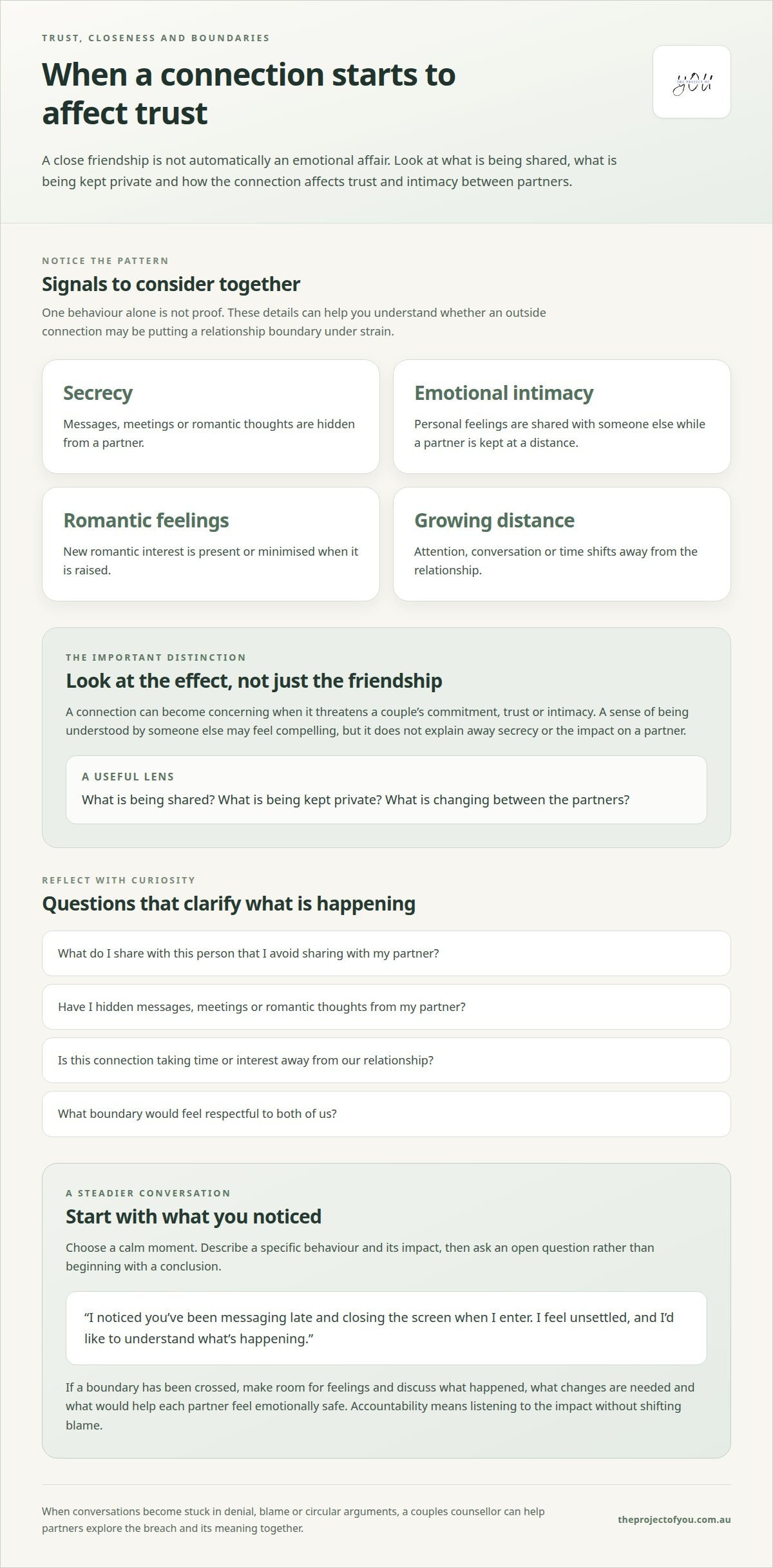
What do I share with this person that I avoid sharing with my partner?
Have I hidden messages, meetings or romantic thoughts from my partner?
Is this connection taking time or interest away from our relationship?
What boundary would feel respectful to both of us?
Your answers can point to unmet needs, a disagreement about boundaries or a breach of trust. Naming which feels closest gives you a clearer starting point for an honest conversation, without reducing either partner to a label.
What Is an Emotional Affair?
An emotional affair is a close connection outside a relationship that threatens the couple’s commitment, trust or intimacy. It may involve no sexual contact, yet secrecy and romantic feelings can still leave a partner feeling displaced or deceived.
Possible emotional affair signs are best understood as a pattern, not a verdict based on one message or friendship. A partner may hide conversations, share intimate feelings with someone else while withdrawing from you, or show new romantic interest that they minimise when asked. A sudden change in privacy can prompt questions, but it doesn’t prove what is happening.
Notice what has changed in daily life. Perhaps your partner used to tell you about work but now shares those details with a colleague and becomes guarded about their phone. Or they seem deeply engaged in messages while giving little attention to conversations at home. These are reasons to discuss what you’ve observed, not proof of an affair.
Unfair comparisons can make a difficult situation more painful. A new connection may feel easy because it hasn’t had to contend with shared bills, parenting, tired evenings or old disagreements. If your partner says the other person “understands me better”, ask what feels missing rather than competing with an idealised picture. That doesn’t excuse secrecy; it helps bring unmet needs into the conversation.
If you’re concerned, choose a calm moment when neither of you is rushing out the door. Describe specific behaviour and its impact: “I noticed you’ve been messaging late and closing the screen when I enter. I feel unsettled, and I’d like to understand what’s happening.” Then ask an open question, such as, “What does this connection mean to you?” Avoid starting with a conclusion. Couples can hear each other more clearly when the discussion begins with observations rather than accusations.
If your partner acknowledges crossing a boundary, make room for your feelings while asking what happened and what changes they’re willing to make. You might discuss contact with the other person, honesty about future communication and what each of you needs to feel emotionally safe. Accountability means listening to the impact without shifting blame; it doesn’t require an immediate decision about the relationship.
If the conversation keeps turning into denial, blame or circular arguments, support from a couples counsellor can help you explore the breach and its meaning together. You can book a counselling conversation if you’d like guided support to begin.
What is emotional cheating?
Emotional cheating describes an outside connection that threatens a couple’s trust, commitment or intimacy. The boundary depends on the relationship’s agreements and the effect of the connection, not simply whether sex has occurred.
Can an emotional affair happen without romantic or physical attraction? Yes. A connection can still breach trust when someone hides it or relies on it in ways that undermine intimacy with their partner, even without romantic or physical attraction.
Signs of emotional cheating
Signs may include secrecy, romantic feelings or sharing private thoughts with someone else while withdrawing from a partner. For example, a person might delete messages or turn to a friend for comfort after every disagreement while refusing to discuss the conflict at home. These behaviours matter as a pattern because they can shift emotional closeness away from the relationship.
Emotional cheating and physical infidelity
Emotional cheating centres on a private emotional bond; physical infidelity involves sexual contact outside the couple’s agreement. Either can damage trust, and one isn’t automatically more serious than the other. A partner may feel deeply betrayed by romantic messages, while another may focus on sexual contact. Naming the specific boundary crossed helps explain each person’s experience.
When emotional cheating may become physical
An emotional connection can move towards physical intimacy when boundaries shift and opportunities for private contact increase. That doesn’t mean physical infidelity will happen. Two people may, for example, begin with personal conversations, then arrange time alone and develop sexual interest. The important point is to address secrecy and changing agreements before either partner assumes what will happen next.
Emotional cheating versus platonic intimacy
Platonic intimacy is close friendship without hidden romantic or sexual feelings that undermine a couple’s agreements. A trusted friend might hear about a hard day while both partners know about the friendship and feel its boundaries are respectful. By contrast, hiding meetings or secretly nurturing romantic feelings can change the meaning of that connection. Openness and agreed boundaries help clarify the difference.
Reflection can help reveal why an outside bond has become important. Ask yourself what happens before you seek that person: loneliness after dinner, tension after an argument or a wish to feel admired. Then consider whether you’ve tried expressing that need to your partner. Understanding the context doesn’t excuse a breach of trust; it can show what needs attention and guide an honest conversation about intimacy, responsibility and boundaries.
Distinguishing friendship from an emotional affair
A close friendship can include affection, personal sharing and dependable support. It may move into emotional infidelity when romantic or sexual feelings develop and the connection, or parts of it, are hidden from a partner. The label matters less than the agreements and trust within your relationship.
Consider two everyday examples. In one, Sam tells their partner about a work friend, mentions their regular coffee catch-ups and welcomes questions. In another, Sam deletes messages, conceals those catch-ups and privately hopes the friend will become a romantic partner. Both involve closeness, but secrecy and romantic feelings change the meaning of the second connection.
Privacy and secrecy aren’t the same. A friend may share something confidential that isn’t yours to disclose, such as a colleague’s family difficulty. Secrecy becomes more concerning when someone hides their own choices to avoid a partner’s response, such as disguising late-night messages or giving a false account of a meeting.
Rather than treating one behaviour as proof of cheating, look at the pattern. You might reflect on these questions:
Would I describe this friendship honestly to my partner?
Do I change or hide details because I expect them to feel hurt?
Have romantic or sexual feelings appeared, even if I haven’t acted on them?
Is this connection replacing conversations or time I once shared with my partner?
What boundary have we actually agreed on, rather than assumed?
These questions aren’t a test with one correct answer. A couple may welcome close friendships but agree to discuss one-to-one time with an ex. Another couple may feel comfortable with private messages, provided neither person conceals romantic interest. Boundaries can differ; honest discussion helps each partner understand what feels respectful.
If you feel uneasy about your partner’s friendship, separate what you observed from what you fear it means. “I saw several messages late at night” describes an observation. “You’re cheating” states a conclusion. Starting with the observation can make room for a more useful conversation about the friendship, feelings and shared expectations.
If trust has been shaken, clarity usually takes more than a promise that “it’s only a friendship”. A partner can explain what the connection means, acknowledge any secrecy and listen to its impact. The other partner can describe what would help them feel respected without demanding control over every friendship. For example, agreeing to be open about one-to-one plans may address the concern better than banning all contact.
Rebuilding trust depends on what happened and whether both people can discuss it honestly. A friendship can remain important while its boundaries change. If romantic feelings, concealment or broken agreements are involved, naming those details plainly can help couples decide what needs attention next.
Taking responsibility and rebuilding trust
After emotional cheating, rebuilding trust starts with an honest account of what happened and why. If messages were hidden, for example, the person who hid them can explain the nature of the connection, acknowledge the secrecy and answer reasonable questions without minimising the impact. Context can help a couple understand the choices, but it doesn’t remove responsibility.
An apology is more meaningful when it names the behaviour and its effect. “I’m sorry you felt hurt” can make it sound as if the injured partner’s feelings are the problem. “I hid those conversations, and I understand that damaged your trust” takes clearer responsibility. The partner who was hurt may need time to absorb what they’ve heard before deciding what comes next.
Transparency means sharing relevant information openly, not offering details in fragments that keep changing. If a friendship crossed an agreed boundary, a couple might discuss when the connection began, what was kept private and whether contact will continue. Clear, consistent answers can give both partners a more reliable picture than repeated discoveries or vague assurances.
Boundaries work best when they are specific and mutually understood. A couple might agree to disclose one-to-one contact with the person involved, stop private romantic messaging or make time for regular conversations about how trust is changing. These agreements aren’t a shortcut; they give each partner something concrete to discuss and revisit.
The hurt partner can describe what would help them feel safer without being expected to suppress questions. The partner who caused harm can listen without turning each conversation into a defence. If a message notification triggers distress, for instance, both people might pause, name what is happening and agree on a calm time to talk rather than escalating the moment.
Trust is rebuilt through repeated actions that match words. If someone promises to be honest about contact and consistently follows through, their partner can observe that pattern over time. If the promise is broken, name the breach plainly and reconsider the agreement. Neither person has to pretend the betrayal no longer hurts just because an apology has been offered.
Some couples find it difficult to talk without returning to blame, shutdown or interrogation. Couples counselling can help create a steadier conversation, clarify what each person needs and support decisions about boundaries. It can also help partners examine unmet needs and relationship patterns surrounding emotional cheating, without treating those patterns as an excuse for secrecy.
Rebuilding trust doesn’t require an immediate promise to stay together. Each partner can be honest about what they can offer now, whether that’s continued conversations, clearer boundaries or time to consider the relationship. The next steps matter most when they’re discussed openly rather than assumed.
The Project of You | Trauma, Couples & Relationship Therapy Australia: Affair Recovery
The Project of You | Trauma, Couples & Relationship Therapy Australia offers Affair Recovery for people and couples working through the impact of a hidden or emotionally intimate connection. Support may be helpful when conversations keep circling, trust feels fragile, or you’re unsure how to set boundaries and decide what comes next.
With room to explore the hurt, unmet needs and choices involved, you can better understand each person’s experience without reducing the relationship to blame. The Project of You also offers Nervous System Regulation & Restoration to support steadiness when strong emotions make it difficult to talk or listen.
If you’d like support with what you’re facing, you’re welcome to contact The Project of You | Trauma, Couples & Relationship Therapy Australia.
Choose a next step that feels grounded
After a painful discovery, it can be tempting to seek certainty straight away. A steadier beginning may be to notice what you need to feel heard, respected and able to make choices that reflect your values. Recognising emotional affair signs can open a conversation, but it doesn’t have to decide the future of your relationship.
You might start by writing down what you want to ask or naming one boundary that would help you feel safer. If you’re not ready to talk together, individual counselling can give you room to understand your feelings before choosing what comes next. You don’t need every answer before taking one thoughtful step.
If you’d like support to explore your situation, you’re welcome to book a conversation with The Project of You.
Whatever you decide, move at a pace that honours your wellbeing and gives honest reflection room to grow.
Frequently Asked Questions
How is emotional infidelity different from a close friendship?
Emotional infidelity involves a connection that conflicts with the couple’s understanding of commitment, not simply closeness. A useful conversation is to describe what each of you considers private, romantic or relationship-focused, then compare your expectations. You may discover, for example, that one partner sees frequent personal conversations as ordinary friendship, while the other experiences them as intimacy that needs discussion.
What are common signs of an emotional affair?
Some emotional affair signs become clearer through their effect on everyday choices. Notice whether someone makes plans around a particular person, mentally compares them with their partner or feels unusually preoccupied after an interaction. These details can help you describe your concern without turning uncertainty into a firm conclusion. A single change in mood or routine still needs context.
How can you tell the difference between a close friendship and an emotional affair?
Consider what happens when a friendship meets a relationship boundary. Does the person accept a reasonable conversation about its impact, or insist that no discussion is allowed? If a partner says a particular interaction feels uncomfortable, for example, their response may show whether both people can make room for each other’s experience. That response is useful information, but it doesn’t settle the meaning of the friendship on its own.
Does secrecy or hiding messages indicate an emotional affair?
Hidden messages can raise concern, but their meaning depends on the wider circumstances. Before drawing a conclusion, consider what you know directly, what you’ve inferred and what remains unclear. If a message was concealed, ask about that choice rather than searching for certainty in every phone notification. A calm discussion about the reason for secrecy can clarify whether it relates to a boundary, privacy or another concern.
What behavioural changes may signal an emotional affair in a partner?
Emotional affair signs may include a noticeable shift in how a partner responds when a particular person is mentioned, or repeated defensiveness about plans involving them. Consider whether the change is specific to that connection or part of broader pressure, such as a demanding period at work. Noting what you actually observe can help you raise the concern accurately and avoid treating stress-related changes as proof.
What are the effects of an emotional affair on trust and mental health?
The effects can reach beyond a couple’s conversations. A person feeling betrayed may find it harder to concentrate at work, relax during shared downtime or feel settled when plans change. The person who concealed the connection may also carry guilt or worry about further conflict. If distress disrupts daily life, speaking with a mental health professional can provide support without requiring an immediate decision about the relationship.
How should you talk to your partner if you suspect an emotional affair?
Agree on a time to talk when neither person needs to leave soon, and decide what you want from that first conversation. You might seek clarity about one unresolved event rather than trying to settle the whole relationship at once. If voices rise or either person shuts down, pause and decide when to return to the discussion. A productive conversation can begin with understanding, not an instant verdict.
What boundaries can help prevent emotional affairs in a relationship?
Prevention starts with discussing what commitment means to both partners, including how each would handle developing feelings for a friend. You could also revisit expectations when a friendship changes, such as when contact becomes more frequent or emotionally significant. Boundaries are more useful when both people can explain the values behind them, rather than treating them as rules one partner imposes without discussion.



Comments