

Emotional numbness causes, symptoms and relationship effects

What if feeling nothing doesn’t mean you don’t care, but that you’re trying to cope with more than feels manageable? Emotional numbness is a sense of disconnection from your feelings, and possible emotional numbness causes include trauma, prolonged stress, grief, depression and some medications. It can be a protective response, but it may also make it harder to feel close to yourself or the people you love.
You might notice that joy feels muted, everyday tasks happen on autopilot, or it’s hard to name what’s going on inside. That can feel confusing, especially when someone close to you wants connection and you’re unsure how to respond. Psychotherapist and relationship expert Azita Abdollahian confirms this is a common thing she sees with her clients, and this doesn’t mean you’re uncaring or that your relationship is beyond repair.
This article explains emotional numbness causes, including how trauma, stress and medication may contribute, and what signs to notice. It also looks at how numbness can affect communication and intimacy, and when support may help you reconnect with your feelings.
Table of Contents
Can numbness be caused by trauma?
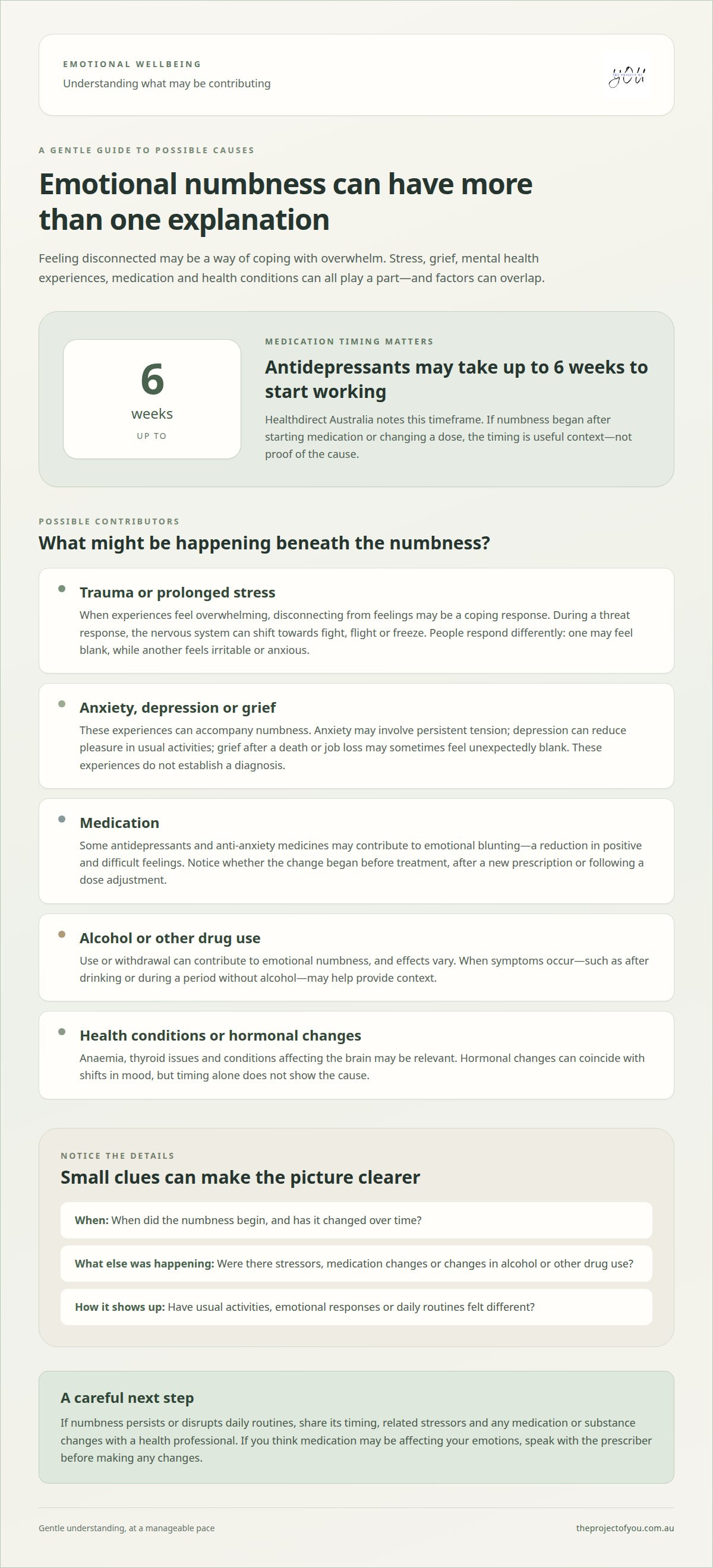
Yes. Trauma and prolonged stress can contribute to emotional numbness, as can anxiety, depression, grief, medication and some health conditions. These factors can overlap, so noticing when the feeling began may help you describe what’s happening.
Trauma and prolonged stress
Trauma or prolonged stress can lead someone to disconnect from feelings when experiences seem overwhelming. Numbness may be a coping response, rather than evidence that a person has stopped caring.
During a threat response, the nervous system can shift towards fight, flight or freeze. For example, after a frightening event, someone may feel detached while managing work or family responsibilities. Long-term stress can also leave someone feeling overloaded, making emotions harder to notice. Responses vary: one person may feel blank, while another feels irritable or anxious.
Anxiety, depression and grief
Anxiety, depression and grief can all accompany emotional numbness, though each person’s experience differs. Recognising this connection matters because numbness may appear alongside distress, rather than replacing it.
Someone with anxiety may feel persistently tense yet struggle to identify other emotions. Depression can involve a reduced emotional range, such as finding little pleasure in a favourite activity. After a death or job loss, a grieving person may feel unexpectedly blank. PTSD can also involve emotional disconnection. These experiences don’t establish a diagnosis, but they can be useful to discuss with a health professional.
Medication can be another factor. Some antidepressants and anti-anxiety medicines may contribute to emotional blunting, such as feeling less excitement or sadness than before treatment. If numbness began after starting medication or changing a dose, note when the change occurred and what you’ve noticed. Antidepressants may take up to 6 weeks to start working, according to Healthdirect Australia. Don’t stop or change prescribed medication without speaking with your prescriber.
Alcohol and other drug use can contribute to emotional numbness. Effects linked with substance use or withdrawal vary, so tell a health professional what you use and when symptoms occur. For example, note whether numbness appears after drinking, during a period without alcohol, or alongside anxiety. This information can help clarify possible contributors without assuming a single cause.
Some medical conditions may also affect emotions. Anaemia, thyroid issues and conditions affecting the brain can be relevant. Hormonal changes may coincide with shifts in mood, but timing alone doesn’t show the cause. A GP can assess your symptoms and consider whether a health condition needs attention.
If numbness persists or disrupts daily routines, describe its timing, related stressors, and any medication or substance changes to a health professional. That context can help guide the conversation.
Medication side effects
Medication can help manage a health condition, but some medicines may also affect how strongly you experience emotions. Emotional blunting can feel like a reduction in both positive and difficult feelings, rather than sadness alone. For example, someone may feel less excitement when seeing friends, but also find it harder to cry during a moving film. The effect can be subtle at first, especially when life is busy.
Some antidepressants and anti-anxiety medicines may contribute to emotional numbness as a side effect. That doesn’t mean medication is necessarily the cause: depression, anxiety, trauma, stress and grief can also change emotional experience. Timing offers useful context. Note whether symptoms began before treatment, followed a new prescription, or appeared after a dose adjustment. A brief record of mood, medication changes and daily activities can help you explain what you’re experiencing to your prescriber.
Notice the details, not just the label “numb”. You might feel less moved by music, find it harder to laugh, or feel as if ordinary tasks happen automatically. You may also feel emotionally distant from people while continuing familiar routines. Write down specific examples and when they occur. This gives your healthcare professional clearer information than a general sense that something feels different.
If you think medication is affecting your emotions, speak with the professional who prescribed it. They can consider your symptoms, the reason for treatment, the medicine and dose, and when the changes began. Depending on their assessment, they may discuss adjusting the dose or changing medication. Don’t stop or change a prescribed medicine on your own, as this can affect your treatment and how you feel. If side effects are difficult, say so plainly and ask what options are appropriate.
Medication can also be part of treatment for a condition linked with numbness. For example, someone experiencing depression may discuss medication to address symptoms while exploring emotional changes with a health professional. Treatment decisions take the whole picture into account, including daily functioning and other symptoms. The aim isn’t to force a particular feeling, but to understand possible contributors and what support makes sense.
Movement and exercise may support general wellbeing, but they don’t replace reviewing medication side effects with a prescriber. If a walk feels manageable, notice whether your mood or energy shifts afterwards, and share that observation alongside your medication notes. You don’t need to push through exhaustion or treat exercise as a test. The useful step is describing how activity, symptoms and treatment fit into your day.
If you’d like a space to explore emotional changes alongside treatment, you can book an individual counselling session. Counselling can help you put words to what you’re noticing while you continue medication discussions with your prescriber.
What Is Emotional Numbness?
Emotional numbness is a sense of disconnection from feelings, thoughts or experiences. You might understand that an event matters, yet notice little emotional response. For example, someone may receive welcome news but feel no excitement, or struggle to feel sadness after a loss. Emotional numbness isn’t a diagnosis by itself. Possible causes include difficult experiences and underlying health conditions.
For some people, numbness creates distance from feelings that seem overwhelming. It may last a few hours or days at a time, then shift as circumstances change. Over time, disconnection can make it harder to enjoy ordinary moments, make decisions or connect with people. Someone might keep attending work and family events while feeling as if they’re watching life from a distance.
Emotional numbing and dissociation are related, but they aren’t identical. Numbing describes reduced access to emotion; dissociation can also involve feeling detached from yourself or your surroundings. They can overlap. During a stressful conversation, for instance, someone might feel blank and experience the room as unreal. These words describe experiences, not a diagnosis you can make about yourself.
Consider professional support if numbness interferes with daily routines, relationships or activities you usually enjoy. Support may also help if the feeling persists or becomes difficult to manage. A health professional can explore when symptoms began and whether stress, grief, medication or a health condition may be relevant. The timing and context can guide that conversation.
Seek prompt professional help if numbness occurs alongside self-harm or thoughts of suicide. You don’t need to explain everything perfectly. Tell a trusted person or health professional what’s happening, using direct words such as, “I feel disconnected and I’m worried about my safety.”
Talk therapy can help you name emotions and connect experiences with feelings. A counsellor might explore what happens in your body when a difficult memory comes up, or what you notice during a conversation with someone close. Cognitive Behavioural Therapy, trauma-focused therapies and mindfulness-based approaches are among the approaches used for emotional numbness. The focus depends on your needs and circumstances.
Therapy doesn’t require you to produce a strong emotion on demand. You could start by noticing, “I feel blank when my partner asks how I am,” then exploring what happens before and after. Naming details, such as tension in your shoulders or wanting to leave the room, can build awareness without forcing a particular response.
If you’re unsure what support might fit, describe a recent example to a GP or mental health professional. Include what was happening, how numbness affected your day, and whether it changed your relationships or usual activities. These details offer a practical starting point for exploring possible causes and support.
Emotional numbness and its symptoms
Emotional numbness can affect feelings, interest, connection and everyday choices. Someone experiencing it might know a birthday matters but feel little excitement, or struggle to respond when a friend shares difficult news. Numbness may occur across many situations, not just during sadness. It can be temporary or continue alongside depression, anxiety, trauma or prolonged stress. A symptom alone doesn’t explain why it’s happening.
Look for changes from your usual patterns. For example, you might stop calling a close friend, avoid a hobby you once enjoyed, or move through household tasks on autopilot. Some people describe an uncomfortable sense that something is missing inside. Others notice that strong emotions feel distant, while irritation or anxiety still breaks through. Symptoms vary from person to person and don’t always occur together.
Reduced emotional range: a favourite song, family celebration or good news brings little response.
Difficulty naming feelings: when asked how your day went, you can describe events but not your emotional reaction.
Social withdrawal: you decline a regular coffee with a friend because conversation feels effortful.
Loss of interest: an activity such as gardening or playing sport no longer draws you in.
Autopilot: you complete a familiar commute or prepare dinner without feeling present.
Changes in time or attention: a meeting seems to pass in a blur, or you struggle to stay engaged.
Depression can involve a reduced emotional range, including feeling flat or emotionally numb. Similar experiences can also arise with grief, stress, trauma or medication effects. Consider the pattern rather than one difficult afternoon: has your interest changed, do you feel disconnected in different settings, and is it affecting work, rest or relationships? These observations provide useful detail without turning a symptom list into a diagnosis.
To describe what’s happening, choose a recent moment and note what occurred, what you noticed in your body, and what you did next. For instance: “At dinner, I felt blank when my family celebrated; I stayed quiet and wanted to leave.” That concrete example can help you explain your experience to a health professional. You might also notice whether sleep, stress or a particular interaction changes how present you feel.
Try not to force happiness or judge yourself for a muted response. Instead, make room for small, low-pressure experiences, such as stepping outside, listening to a familiar song or sharing a quiet meal. Notice any shift, even if it’s simply feeling more present for a moment. If numbness interferes with daily life or enjoyable activities, or self-harm is involved, seek professional support.
Emotional numbness in relationships
Emotional numbness can make a close relationship feel distant, even when care is still present. You might sit beside your partner at dinner and struggle to share what’s happening inside. They may read your silence as disinterest, while you feel detached or unsure how to respond. Neither reaction alone explains the situation. The distance can become a shared pattern, rather than one person’s fault.
When someone feels overwhelmed, withdrawing from emotional conversations may seem like a way to cope. But avoiding those conversations can leave feelings unspoken and reinforce disconnection over time. For example, one partner asks about a difficult day, the other says “I’m fine” and changes the subject, and both leave feeling unseen. The pattern is understandable, but repeating this exchange can make emotional intimacy harder to rebuild.
Numbness can also affect how a couple handles conflict. A partner who feels blank may go quiet during an argument, while the other tries harder to get a response. That pursuit and withdrawal can intensify tension without either person intending harm. If medication may be contributing to emotional blunting, discuss that possibility with the prescriber rather than treating distance as proof of lost affection.
Small, clear statements can make a difficult moment easier to understand. For instance, you could say:
“I’m feeling disconnected, and I’m trying to understand why.”
“I care about this conversation, but I need a pause before I can respond.”
“Could you listen while I find the words, rather than looking for a solution yet?”
These phrases describe your experience without blaming your partner or promising a particular response. A pause can support a calmer conversation when you agree on when to return to it.
Curiosity helps both people explore what the distance means. Ask yourself whether you feel numb in other parts of life or mainly during particular interactions. Your partner might share what they notice, such as fewer affectionate gestures or less conversation at breakfast. Compare observations gently. A change in touch or communication is information to explore, not a verdict about the relationship.
If numbness is affecting trust, affection or everyday communication, relationship counselling can offer a supported space to understand the pattern. Individual mental health support may also help when disconnection extends beyond the relationship or feels difficult to manage. The aim is to make room for honest conversation and emotional safety, without pressuring either person to produce feelings on demand.
The Project of You | Trauma, Couples & Relationship Therapy Australia
The Project of You | Trauma, Couples & Relationship Therapy Australia offers individual counselling for people seeking to understand emotional numbness and its effects on daily life or relationships. Sessions provide space to explore possible contributors, notice emotional and nervous system responses, and consider a supportive next step without forcing feelings.
Depending on what you’re looking for, Nervous System Regulation & Restoration may also be relevant when you want to build awareness of your responses and work towards feeling more grounded. Support can be useful when numbness persists, affects connection with others, or feels difficult to make sense of alone.
If you’d like to discuss support, contact The Project of You | Trauma, Couples & Relationship Therapy Australia.
Take a gentle next step towards connection
You don’t need a complete explanation before seeking support. Beginning with what you’ve noticed, such as feeling distant from someone you love or less present in daily life, can be a starting point for reflection. Understanding which emotional numbness causes may be relevant to you can take time. Your experience deserves curiosity rather than self-judgement.
Support can help you explore what feels safe to approach, build awareness of your emotional responses and consider how you want to relate to others. You can move at a pace that respects your circumstances and leave room for questions as they emerge.
Even a small step towards understanding yourself can open space for new choices. You’re allowed to begin wherever you are.
Frequently Asked Questions
Why do I feel numb in my relationship?
You may feel numb with a partner when closeness, conflict or vulnerability feels difficult to manage. It can also reflect stress or emotional disconnection beyond the relationship. Notice whether the feeling appears during particular moments, such as after an argument or when discussing the future. Sharing one observation, like “I go quiet when we talk about money”, can open a conversation without assigning blame.
What actually helps?
Start with a small, specific observation rather than trying to force an emotion. You could pause after a conversation and name a body sensation, such as a tight jaw, or describe what you wanted to do next. Regular rest, gentle movement and supportive connection may help you notice your experience. If numbness affects daily life, a health professional can help explore possible contributing factors and support options.
What triggers it?
Emotional numbness may follow overwhelming experiences or periods when demands feel unmanageable. A tense interaction, a major change, reminders of a painful event, or a shift in medication may coincide with its onset. Triggers differ between people. Noting what happened before the feeling appeared, and what was happening in your body or surroundings, can help you and a health professional identify patterns without assuming one event explains everything.
Why do people feel disconnected from their emotions?
People can become disconnected from emotions when their attention is focused on coping with immediate demands. For example, someone caring for an unwell family member may organise appointments and meals while barely noticing their own feelings. Past experiences can also shape how safe it feels to express emotion. Disconnection is an experience to understand, not a character flaw or proof that someone lacks care for others.
Why do I feel nothing?
Feeling nothing can mean emotions are hard to access or name, rather than proving they’re absent. Try describing what you notice in a particular moment: your energy, body sensations, thoughts and urge to act. For instance, you might not identify sadness but notice heaviness and a wish to be alone. If this feeling persists or disrupts your life, discuss it with a health professional.
Why does emotional numbing happen?
Emotional numbing can arise in response to strain, painful experiences or a mental health concern. Distancing from feelings may help someone keep functioning during a demanding period, but it can also make enjoyment and connection harder. The reason isn’t always clear from the feeling alone. Consider when it began, what else changed around that time, and whether it appears across different parts of life.
Can depression or anxiety cause emotional numbness?
Yes, emotional numbness can occur alongside depression or anxiety, though it doesn’t confirm either condition. Someone with anxiety might feel restless and alert while struggling to access affection or excitement. Depression may involve reduced interest or a narrower emotional range. A health professional can consider the full picture, including changes in sleep, energy, concentration and daily functioning, rather than interpreting numbness in isolation.
Can trauma, PTSD or grief cause emotional numbness?
Yes, trauma, PTSD and grief can be associated with emotional numbness. After a distressing event, someone may feel detached in situations that bring back reminders, while grief can include periods of blankness alongside other reactions. People respond differently, and numbness alone cannot establish PTSD or explain its cause. If memories or loss are affecting daily life, professional support can help you explore them at a manageable pace.



Comments