

Fear of intimacy in men and communicating with greater openness

What if intimacy isn’t about sharing everything at once, but learning to feel safe enough to let someone know you? Emotional intimacy grows through trust, openness and vulnerability. It can exist in friendships as well as romantic relationships, and it isn’t the same as sex. Fear of intimacy in men can make emotional closeness uncomfortable, even when connection is deeply wanted.
You may recognise this in yourself or someone you care about: difficult conversations get avoided, feelings are hard to put into words, or closeness is followed by distance. These patterns aren’t a diagnosis or a reason to blame yourself or your partner. In fact, relationship expert and couples counsellor Azita Abdollahian says they can be a starting point for understanding what makes vulnerability difficult.
This article explores what intimacy means, how fear can shape friendships, romantic relationships and communication, and how trust can grow through small, gradual steps. It also considers how past experiences, expectations of masculinity and emotional safety may play a part, and when professional support could help you find a more open way forward.
Table of Contents
1. Can fear of intimacy affect friendships and romance?
Yes. Intimacy includes emotional openness, physical affection and shared experiences; it isn’t limited to sex or romantic relationships. A man might feel comfortable holding hands but struggle to explain what’s troubling him, or enjoy a close friendship while avoiding conversations about grief, shame or fear. Different forms of closeness can feel safe or challenging in different ways.
Friendships can be affected when a person keeps conversations light, cancels plans as connection deepens, or turns to work and hobbies instead of talking. For example, a friend may offer practical help after a difficult week but find it hard to ask, “How are you really feeling?” That doesn’t make the care insincere. It may show that emotional expression feels unfamiliar or exposing.
In a romantic relationship, emotional distance might look like withdrawing after a partner shares something personal, avoiding affection, or starting an argument when closeness increases. Being absorbed in a phone during a serious conversation can also interrupt connection. These behaviours matter as patterns, not isolated moments: tiredness, stress or a need for space can have other explanations.
How can you distinguish fear of intimacy from lack of interest or commitment? Look for a repeated push-pull pattern: someone seeks connection, then retreats as emotional closeness grows, while still showing care in other ways. This pattern alone can’t explain why it’s happening. A calm, direct conversation about what each person wants can clarify whether both are willing to build the relationship together.
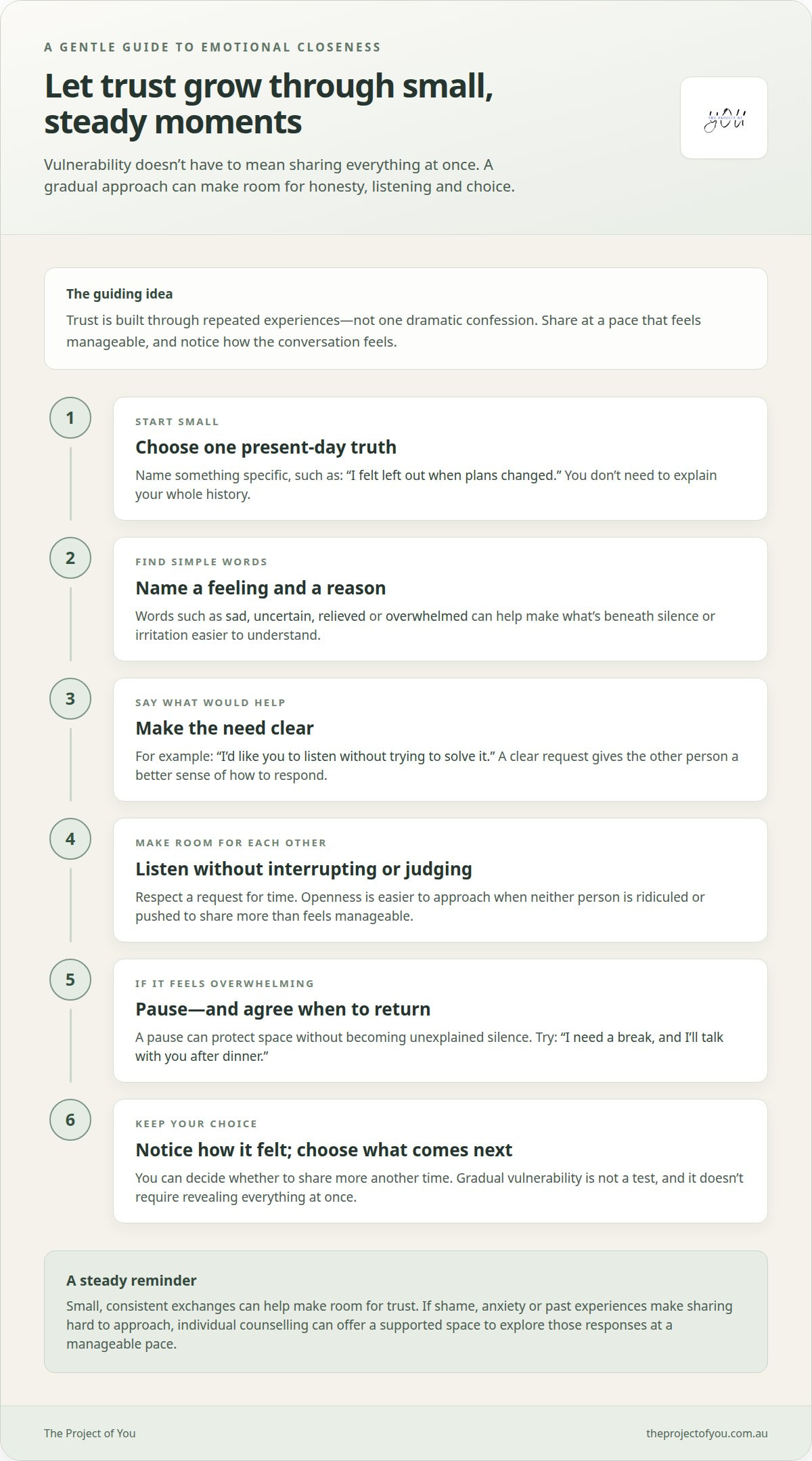
Trust grows through small, consistent exchanges. Try naming one feeling and one need: “I’m anxious about this conversation, but I want to stay with it,” or “I need a little time, then I’ll come back to talk.” Emotional vocabulary doesn’t need to be elaborate. Words such as sad, uncertain, relieved or overwhelmed can help a partner understand what’s beneath silence or irritation.
Physical intimacy can include affection, touch and sex, but it doesn’t automatically mean emotional closeness. Someone may welcome physical contact while holding back personal feelings, or want emotional connection without wanting sex. Asking before initiating touch, noticing whether affection feels mutual, and respecting a partner’s boundaries can help both people feel respected. Shared activities, such as cooking together, can also create connection without requiring immediate disclosure.
If a conversation becomes overwhelming, pause and agree when to return to it rather than disappearing without explanation. If anyone is in immediate danger in Australia, call 000, according to the Australian Government.
2. Vulnerability and expectations of masculinity
Ideas about masculinity can shape what feels safe to share. A man may have learnt to value self-reliance, control or being the person who solves problems. If sadness or uncertainty was treated as weakness in his family, he might find it difficult to name those feelings with a partner. These expectations aren’t universal, and they don’t define every man’s experience. They can, however, make openness feel unfamiliar or risky.
Vulnerability can bring up defensiveness or irritation, especially when someone asks, “What’s going on for you?” A person might joke, change the subject or say, “I’m fine,” before recognising what he actually feels. That response may protect him from embarrassment or rejection in the moment, while leaving his partner unsure how to connect. Recognising the reaction is a first step, not a reason to judge himself.
Some people feel exposed or unsettled after sharing something personal. This is sometimes called a vulnerability hangover. For example, after telling a partner about a painful memory, a man might replay the conversation, regret saying so much or feel an urge to withdraw. The discomfort doesn’t automatically mean he shared too much or made a mistake. It can help to pause, notice what’s happening in his body and choose a steadying action, such as taking a slow breath or going for a short walk.
Sharing vulnerability doesn’t require revealing everything at once. A manageable step could be naming one feeling and one reason: “I’m worried about work because I don’t know what happens next.” He can then say what would help, such as being listened to without someone trying to solve the problem. Specific words make the conversation easier to follow and give the other person a clearer way to respond.
Partners can support openness by listening without interrupting, avoiding ridicule and respecting a request for time. If a conversation becomes tense, either person can suggest a pause and agree to return to it later. Making that return clear matters: “I need a break, and I’ll talk with you after dinner.” This protects space without turning it into unexplained silence.
With practice, emotional expression can become a skill rather than a test of character. If shame, anxiety or past experiences make sharing feel hard to approach, booking mental health counselling can offer a supported space to explore those responses at a manageable pace.
4. Building trust through gradual vulnerability
Trust is built through repeated experiences, not one dramatic confession. If sharing personal feelings feels risky, start with a small, present-day truth: “I felt left out when plans changed.” This gives a partner something specific to understand without requiring a full account of painful history. Notice how the conversation feels, then choose whether to share more another time.
Gradual steps can make vulnerability feel more manageable. A person might first say, “I’m finding this hard to talk about,” before explaining why. He could share one concern with a trusted friend, then reflect on what helped him stay in the conversation. The aim isn’t to push past every boundary. It’s to make room for closeness while keeping a sense of choice and personal safety.
Trust also grows through follow-through. If someone says they’ll return to a difficult conversation, coming back when agreed shows care and reliability. If a partner shares something sensitive, listening without teasing or using it against them helps create emotional safety. These ordinary actions matter because both people learn whether openness is met with respect, patience and interest.
Each partner has a part in building connection. One person can practise naming feelings, while the other asks what kind of response would help: listening, reassurance or practical support. For example: “I’m embarrassed about what happened; could you hear me out before offering advice?” This makes the need clearer and reduces the pressure to guess or fix everything immediately.
Trust can also grow when partners support each other’s independence. If one person is preparing for a course or career change, the other might ask what support would be useful, then respect their need to focus alone. Checking in later without taking over communicates care while allowing each person to keep their own goals and sense of agency.
After opening up, someone may feel exposed and want to retreat. Instead of treating that reaction as proof that sharing was a mistake, he can notice the feeling, ground himself and decide what he needs next. A calm sentence such as, “I’m feeling a bit raw after saying that, but I’m glad I told you,” can help keep the connection intact.
Past experiences, attachment patterns and mental health can influence how safe closeness feels. If attempts to build trust keep ending in withdrawal or conflict, attachment-based therapy can help people explore these patterns and practise new ways of relating. Progress can be uneven; returning to honest, respectful communication after a difficult moment is part of the process.
5. Communication and active listening
Partners can support a man who fears intimacy by inviting honest conversation without taking responsibility for his emotional work. They can state what they need from the relationship and what behaviour they won’t accept, while leaving him free to decide whether he’s ready to engage.
A useful starting point is a regular, low-pressure check-in. Rather than waiting until frustration builds, one partner might ask, “What’s been taking up your attention lately?” A specific, open question can make it easier to begin than a broad question that feels like a test. If he isn’t ready to answer, his partner can explain why the conversation matters to them.
Clear statements about personal experience can reduce blame. “I miss having time together during the week” describes an impact more clearly than “You never make an effort.” The other person can respond to the actual concern, rather than defending themselves against a sweeping judgement. This approach also gives both partners room to explain what’s been happening from their perspective.
When a partner says, “You’re reading too much into it,” avoid debating whether that interpretation is correct. Bring the discussion back to one observable issue: “I’m talking about the plans we changed yesterday, and how we’ll handle that next time.” Addressing one subject at a time can help keep the exchange focused and less overwhelming.
Communication also includes naming what’s working. MensLine Australia recommends expressing gratitude so a partner feels seen, valued and understood. Rather than offering general praise, mention a particular moment: “I appreciated you telling me you were nervous before the family lunch.” This recognises openness without turning it into a demand for more disclosure.
Partners can discuss what kind of relationship they want and how much time together, privacy and independence each person needs. One might prefer a planned evening together, while the other values unstructured time alone. Naming these preferences allows them to explore options, such as protecting a shared evening while keeping separate plans at other times.
Boundaries make that conversation honest. For example, someone might say, “I want closeness, but I won’t keep discussing this if I’m being mocked.” This states what they will do to care for themselves; it isn’t a way to control the other person. Support means making invitations, not repeatedly pursuing someone who declines to engage.
Active listening can help clarify what has been heard, but it doesn’t require agreeing or fixing the issue. A simple check, such as “Have I understood what matters most to you?”, gives the speaker a chance to clarify. Over time, these specific exchanges can help partners discuss needs without making either person responsible for the other’s choices.
5. How can fear of intimacy affect men's romantic relationships and mental health?
Fear of intimacy in men can make being emotionally known feel risky, even when a relationship matters deeply. Someone may carefully manage what a partner sees, sharing opinions about work but keeping personal hopes private. This can create a gap between the life they share on the surface and the connection each person wants to feel.
Over time, that gap may leave a partner unsure where they stand. For instance, a couple might make practical decisions together, such as managing household tasks, while avoiding discussions about future plans or emotional needs. The uncertainty can make ordinary choices feel loaded, because neither person knows whether the relationship is moving towards greater commitment or staying as it is.
Self-protection can also narrow the kinds of support a man accepts. He might insist on handling a setback alone, even when his partner wants to help. His intention may be to avoid feeling dependent or exposed; his partner may experience the refusal as a sign that their care isn’t welcome. Naming the need beneath the response can help both people understand the mismatch.
Emotional distance can affect relationship satisfaction and sexual desire. A couple might share routines but find it hard to talk about what affection means to each of them. One partner may want more closeness, while the other feels pressure to perform or provide reassurance. Talking about preferences and comfort can help them distinguish wanting connection from feeling ready for a particular kind of closeness.
These patterns can also affect mental wellbeing. If someone repeatedly keeps worries private, he may have fewer opportunities to feel understood or ask for practical support. A difficult week at work, for example, can become more isolating when he tells his partner only that he’s busy. That isolation doesn’t prove a mental health condition, but it can be a reason to pay attention to his wellbeing.
Try noticing one situation that leads to emotional distance. Ask yourself: what did I want to protect, what did I expect my partner would do, and what could I communicate instead? A sentence such as “I want your support, but I’m not ready for advice yet” can clarify a need without requiring a full account of its history.
If these patterns keep affecting connection or everyday wellbeing, professional support can help someone explore their concerns and consider practical ways forward. Individual counselling may help with understanding personal responses; couples support can help partners discuss how the pattern affects them together. Neither requires deciding in advance what the relationship should become.
The Project of You | Trauma, Couples & Relationship Therapy Australia
The Project of You | Trauma, Couples & Relationship Therapy Australia offers individual counselling for people who want to understand why emotional closeness feels difficult and practise communicating more openly. Support can help you explore how past experiences, shame or anxiety may shape your responses, while respecting your pace and boundaries.
If tension or overwhelm makes honest conversations harder, Nervous System Regulation & Restoration may also be relevant. The aim is to make space for reflection and more considered ways of connecting, not to force disclosure or promise a particular outcome.
If you’d like support exploring these patterns, contact The Project of You | Trauma, Couples & Relationship Therapy Australia.
Take the next step towards more open connection
Fear of intimacy in men isn’t a fixed identity or a verdict on someone’s capacity to love. It can be a pattern shaped by experience, and recognising it creates room to respond differently. You might begin by noticing what happens just before you withdraw, become defensive or change the subject. That moment can offer a useful place to pause and choose what you want to communicate.
Change doesn’t require perfect words or constant openness. It can start with an honest sentence, a thoughtful boundary or a willingness to return to a conversation after taking space. If you’re supporting someone, stay curious about their experience while taking your own needs seriously. Both matter.
Seeking support can help you explore what closeness brings up and find a pace that feels workable. You don’t have to have everything figured out before taking that step.
There is room to practise, reflect and build a more honest way of relating, one step at a time.
Frequently Asked Questions
What is intimacy?
Intimacy is a sense of knowing and being known, built through trust, care and shared experience. It can be emotional, such as discussing a decision that matters; physical, such as affectionate touch; or experiential, such as tackling a challenge together. People differ in which forms feel comfortable. Intimacy also includes respecting privacy and individuality, rather than expecting two people to share every thought or always agree.
Can fear of intimacy affect friendships as well as romantic relationships?
Yes. Fear of intimacy can affect any relationship where trust and openness matter, including long-standing friendships. A person might be dependable when a mate needs practical help but avoid talking about his own loneliness. Friends can make connection easier by inviting him to a familiar activity and allowing conversation to unfold naturally, rather than treating every catch-up as a serious emotional check-in.
Does your attachment style shape your fear of intimacy?
Attachment patterns can influence how someone responds to closeness, conflict and reassurance. A person with avoidant tendencies might rely heavily on self-sufficiency, while someone with anxious tendencies might worry about losing connection. These are ways of understanding relationship habits, not fixed labels or diagnoses. The same person may respond differently across relationships, and attachment patterns can shift through experiences of safety, reflection and supportive relationships.
How does childhood trauma cause fear of intimacy?
Childhood trauma can affect intimacy if closeness became associated with danger, unpredictability or unmet needs. For example, a child who was criticised for expressing sadness may later conceal distress from a partner. This connection isn’t automatic: people respond to early experiences in different ways, and intimacy difficulties can have other influences. Exploring what feels unsafe now can help distinguish present-day relationships from earlier experiences.
Why do I crave intimacy but push people away?
You may want affection and companionship while also anticipating rejection, criticism or loss of independence. That conflict can lead you to seek reassurance, then feel exposed and withdraw when it arrives. For instance, you might miss someone after cancelling plans but feel tense when they suggest getting closer. Noticing what you predict will happen before pulling away can help you understand the protective purpose of your response.
What are some common mistakes people make when trying to overcome fear of intimacy?
Common missteps include forcing a deeply personal disclosure before trust is established, expecting a partner to remove all discomfort, or treating one difficult conversation as proof of failure. Another is using a relationship label, such as “avoidant”, to explain every disagreement. A more useful approach is to choose a manageable change, agree on boundaries, and review what felt helpful afterwards. If either person feels overwhelmed, slow the pace.
What are the signs of fear of intimacy in men?
Possible signs include keeping relationships emotionally light, feeling uneasy when a partner asks personal questions, or avoiding future plans despite expressing interest. Someone might also criticise potential partners harshly or use humour to sidestep emotional topics. These behaviours can have different explanations, including stress or incompatible needs. Look for a recurring pattern and its effect on connection, rather than interpreting one moment as proof.
What causes fear of intimacy in men?
Fear of intimacy in men can be shaped by earlier rejection, painful relationships, anxiety, attachment patterns or expectations that men should hide vulnerability. These influences may interact, rather than one cause explaining everything. For example, after a relationship ends painfully, someone may keep new connections casual to avoid being hurt again. Understanding the personal context can help identify what feels threatening and what kind of support may be useful.



Comments