

Feeling disconnected from your husband? Explore ways to rebuild closeness

What if feeling disconnected from your husband is a pattern you can begin to understand together, rather than a sign that either of you is to blame? Relationship expert and couples counsellor Azita Abdollahian understands that the distance can feel lonely, especially when everyday conversations stay on the surface. You don’t have to face it without support.
Closeness rarely returns through one big conversation or gesture alone. Couples counselling can help you recognise recurring patterns, listen with greater care and practise different ways of responding. It isn’t about deciding who’s at fault; it’s about making room for both of your experiences.
This article explores how vulnerability, changed behaviour and shared rituals can help rebuild connection, and when individual counselling may be useful alongside couples work. You’ll also find gentle ways to start a conversation and consider what support might suit your situation.
Table of Contents
1. Can couples therapy really help when you feel disconnected?
Yes, couples counselling can help partners understand emotional distance and practise new ways of responding. If you’re feeling disconnected from your husband, you may still love him while feeling unseen, unheard or alone beside him. Perhaps you talk about shopping, school pick-ups or dinner, but find it hard to share what’s worrying you. That gap can make intimacy feel far away, even when you’re both committed to the marriage.
Disconnection often shows up in small moments. One partner tries to talk after work while the other keeps looking at their phone. A bid for closeness goes unanswered, and both retreat. Conflict may grow sharper, or silence may replace difficult conversations. Rather than deciding who’s at fault, couples counselling can help you notice the shared pattern: what happens before either person withdraws, what each may be feeling, and how the cycle could change. Seeking support before distance hardens into resentment can make it easier to explore these patterns together.
Emotionally Focused Therapy (EFT) is one approach that helps couples understand the feelings and needs beneath repeated conflict or withdrawal. A therapist may help each partner slow down a familiar argument and express what lies underneath, such as fear of rejection or a longing to matter. This isn’t about making either person the problem. It creates room to hear each other and respond with more care. For example, “You never listen” might become, “I miss feeling close when we don’t talk after dinner.”
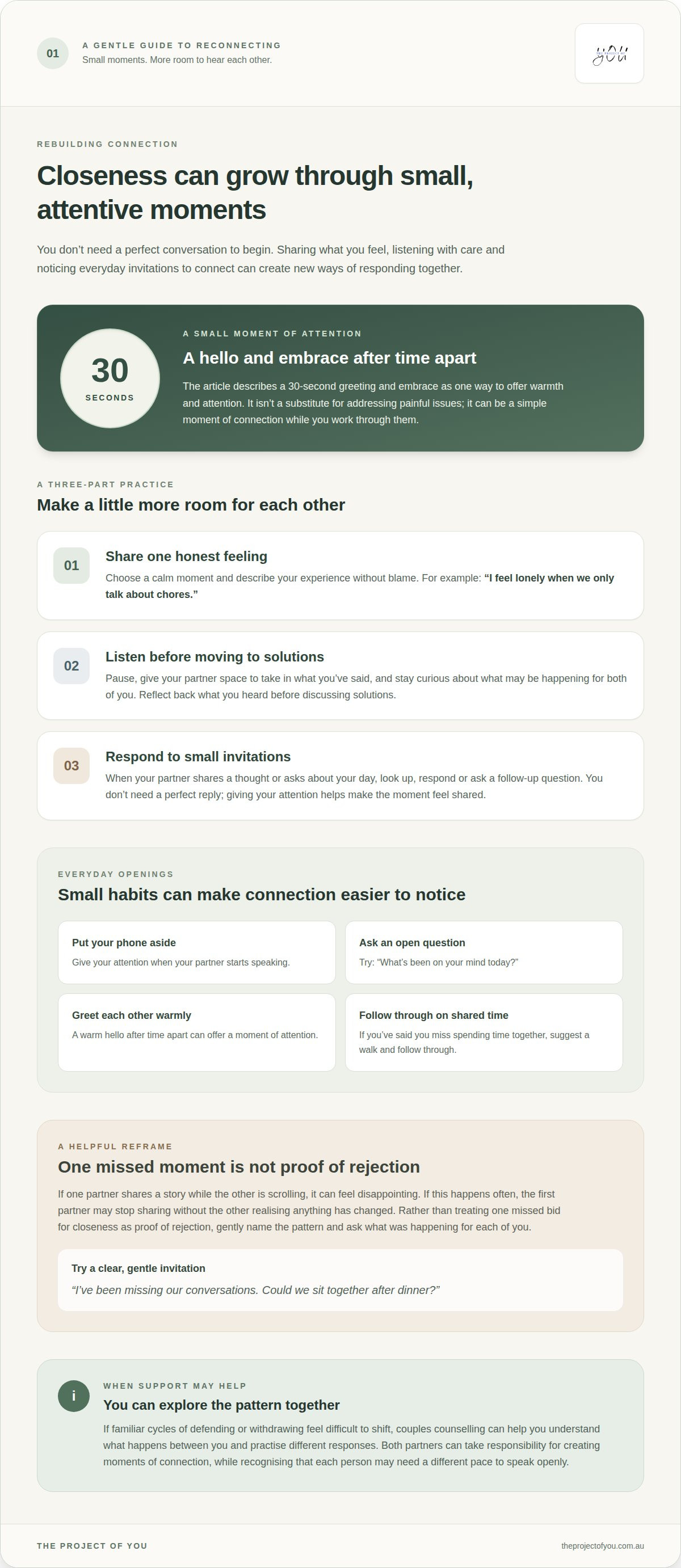
Emotional intimacy can also begin with ordinary, non-sexual affection. Try a hand held during a walk, a gentle touch on your husband’s shoulder, or a sincere word of appreciation. A 30-second hello and embrace after time apart can create a small moment of attention. These gestures aren’t a substitute for addressing painful issues; they can offer a practical way to show warmth while you work through them.
In Australia, consider relationship counselling when repeated conflict, withdrawal or emotional loneliness feels difficult to shift together. You don’t need to wait until the relationship feels beyond repair; a couples counselling process can help you understand the pattern and practise different responses.
To find an accredited relationship counsellor in Australia, ask what accreditation they hold, which professional body granted it, and what couples-therapy training they have. Then check their membership or accreditation status with that body, and consider whether their approach feels respectful to both partners.
Beginning at home can be simple: choose a calm moment and share one fear or feeling without blame. South Eastern Sydney Local Health District recommends talking openly with your partner about fears and how you feel. A specific opening, such as “I miss us and would like to understand what’s changed,” can invite a more meaningful conversation.
2. Rebuilding connection through vulnerability and changed behaviour
Practical ways to reconnect emotionally include sharing one honest feeling, listening without interrupting and responding to small invitations for closeness. Choose a calm moment, rather than raising the issue during an argument. You might say, “I’ve been missing our conversations. Could we sit together after dinner?” A clear invitation gives your partner something specific to respond to.
Vulnerability means letting your husband see what lies beneath your frustration, without making him responsible for fixing every feeling. For example, “I feel lonely when we only talk about chores” shares your experience more openly than “You never make time for me.” Then pause and give him space to take in what you’ve said. Notice whether you can both stay curious.
Small attempts to connect can happen throughout an ordinary day. A glance, a comment about the drive home or a question about your day may be a quiet way of reaching towards each other. Turning towards that bid means acknowledging it: look up, respond or ask a follow-up question. You don’t need a perfect reply. Giving your attention helps make the moment feel shared.
Missed bids can gradually shape a couple’s patterns. Imagine one partner mentioning a funny moment from work while the other keeps scrolling. If this happens often, the first may stop sharing, and the second may not realise anything has changed. Rather than treating one missed moment as proof of rejection, gently name the pattern and ask what was happening for each of you.
Small daily habits can create more openings for connection. Put your phone aside when your partner starts speaking, greet each other with warmth when you reunite, or ask, “What’s been on your mind today?” Sydney Children’s Hospitals Network notes that sharing feelings and information can help partners stay connected and make decisions together. Choose one habit that feels manageable for both of you.
Connection also grows when changed behaviour follows what you’ve shared. If you’ve said you miss spending time together, suggest a walk and follow through. If your husband raises a worry, listen before offering advice, then ask what support he wants. Both partners can take responsibility for creating these moments, while recognising that each person may need a different pace to speak openly.
Try asking each other about a current worry, then reflect back what you heard before discussing solutions. That small sequence can interrupt familiar patterns of defending or withdrawing. If starting this conversation feels difficult, book a couples therapy session to explore ways of communicating and reconnecting with support.
3. What relationship disconnection does and does not mean
Feeling disconnected can describe a painful experience, not a final verdict on your marriage. You might still care deeply for your husband yet feel unable to reach him during ordinary moments, such as dinner or the drive home. That tension can be confusing. Love and loneliness can exist together. Noticing the distance is a reason to get curious, not proof that the relationship has failed.
One pattern couples may recognise is pursuing and withdrawing. One partner asks repeatedly to talk, hoping for reassurance; the other goes quiet, perhaps to avoid conflict or manage feeling overwhelmed. The more one pursues, the more the other retreats, and both can feel misunderstood. Naming the cycle, rather than labelling either person as the problem, can help you see what happens between you.
Underneath this pattern, there may be an ache or longing: wanting to be chosen, understood or comforted. For example, asking your husband to “put your phone down” might express a deeper wish to feel important. The words can sound critical, while the need underneath is closeness. Try asking yourself, “What am I hoping for in this moment?” That question can help clarify your need before you speak.
Feeling distant doesn’t automatically mean you’ve stopped loving each other or must make an immediate decision about the marriage. Stress, grief, unresolved hurt or different ways of handling emotions can affect how available each partner feels. These possibilities don’t dismiss the impact. They offer starting points for exploring what has changed, what each of you misses and whether both partners are willing to engage.
You’re not alone in having mixed feelings. Wanting closeness while also feeling hurt, guarded or unsure can happen in a relationship. Notice the difference between a difficult period and a repeated pattern. For instance, ask whether you can raise a concern without being mocked, punished with silence or frightened. Your sense of emotional safety matters as you consider what support is appropriate.
Disconnection must not be used to excuse abuse. If your husband is physically, psychologically or emotionally abusive, prioritise your safety and seek specialist family-violence support. A specialist service can help you consider a safety plan and explore your options; leaving without support may not always be the safest step. Couples conversations or counselling may not be safe when one partner faces intimidation or harm. Support should focus first on safety, not on asking you to repair the relationship.
If you’re unsure what the distance means, take one grounded step: describe the pattern to someone you trust, or write down what happens before and after a difficult interaction. For example, note whether a conversation starts with a request, becomes defensive, then ends in silence. These details can help you make sense of your experience and decide what support feels safe.
4. Creating rituals and prioritising time together
Shared rituals give couples predictable chances to reconnect amid work, parenting and household routines. Choose a simple practice you can both enjoy, such as having tea together after dinner or taking a short walk on Saturday morning. A ritual doesn’t need to be elaborate. Its value comes from returning to it and giving each other attention, rather than waiting for a special occasion to feel close.
Make time for a date, with the main purpose of enjoying each other’s company. It could be a picnic, a café visit or a quiet evening at home after the children are settled. Try not to turn that time into a meeting about chores, school schedules or relationship problems. Those conversations matter, but a date also needs room for play, affection and ordinary enjoyment.
Parents may find it helpful to prioritise time together, rather than time with the children, a couple of times per week. That doesn’t mean neglecting family needs; it means making room for your relationship alongside parenting. If childcare or energy is a barrier, choose a small shared activity at home, such as listening to music while preparing dinner. Agree on a realistic plan together.
Rituals can also help you build memories and dream together. Look through old photos and share what you remember about a favourite trip, or talk about something you’d both like to do in the future. You might plan a day out, learn a recipe or take a class together. A shared plan gives you something to anticipate, even when everyday life feels full.
Protecting time together may mean discussing competing demands with care. If friends, work or family commitments repeatedly take over, talk about what each of you needs without treating outside relationships as the enemy. For example, agree which evening is for friends and which is reserved for the two of you. Clear agreements can reduce misunderstandings and resentment when plans are left unspoken.
Keep rituals flexible. If rain interrupts a planned walk or a child needs attention, choose another moment rather than treating the change as a failure. A cup of tea at home can replace the walk; a brief check-in can preserve the intention. Ask each other, “What kind of time together feels nourishing this week?” The answer may change as work, parenting and energy shift.
Trying a routine isn’t a test of whether you love each other. Notice whether it brings more ease, conversation or affection, then adjust it together. A ritual works best when both partners help shape it and neither feels pressured to perform closeness. Start with one shared moment that fits your life now, and let consistency, not perfection, guide you.
5. Couples therapy and individual therapy
Couples counselling focuses on the relationship: how you communicate, respond and get caught in repeated patterns. Individual counselling focuses on your own experience, including your feelings, boundaries and needs. If you’re struggling to feel close, these approaches can address different parts of the same situation. The useful question is whether you need support together, individually or both.
In a couples counselling session, a therapist can help you slow down a difficult conversation and understand each partner’s perspective. For example, one person may want to discuss a problem straight away, while the other needs time to settle first. Exploring that difference can help you agree on how to return to the conversation, rather than leaving one partner feeling unheard.
Individual counselling may help if you’re finding it hard to name what you feel or express it without shutting down or becoming overwhelmed. You might explore how earlier experiences shape your responses to closeness, conflict or rejection. The purpose isn’t to decide that you’re the problem. It’s to build self-understanding and clarify what you want to bring into the relationship.
Individual counselling can also offer space when your husband isn’t ready to attend couples counselling. You can reflect on what happens during a tense exchange, what you’re hoping for and which boundaries matter to you. For instance, you might practise saying, “I want to keep talking, but I need us to speak respectfully.” Your husband remains responsible for his own choices.
Couples and individual counselling aren’t interchangeable. Individual sessions can help you understand your own needs, but they can’t create a shared conversation if both partners aren’t participating. Couples work, by contrast, gives both people space to examine the relationship together. Consider what you want help with: your personal distress, a recurring interaction or both.
If you’re already seeing an individual counsellor, you can discuss whether couples work might also fit your goals. Be clear about what you hope will change, such as handling disagreements more thoughtfully or feeling able to share difficult emotions. If you love your partner but feel lonely, that distinction can help shape a useful first conversation with a counsellor.
Choosing individual support doesn’t mean giving up on your marriage, and attending together doesn’t require you to minimise your own needs. The next step depends on the struggle in front of you and what feels safe. You might begin by writing down one concern you want addressed, then decide whether it belongs in an individual or shared conversation.
The Project of You | Trauma, Couples & Relationship Therapy Australia
The Project of You | Trauma, Couples & Relationship Therapy Australia offers a supportive place to explore how emotional distance is affecting you and what you need next. If it’s hard to make sense of your feelings, Individual Counselling can help you build self-understanding and consider how you want to approach the relationship. Nervous System Regulation & Restoration can also support you in reflecting on how stress affects your steadiness and connection. This support can help you find a considered next step without minimising your experience or making a decision before you’re ready.
Take one thoughtful step towards greater closeness
Feeling disconnected from your husband can leave you questioning what comes next. You don’t need to settle the whole future of your marriage today. A gentler starting point is to notice what you want more of, what feels difficult to say and what kind of support could help you speak honestly.
You might bring one clear intention into your next conversation or counselling session, such as wanting to understand each other without blame. If you’re unsure whether to begin together or on your own, that uncertainty can be part of the conversation too. The Healing Feminine Workshops and Self Love e-Books offer other ways to make space for reflection and self-connection.
There’s no need to force closeness or pretend everything feels settled. A considered next step can help you move forward with more clarity and care.
Be patient with yourself as you find your way forward. Your feelings deserve attention, and you can take the next step at a pace that feels right.
Frequently Asked Questions
Can couples therapy really help when you feel disconnected?
Couples counselling can provide a structured space to consider what you each want from the relationship and whether you can work towards it together. Before attending, consider what you hope will change in everyday life, such as sharing decisions or feeling more respected during disagreements. You can also ask how the counsellor approaches conflict and makes room for both partners’ perspectives. These details can help you judge whether the process feels suitable.
Is it normal to feel emotionally distant from your partner?
People’s sense of closeness can change over time, and feeling distant doesn’t by itself define the relationship. Notice whether the feeling is present across your life or mainly in particular circumstances, such as during a demanding period at work. You might also ask yourself what closeness means to you now. Your answer may differ from earlier in the relationship, and that can be useful to share.
What’s next to heal disconnection?
Choose one sign that would help you recognise progress, rather than trying to solve the whole relationship at once. For example, you might want to disagree without either person feeling belittled. Write down what that would look like in practice, then discuss whether it feels important to both of you. If your goals differ, that itself can be a starting point for a more honest conversation.
What’s the difference between needing space and drifting apart?
Space can be restorative when it’s chosen openly and doesn’t involve withdrawing affection as punishment. Drifting apart may feel more concerning when neither partner shows interest in returning to shared decisions, responsibilities or emotional life. Consider whether time apart leaves you feeling steadier and more able to engage, or increasingly resigned to handling everything separately. The meaning depends on the pattern and how each of you experiences it, not time alone.
Why don’t I feel close to my husband anymore?
Your sense of closeness may change as you do. A shift in roles, such as becoming a parent, caring for a relative or changing careers, can alter what you need from a partner and how much energy you have to give. You may also be grieving an earlier version of your life together. Naming what you miss and what matters to you now can make the change easier to understand.
Why do I feel disconnected from my partner even though nothing bad happened?
Distance can develop without a dramatic event. A couple may manage bills and family plans efficiently while rarely discussing hopes, doubts or personal interests. The relationship can feel functional but less personally meaningful. Consider whether your conversations leave room for each person’s inner life, not only practical updates. You could each share something you’ve been curious about, proud of or uncertain about lately, without needing to reach a decision.
What are common reasons for feeling disconnected from your husband?
Differences in expectations can contribute, even when both partners care about the relationship. One person may feel loved through practical help, while the other values verbal appreciation or shared experiences. A mismatch can leave each feeling they give without receiving what matters most. Try describing one gesture that helps you feel valued, then ask what your husband finds meaningful. This can reveal whether you’ve been expressing care in different ways.
How can you tell whether emotional disconnection is a temporary phase or a serious relationship problem?
Look beyond the intensity of a difficult week and consider the relationship’s broader pattern. Can you both acknowledge the impact of your actions, show consideration and make room for each other’s needs? Do attempts to address concerns lead to meaningful engagement? These observations can help distinguish strain from a deeper breakdown in mutual respect. If there is fear, coercion or abuse, the priority changes: focus on safety and seek appropriate support.


Comments