

How to plan a DIY marriage retreat for meaningful time together

What if a meaningful marriage retreat didn’t need a packed schedule or a trip far from home? It can simply be protected time to pause, reflect on your relationship and talk about what matters. DIY marriage retreat ideas can help you shape that time around your circumstances, whether you set aside a weekend or spread conversations across at-home dates. Choose ideas that reflect what you both want from the time together.
It makes sense to want honest conversations and time together that feels warm, not like another task. Relationship expert and couples counsellor Azita Abdollahian has hosted hundreds of couples retreats, and she suggest focusing on a few key factors: Protect retreat time, reflect individually, listen to each other and balance serious topics with enjoyable activities. Adapt the plan to your current season of life, so it supports what your relationship needs now.
Table of Contents
Balancing serious conversations and enjoyable activities
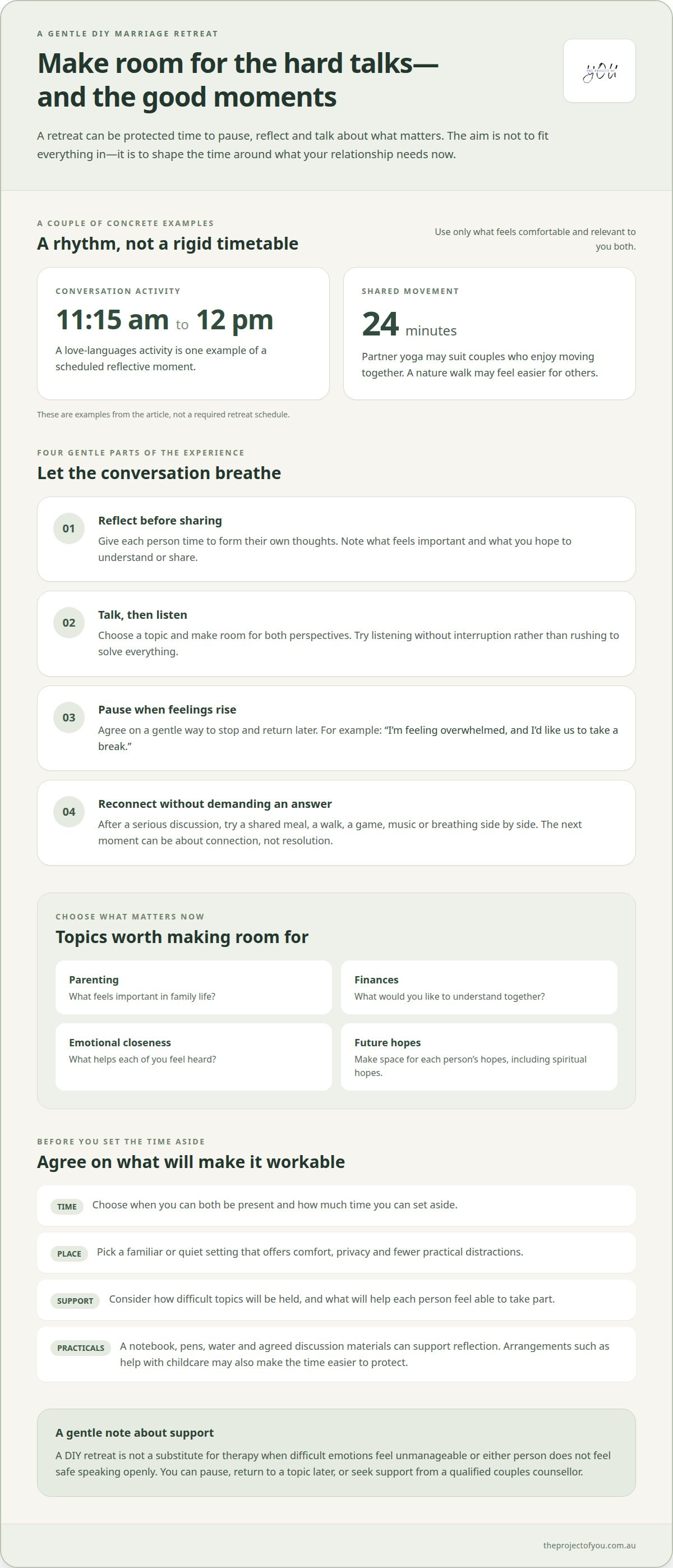
A thoughtful retreat gives relationship conversations room without making the whole experience feel like a meeting. Plan moments of connection around harder topics, with enough flexibility to pause when needed.
How a professionally guided retreat balances serious conversations with enjoyable activities
Alternate reflective discussions with shared activities, rather than stacking difficult topics together. For example, follow a conversation about future priorities with a walk, a game or cooking a meal together. A retreat schedule might include a love-languages activity from 11:15 am to 12 pm, then movement together later. A guided retreat can help pace these transitions; a DIY plan gives you more control, while couples therapy can offer support beyond a retreat.
How a retreat facilitator helps couples choose shared activities
Choose activities both partners genuinely enjoy, and make sure neither person feels pressured to perform or share more than they want. Dancing, listening to music you both love or sharing a favourite meal can bring warmth without elaborate plans. If one partner prefers a quiet walk and the other enjoys a game, take turns choosing. A friend might help with practical arrangements, such as minding children.
Set a gentle time limit for each serious conversation, then agree on a simple way to pause. One partner might say, “I need a few minutes to settle before we continue.” If conflict rises, stop debating, take space and return only when you both feel ready. A DIY retreat is not a substitute for therapy when difficult emotions feel unmanageable or you don’t feel safe speaking openly.
Finish each discussion with a connecting activity, not an immediate demand for resolution. Try breathing side by side, sharing a meal, or reading hopes for the future aloud. A 24-minute partner yoga session could suit couples who enjoy moving together; a nature walk may feel easier for others. For couples seeking guided support with regulation, the Nervous System Retreat offers a professional setting to explore this area.
If a conversation brings up strong feelings, name what’s happening without blame and pause before continuing. For example, you might say, “I’m feeling overwhelmed, and I’d like us to take a break.” Resume only if you both feel able to listen. Otherwise, consider support from a qualified couples counsellor. A prompt sheet can help you return to the topic later, rather than forcing an answer while either person feels distressed.
What is a marriage retreat?
A marriage retreat is protected time for partners to reflect, communicate and consider their shared direction. With a facilitator, the structure can respond to your relationship rather than follow a fixed agenda.
Start by identifying what you both hope to discuss, such as parenting, finances or emotional closeness. A facilitator can help organise those topics into a clear plan and ask what feels most pressing for each partner. Choose a setting that supports privacy and comfort, whether that’s a quiet venue or a familiar space. The right environment can make it easier to focus on conversation instead of practical distractions.
Decide together when you can attend and how much time you can set aside. An overnight stay can create distance from household routines, but travel, caring responsibilities and energy levels also matter. Discuss these factors with the facilitator before settling on a format.
Ask how the facilitator will help you discuss difficult topics, not only what will appear on the agenda. Useful prompts might include, “What helps you feel heard?” or “What would you like us to make more room for?” Exercises may invite each partner to reflect before sharing, then practise listening without interruption. A supportive process makes space for different perspectives without treating one person as the problem.
Consider what will help you feel comfortable in the chosen setting. A notebook, pens, water and any agreed discussion materials can support reflection; a book or phone app is optional if it serves your shared goals. For a professionally facilitated retreat in Australia, the price depends on the case and is provided after a quote request. Factors include facilitator time, format, venue, travel and inclusions.
A retreat can offer focused support, while couples therapy may provide an ongoing space to work through relationship concerns. If you’re considering guided support, you can book a conversation about your options.
As you prepare, consider whether the conversation should include relationships beyond the partnership and hopes for the future. Suggested topics include parenting, finances, relationships and future dreams. Each person can note which subjects feel important and what they would like to understand or share. You might also discuss where each of you hopes to be spiritually in the future, allowing both partners to describe their hopes without needing to agree on every detail. These reflections can clarify what you want the retreat to make room for and help the facilitator understand what matters to you.
Make practical decisions together before the retreat, including its timing, location and duration. Talk through what setting would make it possible to focus, and what arrangements would help you step back from everyday demands for that time. Agreeing on these details in advance can make the experience feel more intentional and reduce uncertainty about what to expect. You can revisit the plan with the facilitator if your priorities or practical circumstances change, so the arrangements remain workable for both of you.
Reflecting individually and discussing answers
A facilitator can give each partner time to form their own thoughts before bringing them together. That pause helps the conversation include both perspectives, not just the first response.
How a couples retreat facilitator structures discussion sessions
Ask the facilitator to organise the retreat into focused sessions, with individual reflection before shared discussion. A suggested plan includes three discussion sessions and an hour for each person to consider questions privately. Rather than trying to answer every prompt, choose the questions that fit your relationship now. A guide with seven pages of questions is a starting point, not a checklist to finish.
How a facilitator can help couples use dinner or a movie night to connect
Use an extended dinner or a movie night as a gentle setting for conversation, rather than expecting every date to resolve a major concern. Over dinner, each partner might share one hope for the relationship five years into the future. After a film, you could discuss a character’s way of handling conflict and what felt familiar. Keep the focus on curiosity, not criticism.
Take turns answering the same prompt, then reflect back what you heard before responding. For example, one partner might say, “I’ve been missing time together,” and the other could ask what shared time would look like in everyday life. A facilitator can help slow the exchange if someone feels unheard or the conversation becomes about proving who is right. Listening first makes room for a more considered reply.
Choose prompts that connect with your shared priorities, such as parenting, finances, intimacy or future hopes. A facilitator might invite each partner to name one area that feels strong and one they’d like to nurture. For couples who value biblical reflection, passages such as Genesis 2 or Ephesians 5:21-33 may provide a starting point for discussing values. Treat the text as an invitation to reflect, not a test with one correct answer.
Close each session by naming one insight and one next conversation, rather than making several promises under pressure. For instance, after discussing parenting, you might agree to revisit how school routines are shared. If a topic feels too charged to continue, note it for the facilitator and return to grounding or a quieter activity. A weekend retreat can hold important conversations without requiring every question to be settled before you leave.
Setting aside protected time and space
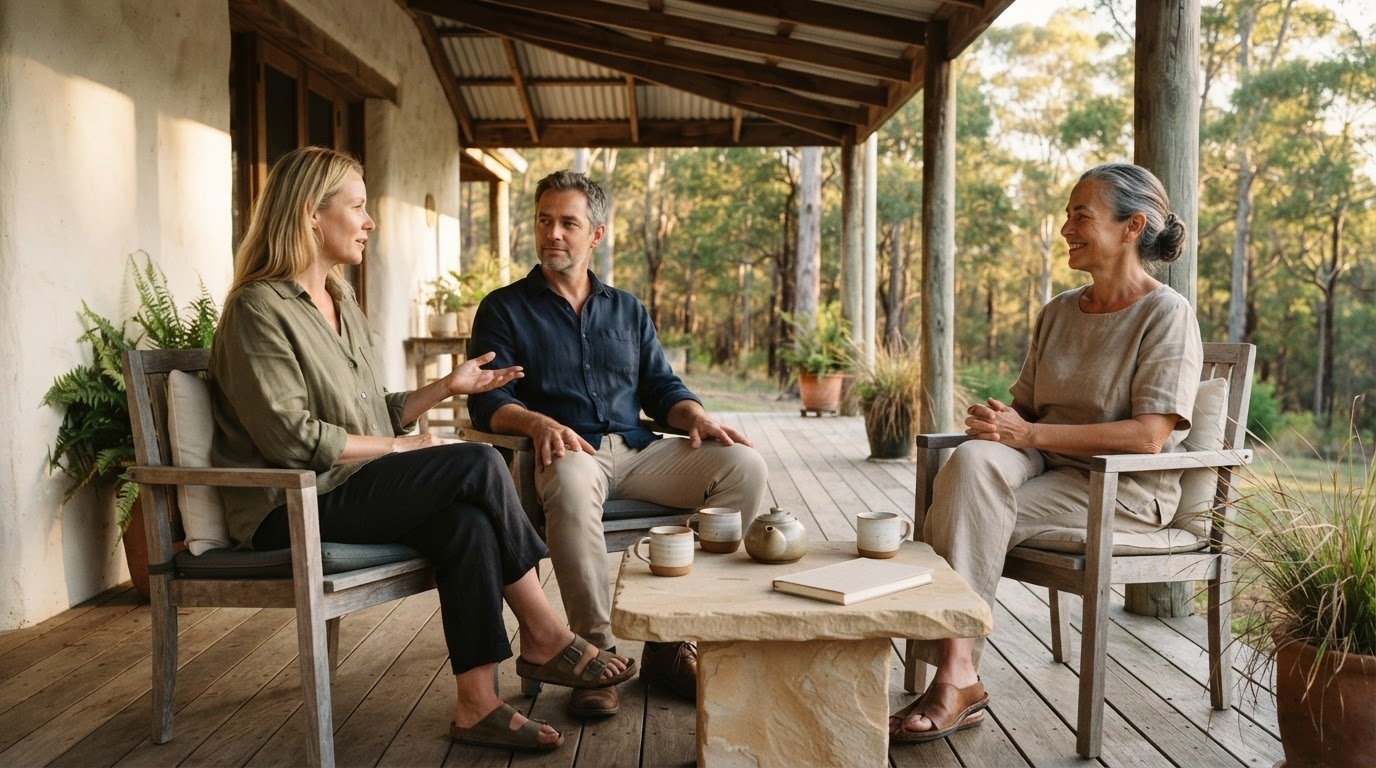
A facilitator can help protect retreat time from daily demands and give your conversations a clear shape. Agreeing on the purpose, boundaries and practical arrangements beforehand helps both partners arrive ready to take part.
Choose a retreat period that gives you room to step away from routine. A facilitator may help plan a two- to three-day retreat, or shape a weekend around the time you can manage. Discuss work, parenting and travel before choosing dates, so neither spouse is left carrying the practical arrangements alone. If a full getaway isn’t possible, agree on a smaller, protected block of time together.
Set clear boundaries around interruptions before the retreat begins. For an at-home retreat, put away laptops, clear your diaries and consider switching off phones for 24 hours. Decide together what counts as an urgent interruption, such as a child needing care. A facilitator can help you agree on these limits, so you’re not negotiating them while already talking about something important.
Ask the facilitator to create a schedule with breathing space, rather than filling every moment. One example sets aside 7:30-9:00 am for waking and reading, followed by time to move together. The point isn’t to follow a timetable perfectly. It’s to make room for meals, rest and conversation, so whatever arises doesn’t have to compete with the next activity.
Choose shared goals that are specific enough to guide discussion. A facilitator might help you identify priorities around parenting, finances or connection, then translate them into a practical next step. For example, parents could discuss objectives for their children over the next six months or year. Keep the goals mutual: talking about what each partner can contribute is more useful than assigning responsibility to one spouse.
Include a pause for prayer, reflection or another shared intention if it fits your beliefs. A retreat planner may suggest opening and closing each session with prayer; couples can instead choose meditation, journalling, music or quiet sitting. You might each name one hope for the relationship, then read those intentions aloud. The facilitator’s role is to make space for your values without making spiritual practice compulsory.
Adapting retreat topics to a couple’s circumstances
A useful retreat follows the relationship you have now, not a template designed for every couple. A facilitator can shape the topics around current pressures, strengths and the kind of support both partners want.
Begin by naming what has changed in your shared life. A new parenting stage, a move or a shift in work can alter what feels urgent. For example, a couple caring for a 10-month-old premature baby may need space to talk about exhaustion and teamwork before exploring long-term aspirations. A facilitator can use these circumstances to shape a relevant agenda, without assuming they define the whole relationship.
Identify what is already working before choosing areas for growth. A facilitator might ask each partner to describe a recent moment when they felt understood, then ask what they’d like more of. One person may value practical help, while the other longs for unhurried time together. Naming both experiences gives you a more balanced starting point than focusing only on what feels difficult.
Notice the pattern between you, rather than assigning blame. For instance, one partner may withdraw during tense conversations while the other seeks reassurance. Or criticism may be met with defensiveness, leaving both feeling unheard. A facilitator can help you slow down and consider what each person is protecting or needing. This makes the pattern easier to discuss than labelling either partner as the problem.
Choose topics that fit your values, culture and beliefs. If faith is important, you might discuss how your community supports you or how spiritual practice fits your shared life. If faith isn’t central, focus elsewhere. Asking what feels meaningful to each partner keeps the retreat inclusive and relevant, rather than assuming one set of priorities suits everyone.
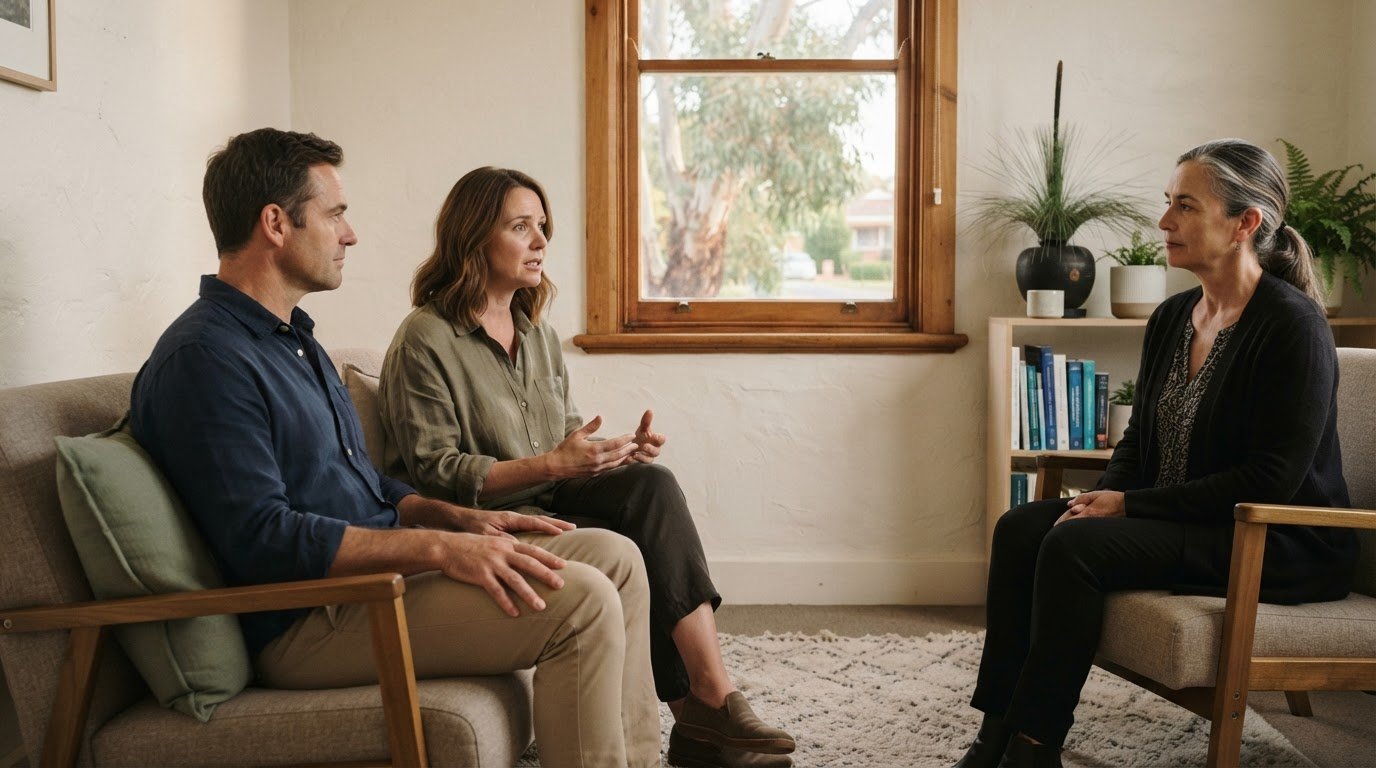
Allow the plan to change as the retreat unfolds. If a topic brings up grief, shame or strong emotion, the facilitator can pause and offer time to ground before revisiting the agenda. You might spend more time understanding a recurring conflict and less time on a topic that feels settled. Agreeing on a next step helps you carry useful insights into daily life, without expecting every concern to be resolved at once.
The helpful question isn’t “What should every couple discuss?” It’s “What matters to us in this season, and what support would help us talk about it?” That answer can guide future conversations too, as family life and relationship needs shift.
The Project of You | Trauma, Couples & Relationship Therapy Australia: Marriage Counselling
The Project of You | Trauma, Couples & Relationship Therapy Australia offers marriage counselling for couples who want professional support with communication, recurring conflict or relationship change. It can be a helpful next step when a DIY retreat raises topics that feel difficult to navigate alone, or when you’d value a supported space to understand each other’s perspectives.
Counselling can help you explore patterns in how you respond to one another and consider practical ways to strengthen connection. If you’re unsure whether counselling suits what you’re facing, take time to reflect on what support would feel useful for both of you.
Let your next step fit the relationship you have
A retreat doesn’t need to create a perfect plan for your future. It can help you notice what you want to keep nurturing and what deserves a gentler conversation at home. Choose one small intention to carry into everyday life, such as making time to check in or approaching a recurring disagreement with more curiosity. The most useful DIY marriage retreat ideas are the ones that support a connection you can keep building together.
If a conversation feels hard to hold without support, Marriage Counselling can offer a guided space to explore it. The Project of You also offers Nervous System Regulation & Restoration, The Healing Feminine Workshops, and Self Love e-Books for people seeking different forms of personal support.
Whatever you choose, let it be a thoughtful, manageable next step for both of you.
Frequently Asked Questions
What might a professionally facilitated one- or two-day retreat look like?
A professionally facilitated retreat can combine guided conversations, personal reflection and restorative breaks across one or two days. For example, the day might begin with time to settle in, followed by breakfast and a reflective activity before a focused discussion. A facilitator can help keep the pace manageable and make room for breaks, meals and enjoyable time together. The schedule can be shaped around your priorities and the time available.
When might a professionally facilitated retreat be helpful, and what does it involve?
A facilitated retreat may help when you and your partner want dedicated support to discuss a transition, recurring disagreement or shared decision. A facilitator guides the conversations, helps each person express their perspective and supports you to listen without rushing towards a solution. Agree on topics beforehand, such as parenting decisions or future plans, so the retreat has a clear focus while leaving room to adjust.
What can couples expect from a professionally facilitated retreat at home?
An at-home retreat can bring guided relationship conversations into a familiar space, without the need to travel. The facilitator helps establish a structure and guides you through agreed topics and reflection. You might prepare a quiet room, comfortable seating and simple meals, so practical tasks don’t interrupt the sessions. A home setting may suit couples who prefer familiar surroundings or need to stay close to family responsibilities.
What does planning a professionally facilitated weekend marriage retreat involve?
Planning involves agreeing on the dates, main topics and practical arrangements with your facilitator. Decide how meals and drinks will be handled, which responsibilities need cover, and what would help you both feel comfortable. Keep the schedule realistic, with room for rest and informal connection. If you can’t set aside a whole weekend, guided conversations can also be arranged across several at-home dates.
How can a couples retreat facilitator help partners set goals and create a schedule?
A facilitator can help turn broad hopes into shared, practical intentions. For example, “communicate better” might become an agreement to discuss household responsibilities during a regular check-in. They can also help prioritise topics, create a workable schedule and leave time to reflect on what feels useful. At the close, partners might rate their marriage from 1 to 10, then discuss what could support a positive next step.
Comments