

Relationship renewal retreat for couples in Australia

What if time away together could make room for the conversations everyday life keeps postponing? A relationship renewal retreat offers couples dedicated space and professional guidance to reconnect, understand recurring patterns and consider how they want to move forward. It’s different from a holiday: the focus is on the relationship, not simply taking a break from routine.
It’s understandable to wonder whether a retreat is right for you, especially if you feel distant, stuck in familiar disagreements or ready to nurture a good relationship. You don’t have to wait for a crisis to seek support, and a retreat can’t promise instant change. It can, however, provide a structured setting to listen and speak with greater care. Relationship expert and couples counsellor Azita Abdollahian has hosted hundreds of retreats at her retreat space Carnelain House in Kurrajong.
Here, she'll explain what couples retreats involve, how they differ from ongoing counselling and what to consider when choosing support in Australia. We’ll also explore how follow-up can help you bring new insights into everyday life, where lasting change is practised one conversation at a time.
Table of Contents
What Is a Couples Retreat, and What Makes It Different?
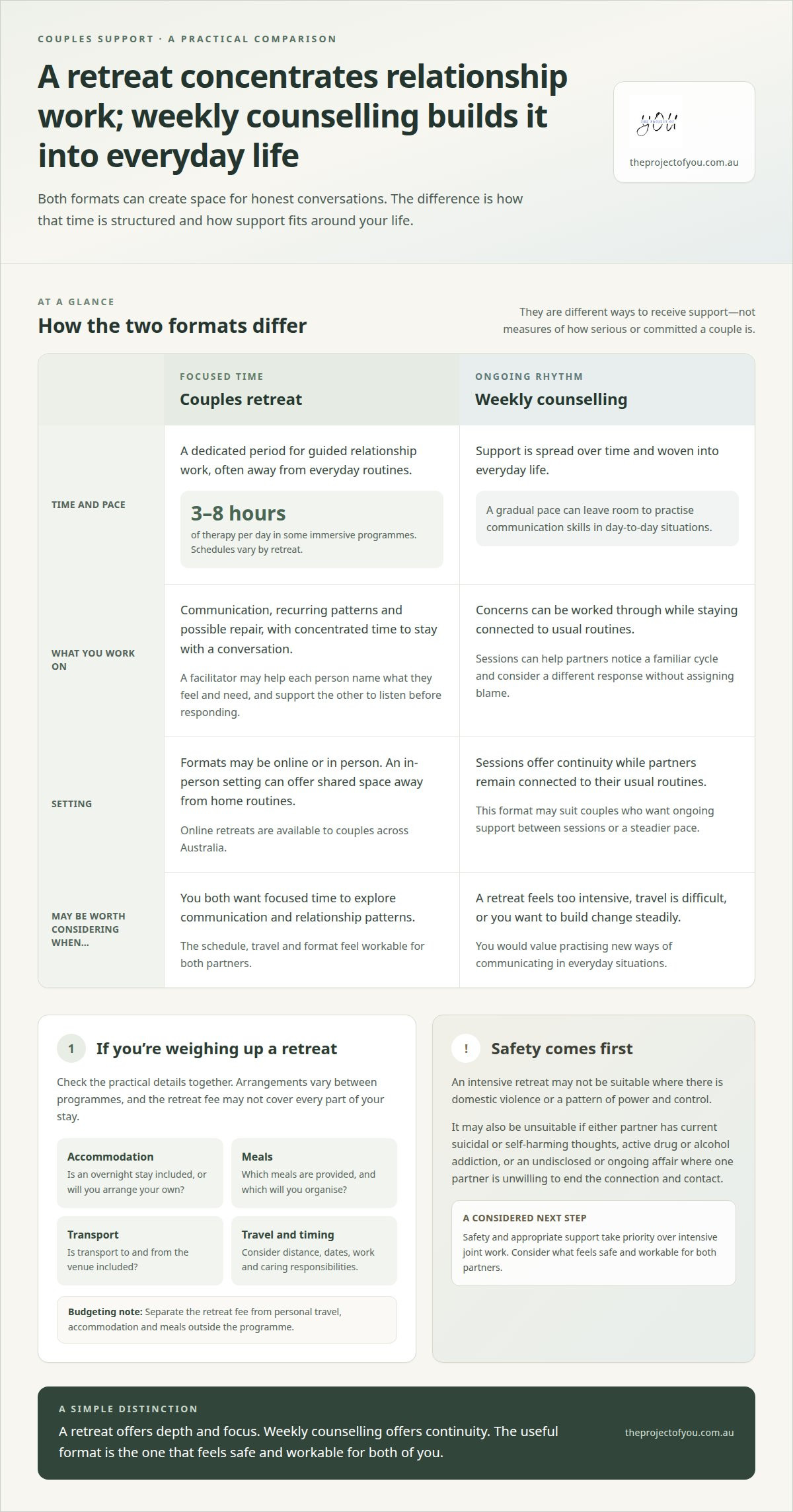
A couples retreat is a dedicated period of guided relationship work, often held away from everyday routines. Instead of fitting conversations around work, meals and family responsibilities, partners set aside focused time to explore communication, recurring patterns and possible repair. Formats vary. Some immersive programs include daily couples therapy, with 3 to 8 hours of therapy per day. The schedule and approach depend on the retreat.
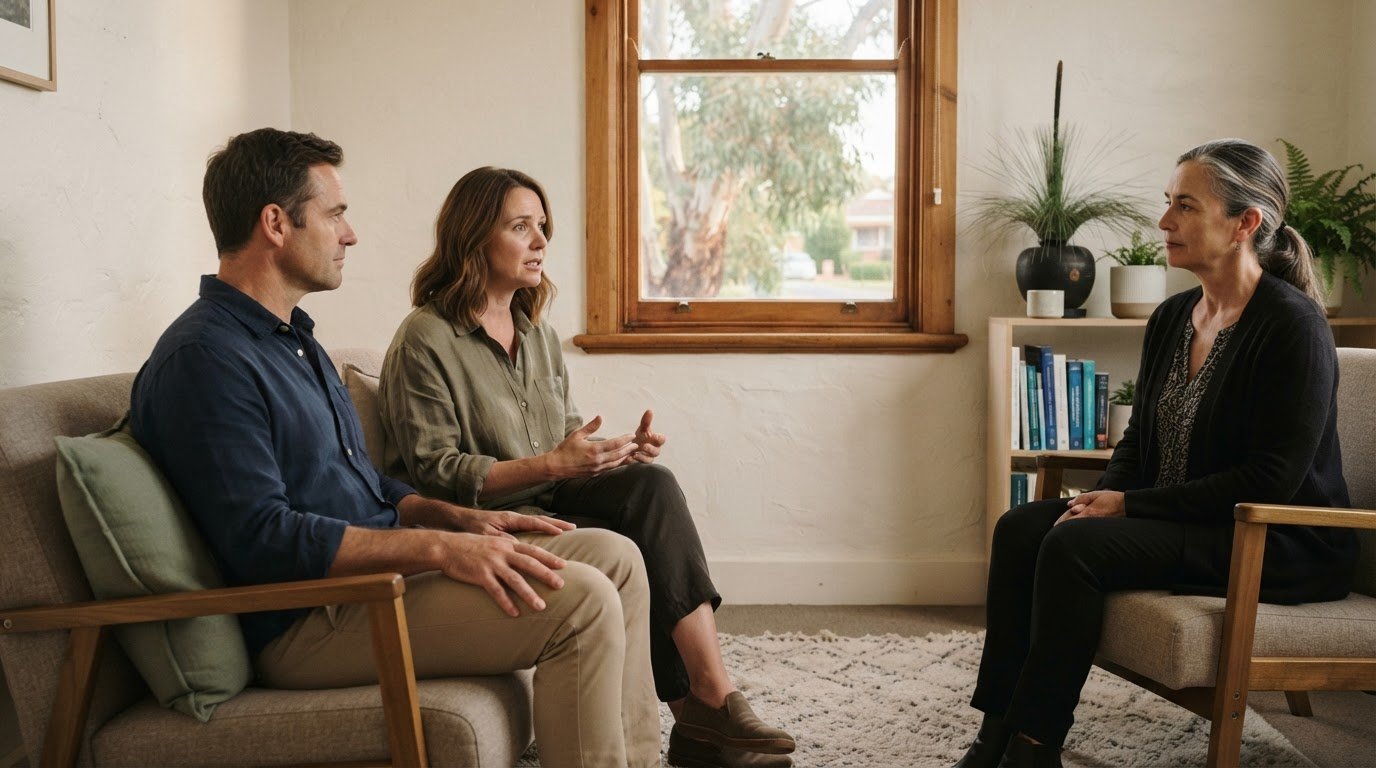
Dedicated time can help partners stay with a difficult conversation instead of postponing it until another appointment. A facilitator may slow the discussion, help each person name what they feel and need, then support the other to listen before responding. For example, “You never help” can trigger defensiveness. “I feel overwhelmed when dinner and bedtime are left to me” gives both partners a more specific place to begin.
An immersive retreat won’t suit every couple. Weekly counselling may be a better fit if you need a gradual pace, ongoing support between sessions or time to practise communication skills in everyday situations. It can also help you work through concerns while staying connected to your usual routines. A retreat and weekly therapy are different formats, not measures of how serious or committed a couple is.
A retreat may not be suitable where there is domestic violence, including physical, sexual, emotional or financial violence, or a pattern of power and control. It may also be unsuitable if either partner has current suicidal or self-harming thoughts, active drug or alcohol addiction, or an undisclosed or ongoing affair where one partner is unwilling to end the connection and contact. Safety and appropriate support take priority over intensive joint work.
Couples across Australia can access online retreat formats, while in-person settings vary. Online participation may avoid interstate travel; an in-person setting can provide a shared environment away from home routines. In either format, the key difference is concentrated time for therapy and communication practice, rather than a standard weekly appointment. The setting and schedule shape how partners take part.
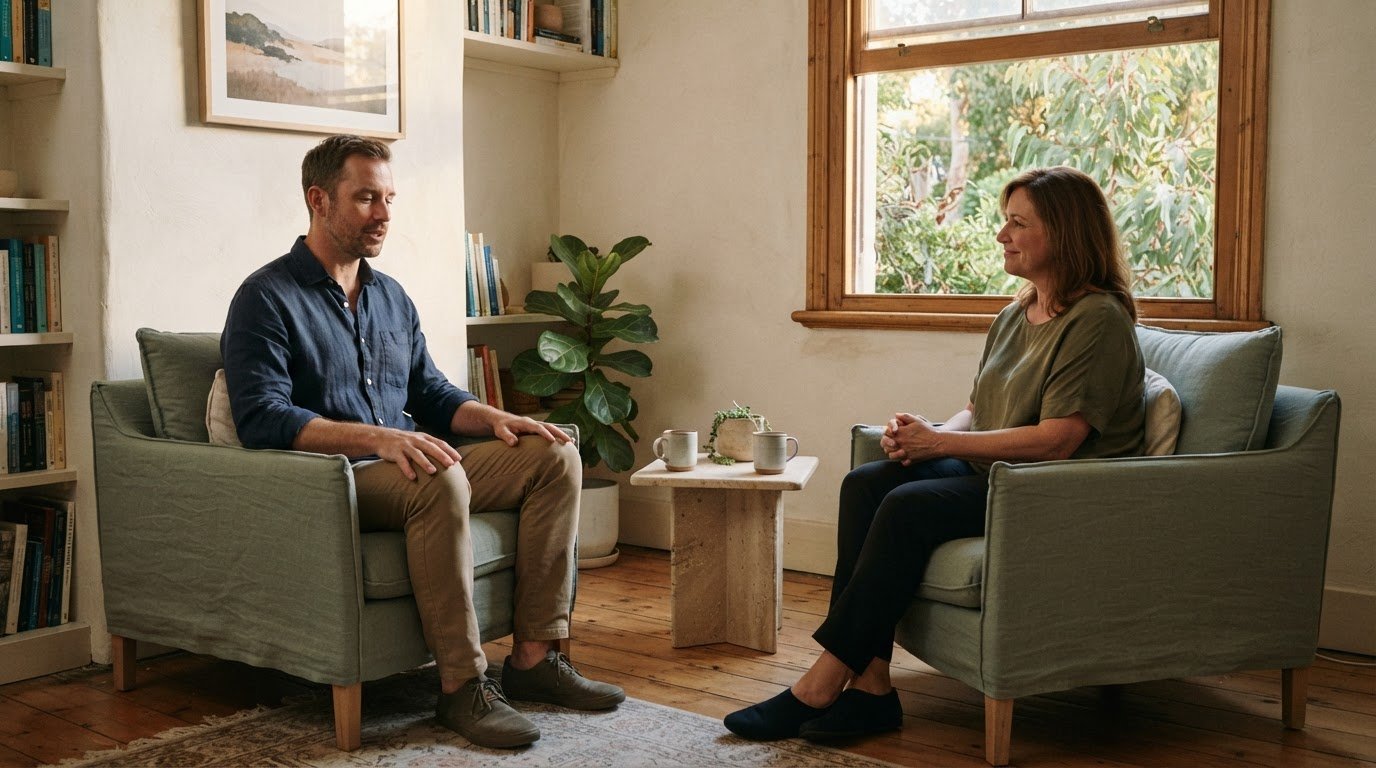
Couple counselling is an alternative when a retreat feels too intensive, travel is difficult, or partners want to build change steadily. Sessions can help couples recognise the moment a familiar pattern begins, such as one person pursuing answers while the other withdraws. Naming that cycle without assigning blame can create room for a different response. Support that includes nervous system regulation in retreat settings may help couples notice how stress affects their ability to listen and feel present.
Whether you’re considering a relationship renewal retreat or ongoing counselling, think about what kind of support feels safe and workable for both partners. A retreat offers depth and focus; weekly therapy offers continuity. Both can create space for honest conversations, clearer understanding and considered steps towards repair.
Retreat accommodation, meals and transport
Practical arrangements affect how couples experience time away for relationship work. Before deciding, review the retreat dates, accommodation, meals and transport together. These details can shape how much time you’ll need away from home and what you’ll need to organise separately.
Accommodation and Retreat Dates
A residential retreat includes accommodation, while other formats may leave partners to arrange their own stay. Dates also affect travel planning, work commitments and caring responsibilities. Check whether the schedule includes overnight accommodation and suits your needs for privacy and rest. If you’re travelling from far away, plan around arrival and departure times.
Meals and Transport
Meal arrangements vary. Some programs include meals, while others leave particular meals for participants to organise. Retreats may also include transport to and from the venue, but arrangements depend on the format. Knowing what’s provided helps you plan meals and transport, reducing avoidable uncertainty during an emotionally focused stay.
Travel and Accommodation Costs
The overall cost of attending depends on what the retreat includes and your travel arrangements. Consider distance, transport, accommodation, meals outside the program and the length of your stay. Travelling from another part of Australia may involve different expenses from travelling locally. Separate the retreat fee from personal travel and accommodation costs when setting your budget.
Some programs offer a residential group format with accommodation, meals, restorative activities and transport to and from the venue. Others provide sessions without those arrangements. An inclusive package can simplify planning, while a non-residential format may offer more choice about where you stay and eat. Consider which approach works for both partners.
The daily schedule shows how a retreat balances structured work with personal time. A program might include morning movement, breakfast and a workshop, with other parts of the day set aside for rest or reflection. Ask how sessions fit around meals and breaks, particularly if either partner needs quiet time to process emotionally demanding conversations.
Think about what helps each of you feel settled away from home. One partner might value having meals organised, while the other prefers choosing food independently. Accommodation can also affect privacy and comfort. Your preferences don’t have to match, but discussing them beforehand can make it easier to choose a format that supports you both.
If you’re considering retreat support, a conversation can help you explore which format fits your circumstances and practical needs. You can book a conversation about retreat support before making your plans.
Appreciation, presence and intimacy
In couples work, appreciation means noticing specific actions, not pretending difficulties have disappeared. A partner might say, “You made time to listen after work,” rather than offer a general compliment. That detail shows what felt meaningful and gives the conversation something real to build on. Structured reflection can also help each person describe what they value without requiring agreement about every challenge.
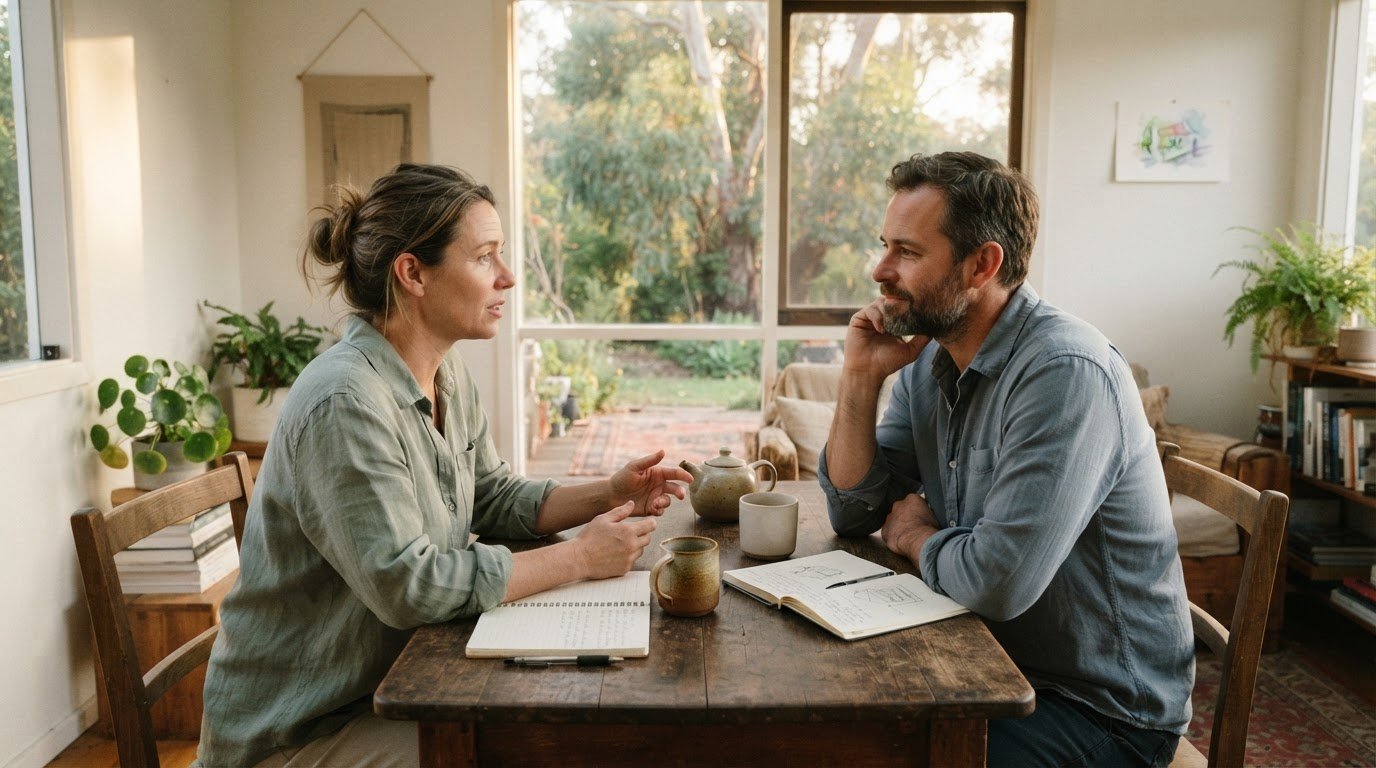
Presence means giving a conversation your attention instead of preparing a rebuttal or turning to your phone. In a guided dialogue, one partner describes an experience while the other listens and reflects back what they heard. This simple sequence can reveal where meanings differ. For example, “I needed help” might sound like criticism, even when the speaker means, “I felt alone.” A facilitator can help slow the exchange.
Retreat programs may use guided dialogues, visualisation, somatic regulation and reflective exercises. These approaches offer different ways to notice what happens during a difficult moment. Somatic regulation involves paying attention to physical signs of stress, such as a tight jaw or shallow breathing, and making space to settle before continuing. Neither partner has to share more than feels manageable. Emotional safety and consent remain central.
Some retreat programs teach core communication tools that give couples a shared structure for discussing sensitive subjects, such as parenting, household responsibilities or time together. Instead of deciding who is at fault, you can explore each person’s experience and what they hope will change. Try asking, “What did you understand me to mean?” This checks understanding before the discussion turns to problem-solving.
Intimacy can include affection, emotional openness, shared humour and feeling known. It doesn’t have to mean sexual closeness, and partners may experience it differently. One person might feel connected through a quiet conversation; the other might value a thoughtful gesture or unhurried time together. Exploring these differences can help you describe what closeness means to you without making one partner’s preference a standard the other must meet.
Appreciation also needs room for mixed feelings. You can value a partner’s steadiness and still feel hurt about an unresolved disagreement. Naming both gives a more honest picture than using praise to smooth over pain. In structured sessions, a facilitator can help partners notice small moments of care while making space for grief, disappointment or uncertainty. The aim is a clearer conversation, not a polished story that leaves difficult parts unsaid.
These practices can help couples strengthen their connection through specific, everyday moments. A meaningful next step might be understanding what helps each partner feel heard, respected and close. Reflect together: which recent conversation left you feeling more understood, and what made that moment different?
Post-retreat integration support
A retreat can bring important conversations into focus, but daily routines soon return. Work, caring responsibilities and familiar disagreements can make new intentions harder to maintain. Integration support helps couples bring retreat insights into everyday moments, such as sharing household tasks or responding when one partner needs reassurance. The goal isn’t to preserve a retreat feeling, but to build practical ways to reconnect at home.
Follow-up therapy may continue weekly, fortnightly or at a schedule tailored to the couple’s needs. Optional post-retreat sessions can help partners revisit what they noticed and work through challenges applying it. For example, one person may have understood a partner’s request for space as rejection. In a follow-up session, they can explore that reaction and agree on clearer words for taking a pause and reconnecting later.
An integration plan turns broad intentions into specific conversations. “We’ll communicate better” is hard to act on. “We’ll pause and check what the other person meant before replying” gives both partners a shared point of reference. A therapist can help you make the plan realistic, including how to handle setbacks, competing schedules and moments when either person feels overwhelmed.
It also helps to notice small signs of change rather than wait for a dramatic shift. One partner might ask a curious question instead of assuming the other’s intention. The other might name a need directly rather than withdraw. These moments don’t erase longstanding hurt, but they offer useful clues about what supports emotional safety and closeness.
Follow-up conversations can make room for different experiences of the retreat, too. One partner may leave feeling hopeful, while the other feels tender or uncertain after difficult discussions. Neither response needs to be dismissed. Considering both perspectives can help you identify what still needs attention, what felt safe and which parts of the work require a slower pace.
Integration isn’t just about repeating retreat exercises. It also means noticing the conditions that make connection more possible. Sensitive topics might go better when you’re not rushing between work and dinner. You may need an agreed pause when voices rise, followed by a clear time to return to the conversation. A therapist can help shape these arrangements around your circumstances.
A retreat’s insights matter most when they can be carried into everyday life. Before the final session ends, identify one shared intention, one likely obstacle and the support you’ll use if old patterns return. Follow-up therapy offers a place to review and adjust that plan, without treating a difficult week as failure. What would help each of you feel understood and secure once you’re home?
What qualifications should retreat facilitators have?
Couples work can bring tender experiences into the room, so facilitators need skills suited to relationship conversations. Retreats may be led by relationship counsellors and mentors who also facilitate events and retreats. Relevant experience helps practitioners recognise recurring patterns, support respectful dialogue and keep both partners’ perspectives in view. A retreat setting doesn’t replace the judgement and care needed when conversations become emotionally difficult.
Professional training matters because relationship concerns can involve attachment, betrayal, grief or trauma. These experiences may affect how partners respond to conflict, closeness and uncertainty. A facilitator should be able to explain relationship patterns in plain language without labelling either person as the problem. They should also recognise when a subject needs more time, a different pace or individual attention.
Trauma-informed practice means paying attention to safety, choice and each person’s capacity to participate. For example, a partner may become quiet during a discussion about trust. A skilled facilitator won’t assume silence means agreement or disinterest. They can pause, ask what would make the conversation feel manageable and support each person to set boundaries around what they share.
Useful experience goes beyond presenting activities or leading group discussions. It includes guiding difficult conversations, noticing when defensiveness rises and helping couples return to listening without assigning blame. In a group retreat, facilitators also need to hold the shared space respectfully, protect personal disclosures and avoid using one couple’s story as a lesson for everyone.
When considering a retreat, look for clear information about the facilitator’s:
Relevant professional training and experience with couples.
Approach to attachment, conflict and emotional safety.
Methods for supporting partners when a conversation becomes overwhelming.
Process for identifying whether intensive joint work is appropriate.
Plan for follow-up support after the retreat ends.
These points help distinguish relationship expertise from general retreat facilitation. Running events well is valuable, but couples therapy also calls for careful listening, balanced attention and an understanding of relationship dynamics. Both partners should have room to describe how an argument affected them, rather than one account becoming the accepted version.
Facilitators should also explain the retreat’s purpose and limits. Intensive work can create space for meaningful reflection, but it can’t resolve every concern in a short time. A responsible approach includes pacing, consent and appropriate next steps if a couple needs ongoing support. These details help you decide whether the format feels safe and suitable for your circumstances.
The Project of You | Trauma, Couples & Relationship Therapy Australia
The Project of You | Trauma, Couples & Relationship Therapy Australia offers relationship-focused support for people considering a retreat or seeking a steadier path through change. If you and your partner are unsure whether an intensive setting suits you, couple counselling can provide space to explore your needs and next steps. Individual counselling may also help when personal experiences are affecting how you show up in the relationship.
Nervous System Regulation & Restoration focuses on noticing stress responses and building greater steadiness. This support may be relevant when difficult conversations feel overwhelming or disconnection is hard to understand. The right starting point depends on what feels manageable for you, whether you’re seeking support together or individually.
If you’d like to discuss your circumstances, contact The Project of You | Trauma, Couples & Relationship Therapy Australia.
Choose a next step that feels right for you
There’s no single way to begin caring for a relationship. A relationship renewal retreat may suit couples ready to make dedicated space together; individual support can help when you first need to understand your own needs and responses. The Project of You | Trauma, Couples & Relationship Therapy Australia offers Nervous System Regulation & Restoration, The Healing Feminine Workshops and Self Love e-Books as part of its broader wellbeing support.
You and your partner can take time to consider what feels manageable, what you hope to understand and what kind of support might help you move forward. Starting with a conversation can bring clarity to that decision, without requiring you to have every answer already.
Whatever step you choose, let it begin with curiosity and care for yourself and your relationship.
Frequently Asked Questions
What actually happens on a Retreat weekend?
A retreat weekend combines facilitated relationship sessions with time to reflect and rest. Some formats begin on Friday evening with dinner and an introduction, followed by guided sessions on Saturday and Sunday. Programs may include a daily group session and a private session for each couple. Schedules vary, so consider how much time they allow for discussion, breaks and quiet time together.
Is it private and non-judgemental?
A retreat can offer private time for each couple alongside shared group activities. Partners choose what they feel comfortable sharing, and a respectful facilitator listens to both perspectives without assigning blame. In a group setting, couples can keep personal details private rather than using their experience as an example for others. Ask how private sessions and group discussions are structured before deciding whether the format feels right.
What does it cost, and what is included?
The cost depends on the retreat and what it includes, such as sessions, accommodation, meals and transport. Some programs include accommodation, meals, restorative activities and transport to and from the venue; others leave some arrangements to participants. For example, a retreat may include most meals but exclude particular lunches or dinners. Reviewing inclusions helps you understand which travel or meal expenses sit outside the program.
Where is it held?
Retreats may take place in residential settings, dedicated venues or online. The format affects practical details such as travel, accommodation and privacy. A residential program involves time away from home, while online participation can take place from a private space of your choosing. Consider which environment would help both partners participate comfortably and speak openly without interruptions.
Why Relationship Renew?
“Relationship Renew” can describe an intention to make space for reconnection, rather than a specific therapeutic method. Couples might consider this kind of experience when they want to understand how their relationship has changed, revisit shared intentions or approach a recurring disagreement differently. The focus isn’t on recreating the past. It’s on understanding each other’s needs now and choosing how to move forward together.
What is a relationship renewal retreat?
A relationship renewal retreat is a guided experience where couples focus on their relationship, communication and shared direction. It may suit partners who want dedicated time to reflect on what’s working and what needs attention. Retreats vary in format and intensity. Some couples may prefer ongoing counselling, particularly if they want support integrated into everyday life rather than concentrated in a retreat.
What relationship renewal retreats are available in Australia?
Options in Australia include group and private couples retreats, as well as online relationship support. The Project of You | Trauma, Couples & Relationship Therapy Australia offers Couples Retreats and Private Couples Retreats, alongside Couple Counselling for partners who prefer another format. The choice depends on whether you value shared group learning, a private setting or support across regular sessions.
Where are relationship retreats held in Australia?
Relationship retreats are held in a range of settings across Australia, including residential venues and dedicated retreat spaces. Some programs are also available online, giving couples flexibility when travel or time away is difficult. Before choosing a format, consider how the setting affects privacy, travel arrangements and your ability to step away from everyday responsibilities. The right location is one that works practically for both partners.
Comments