

Signs your marriage is over after infidelity: what to weigh

What if discovering infidelity has left you questioning not only your marriage, but whether there is anything worth saving? Knowing when a marriage may be over after an affair is rarely straightforward. Ongoing dishonesty, continued contact with the affair partner, a lack of accountability and repeated dismissal of your pain can all be important signs that rebuilding trust may not be possible without meaningful change.
You might still love your partner, feel deeply connected to your shared history or hold onto hope that things could improve. At the same time, you may feel exhausted, hurt and unsure whether staying means compromising your own emotional wellbeing. These conflicting feelings are common, and you do not have to rush into a decision.
The most important place to start is understanding what is happening now. Is your partner taking genuine responsibility? Has contact with the affair partner ended? Are your feelings being acknowledged, and are their actions consistently reflecting a commitment to change?
In this article, Azita Abdollahian, psychotherapist, Clinical Social Worker and relationship specialist, explores the signs your marriage may be over after infidelity, what genuine accountability and relationship repair look like, and how to assess whether staying or leaving is the healthiest decision for you. You will also learn how to protect your emotional wellbeing and find clarity while navigating one of the most difficult decisions in a relationship.
Table of Contents
1. Apologies and accountability after infidelity
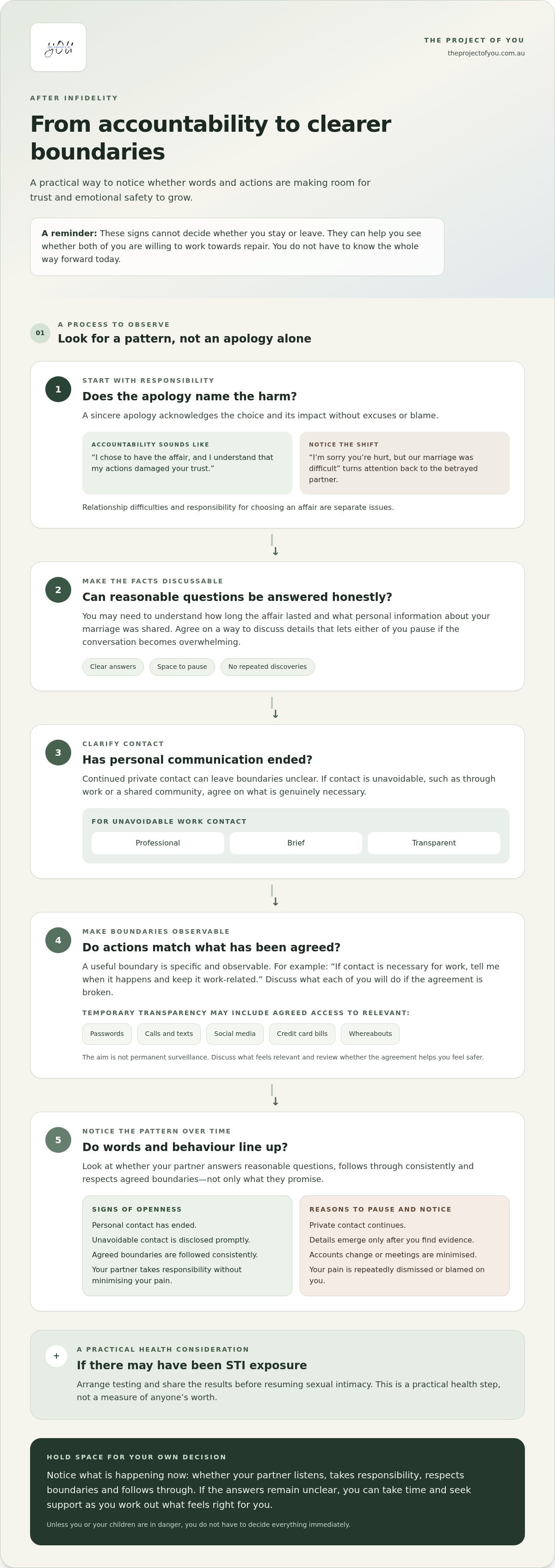
A sincere apology names the harm without making excuses. “I’m sorry you’re hurt, but our marriage was difficult” shifts attention back to the betrayed partner. Accountability sounds different: “I chose to have the affair, and I understand that my actions damaged your trust.” The words matter, but the pattern that follows matters more.
Notice whether your partner can discuss what happened without blaming you, work stress or the affair partner. A person may acknowledge that both partners contributed to relationship difficulties while still taking full responsibility for choosing an affair. For example, even if one spouse believes they contributed only 3 percent to a marital problem, that doesn’t make the other spouse’s 97 percent a justification for betrayal. Relationship difficulties and responsibility for an affair are separate issues.
Honest disclosure can help you understand the reality you’re being asked to respond to. You may need to know how long the affair lasted and what personal information about your marriage was shared. Agree on a way to discuss the details that lets you pause if the conversation becomes overwhelming. Repeated discoveries can make it harder to assess whether trust is being rebuilt.
Transparency is another practical part of accountability. You could agree on clear, temporary access to relevant passwords, phone calls, texts, social media posts, credit card bills and whereabouts. The aim is not permanent surveillance, but making actions easier to understand while trust is fragile. Discuss what information feels relevant and review whether the agreement helps you feel safer.
If the affair could have exposed either partner to a sexually transmitted infection, arrange testing and share the results before resuming sexual intimacy. This is a practical health step, not a measure of anyone’s worth. A partner’s willingness to address it openly can also show whether they’re taking responsibility for the consequences.
In Australia, an affair does not decide whether you stay or leave. Separation or divorce can raise legal and practical questions about parenting, finances and property, separate from whether an apology feels genuine. Consider whether your partner accepts responsibility, answers reasonable questions and follows through consistently. Refusing to apologise sincerely, minimising your pain or blaming others may indicate they aren’t ready to work towards repair. These patterns can inform your decision, but you do not have to reach a verdict today.
Ongoing contact with the affair partner
Rebuilding trust usually requires the relationship with the affair partner to end. Continued messages, calls or meetings keep an emotional connection active and leave the betrayed partner unsure about the boundaries. If your spouse says contact has stopped but continues communicating privately, that contradiction matters. It is difficult to feel secure while the relationship’s conditions remain unclear.
Some contact may feel unavoidable, such as when the affair partner is a colleague or part of a shared community. In that case, discuss what genuinely necessary contact looks like. For example, work-related communication could stay professional, brief and transparent instead of moving into private conversations. What matters is whether both partners agree on clear boundaries and the person who had the affair follows them consistently.
Look at behaviour, not just promises. Has your partner ended personal communication, avoided private meetings and told you promptly about unavoidable contact? A message disclosed before you discover it differs from a hidden conversation revealed later. These actions do not erase the betrayal, but they offer practical evidence of whether your partner is making room for trust to grow.
Honest conversations about the affair can be painful, but refusing to discuss it can block the communication needed to work towards repair. First, consider what you need to understand, then agree on a calm time to talk. For example, ask whether contact has continued, what form it took and what boundary will apply now. Pause if either person becomes overwhelmed, then return to the agreed questions.
Dishonesty during this process can make it impossible to rebuild a solid foundation of trust. If your partner minimises a meeting, changes the account or reveals details only after you find evidence, notice the effect on your sense of safety. You’re not required to investigate every detail alone. Instead, identify what you’ve observed, explain what information you need, and consider whether the response is open or evasive.
A useful boundary is specific and observable: “If contact is necessary for work, tell me when it happens and keep it work-related.” Discuss what each of you will do if the agreement is broken. This is not about controlling another person; it helps you decide what you can participate in while protecting your emotional wellbeing.
Ask yourself whether contact has truly ended, whether communication is candid, and whether agreed boundaries hold over time. If the answers remain unclear, structured support can help you discuss what repair would require. You can book a conversation about affair recovery support as you consider your next steps.
3. Questions to consider when deciding to stay or leave
After betrayal, pressure to choose can come from within and from other people. Unless you or your children are in danger, give yourself room to understand what is happening before making an immediate decision. Pausing is not the same as agreeing to stay. It can help you decide through reflection rather than shock.
Research can offer context, but it can’t choose for your relationship. The Institute for American Values reported that 19% of unhappy spouses who divorced or separated were happily married five years later, compared with 64% of unhappy spouses who avoided divorce. These findings concern unhappy marriages generally, not infidelity alone, so they don’t predict what will happen in your marriage.
There is no single timetable for recovery from infidelity; it depends on whether both partners take part in honest, sustained repair. According to the Grief Recovery Center, affair recovery may bring a couple closer when both commit to healing and rebuilding trust. That possibility does not make you responsible for repairing the relationship alone.
To assess whether trust and emotional intimacy could be rebuilt, look for repeated actions rather than one emotional conversation. Is your partner willing to listen, answer questions honestly and respect agreed boundaries? Can you talk about difficult feelings without being mocked, rushed or punished? Notice whether everyday moments, such as sharing plans or discussing a hard day, begin to feel more open and emotionally safe.
Consider these questions privately, then discuss them together if that feels safe:
Does my partner acknowledge the impact of the affair without shifting responsibility?
Are we both willing to make changes, even when progress feels uncomfortable?
Can I express hurt or doubt without being told to “get over it”?
Do our actions match the relationship we say we want to build?
What would need to change for me to feel respected and emotionally safe?
Try writing your answers after a calm conversation, then revisit them later. For example, note whether your partner followed through on a boundary or made space to hear your feelings. A written record can help you see patterns when grief, longing or fear makes each day feel different.
Staying is not proof of weakness, and leaving is not proof that you did not care. Signs your marriage may be over after infidelity become clearer through patterns such as ongoing deception, refusal to participate in repair, or a growing sense that the relationship no longer fits your values. You can weigh those patterns alongside shared affection, practical realities and your own wellbeing.
4. Validation of the betrayed partner’s feelings
After an affair, feelings can shift quickly. You might feel steady at breakfast, then unsettled when your partner’s phone lights up that evening. A caring response does not require your partner to agree with every interpretation. It means they listen, acknowledge the impact and do not rush you towards forgiveness.
Validation can be simple and specific: “I understand why that message brought the fear back. I’m here, and I’ll answer your question.” Compare that with “You’re overreacting; it was only a text.” The first response recognises your experience. The second minimises it and may leave you alone with the hurt.
During intense moments, a betrayed partner might need an update, encouragement or validation as often as 14 times per day. That doesn’t create a fixed requirement for every couple. It highlights how often reassurance may be needed while trust feels shaken. You could agree on practical check-ins, such as a message after work or a direct answer when a reminder triggers anxiety.
Notice whether your partner listens without turning the conversation into a debate. If you say, “I felt excluded when I learnt you shared our private argument,” a validating response might be, “I can see why that felt exposing.” Your partner can explain their perspective later. First, they need to show they have heard how it affected you.
Blaming the betrayed spouse is not the same as exploring relationship difficulties together. “I felt lonely, so you made me have an affair” shifts responsibility for that choice. A more accountable conversation separates the two: “I was unhappy, and I chose to handle it in a harmful way.” You can discuss relationship problems without being made responsible for your partner’s decision.
Pay attention to what happens after you raise concerns. Does your partner stay present when you ask about a difficult date, or accuse you of trying to punish them? Do they let you revisit a painful memory, or insist you should be “over it” by now? Repeated dismissal can make emotional intimacy harder to rebuild because honesty no longer feels safe.
Make a request clear and manageable: “Please listen for ten minutes before offering solutions.” If either of you becomes overwhelmed, agree to pause and name a time to continue. This can prevent a difficult conversation from becoming an argument about whose feelings matter more.
Ask yourself whether you can express sadness, anger or uncertainty without being mocked, blamed or silenced. A partner’s consistent willingness to hear those feelings can support repair; repeated minimisation may signal that your emotional needs are not being respected. Your feelings do not have to follow a timetable, and you do not need to prove they are reasonable before asking to be heard.
5. Self-care and support during relationship decisions
Infidelity can make everyday decisions feel unusually demanding. You might reread a message, lose focus at work or struggle to sleep after an argument. Caring for yourself is not a way to avoid deciding; it helps you stay connected to your needs as you consider what comes next.
Staying in a marriage where dishonesty or blame continues can deepen distress and self-doubt. Leaving can bring grief, loneliness and uncertainty, even when separation feels necessary. These emotional challenges do not prove you have chosen wrongly; they reflect how a major relationship change affects many parts of life.
Start with basic needs you can attend to today. Eat something nourishing, drink water, take a walk or ask someone you trust to sit with you. If concentrating is difficult, choose one practical task, such as arranging childcare or attending a work meeting, rather than trying to resolve the whole relationship at once.
Choose support that lets you speak honestly without being pushed towards staying or leaving. A trusted friend or family member might listen while you describe what happened. A therapist can help you explore the impact of betrayal and your options. If letting go or forgiveness feels difficult, support from a 12-step group, a pastor or a therapist can sit alongside an infidelity-specific healing process.
Choose carefully whom you tell. For example, a friend who repeatedly urges you to leave may not be the best person to help you weigh both options. You could say, “I need you to listen without deciding for me.” If you consider a divorce support group, choose one that leaves room for your circumstances and feelings.
A simple written check-in can help when your emotions change from one day to the next. Note what happened, how you felt, what support helped and what you need tomorrow. For instance, after a difficult conversation, record whether you felt heard or more unsettled. Look for patterns over time, not a single good or painful afternoon.
Protect small spaces that are yours, such as a regular walk, a quiet cup of tea or time with a supportive relative. These moments will not resolve the marriage, but they can help you notice what steadies you and what drains you. If parenting is involved, someone you trust might help with school pick-up while you rest or attend an appointment.
What support would help you feel more grounded as you weigh your choices? If you’d like professional space to explore the effects of infidelity and your next steps, book a conversation about relationship support.
The Project of You | Trauma, Couples & Relationship Therapy Australia: Nervous System Regulation & Restoration
The Project of You | Trauma, Couples & Relationship Therapy Australia offers Nervous System Regulation & Restoration for people processing betrayal and relationship uncertainty. When stress makes it difficult to pause, reflect or feel grounded, this service can provide space to focus on your emotional wellbeing alongside decisions about the relationship.
Individual Counselling can help you explore what you need, clarify personal boundaries and consider whether staying or leaving aligns with your values. You don’t need to arrive with a final decision. The Healing Feminine Workshops and Self Love e-Books are other offerings that may support reflection and self-connection.
If you’d like to explore support, contact The Project of You.
Choose a next step that honours your needs
You do not have to solve the future of your marriage in one conversation. Give yourself permission to notice what feels possible, what feels painful and what matters most to you. Signs your marriage may be over after infidelity can become clearer when you make room for your own needs instead of responding only to pressure or fear.
For now, choose one grounded next step: write down what you need to feel emotionally safe, speak with someone you trust, or set aside time to reflect without interruption. You can revisit your decision as you gain clarity. Caring for yourself is part of finding your way, whether that leads towards repairing the relationship or a different future.
[Book a conversation about your next steps](https://www.theprojectofyou.com.au/book-online)
Your feelings and values deserve a place in this decision. Move at a pace that helps you listen to yourself, and remember that asking for support is a thoughtful act of care.
Frequently Asked Questions
Why is it hard to walk away after infidelity?
Leaving can mean grieving more than the relationship: you may also face changes to your identity, home routines, finances or family traditions. Love and disappointment can exist side by side, making either choice painful. Try imagining an ordinary week in each possible future, rather than focusing only on the most intense moments. What would you miss, and what might feel different? This reflection can help you separate grief from your decision.
What are the signs a marriage is over after infidelity?
There is no definitive sign that your marriage is over after infidelity. Consider whether you can still imagine a meaningful shared future, rather than one that feels merely familiar. For example, are you interested in making plans together, or does the thought bring only resignation? Feeling relief when imagining separate lives may be worth exploring, but it is not a verdict on its own. Consider what that feeling might be telling you.
How can you tell the difference between a temporary crisis and a marriage that cannot be repaired after an affair?
A temporary crisis may come in waves: a hard week can be followed by moments of connection, humour or shared purpose. A deeper ending may feel more like a settled lack of interest in a common future. Compare how you feel in different settings, such as a quiet evening at home and a family gathering. A journal can help you notice whether your sense of possibility shifts with circumstances or remains consistently absent.
What factors make reconciliation after cheating more or less likely?
Reconciliation can be shaped by what the affair means to each person, the relationship’s history and whether both still value a shared future. Practical pressures, such as parenting responsibilities or financial dependence, can affect the decision without showing whether the relationship itself is wanted. Ask each other what you hope life together could become, beyond returning to how things were. Different answers may reveal needs to explore before deciding.
What steps can couples take to decide whether to reconcile or separate after infidelity?
Give each person private time to write down what they want, fear and need to understand. Then compare notes without trying to reach a final answer in that conversation. Discuss practical scenarios, such as how daily routines might work if you stayed together or lived separately. This can make abstract fears more specific. If the discussion is difficult to manage alone, a counsellor can help you explore the options without choosing for you.
When should couples seek marriage counselling after an affair, and how do they find a qualified counsellor in Australia?
Consider counselling if you’re going in circles, struggling to understand what you want, or hoping for a more structured conversation. In Australia, look for a counsellor or therapist whose qualifications and professional standing are clear, and ask about their experience supporting couples through infidelity. You can also ask how they work with different goals, such as one partner wanting to repair the marriage while the other remains unsure. A first discussion can help you decide whether their approach suits you.



Comments